
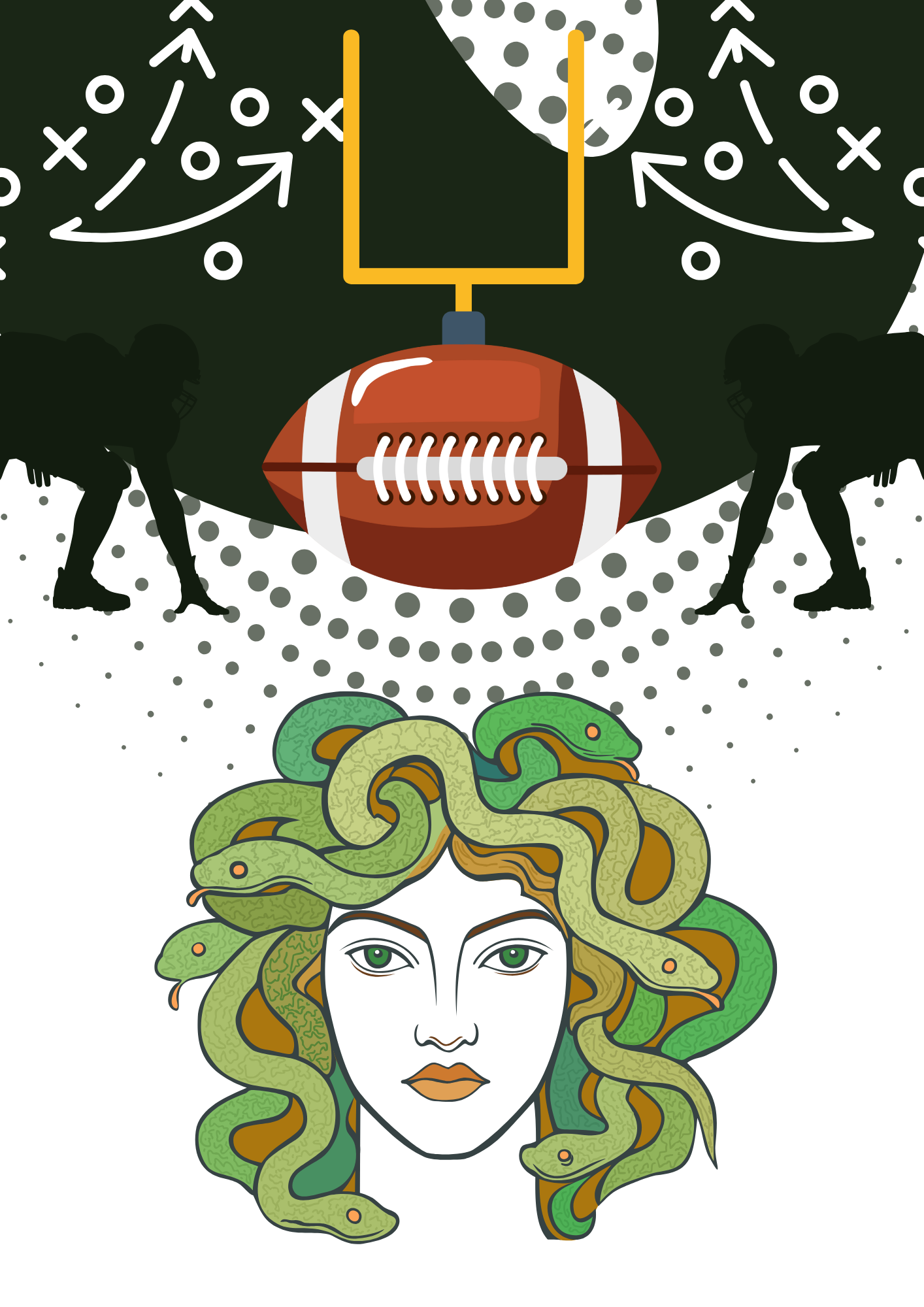
This week, I signed a contract for the second book in the Monster College Chronicles series, Monsters Play the Field. It incorporates friendly reader feedback from Book 1, Snakes in the Class. Readers wanted a monster homecoming and football game, swamp creatures, and trouble at the nearby fertilizer plant. I’m going to give it to them.
How did I come up with this series? When an editor at City Owl Press made a request for a monster romance set on a college campus — Monster High but at a college –I took up the challenge. Colleges and monsters and romances are all in my realm. Not only have I been a professor for decades, my grandparents were a college football coach and a college librarian. Some of my first memories are on a campus, although they are of buildings and vending machines, not lofty ideals.
My novels don’t feature student romance—it seemed too voyeuristic given my role as a professor. I decided that faculty-staff romance was more appropriate, although—disclaimer—I’ve never had such a romance. I decided that, at least in my first book, I would stick with heterosexual monster-monster romance. It features two lonely faculty/staff monsters kindling a relationship within the satirical backdrop of unfriendly humans, punishing demigods, and budget cutting administrators. You can think of this series as the monster version of Abbott Elementary at a college level.
Monster romances feature a love interest who isn’t fully human. There are different criteria for monster romance readers and reviewers. Some only want a human plus a monster, some only want monsters that don’t look human (a lizardman or minotaur for example). What’s the appeal of this genre? Monsters are a type of “other” which allows readers to explore their feelings for an unfamiliar love interest.
The idea of an “Other” is common in gothic romance, science fiction, and fantasy. The “Other” is an unfamiliar or-nondominant social group such as an alien or robot or different type of creature such as an elf or a vampire. The “Other” concept allows readers and authors to explore in-groups, outgroups, colonization, racism, differences, and diversity without directly appropriating any people the author might not understand emotionally. What better way to do this than to explore it through a romance? Perhaps monster romance can undo a little of the harm done by politicians who use “the Other” to motivate people to vote for authoritarians, who are prone to finding an “other” to demonize. It’s been said before: love is the most powerful force in the Universe. And I’d like to add, education might be the second most powerful force.
 Catherine Haustein