Friends of Big Rock Park here in Pella Iowa held their first event of the season–a walk lead by ecologist Dr. Paul Weihe. We learned to identify and appreciate trees without leaves. Several of the walkers were new to Iowa and wanted to learn what trees are native to our state.
Iowa’s most common type of timber are oak-hickory forests.
Oaks are slow growing but strong with “ski slope” bark, sometimes taking on different colors.This red oak tree, shown below, with bark shading of white, black, green, and red is older than Pella!
Oaks hang onto their leaves longer than many other deciduous trees, keeping them well into winter. It’s thought that this might serve as a buffer against winter winds and also help the trees warm up when spring comes. I’ve long felt slight resentment for my oak trees when they drop leaves onto the snow which makes them inconvenient for raking. Now, I’ll understand them better.
One identifying feature of an oak is the starburst pattern within the branch.
This star pattern translates into waves when oak is used for building.
Oaks are hardy and even a half dead one will provide plenty of habitat for forest creatures.
The Shagbark Hickory is hard to miss with its bark looking like a league of wild cats attacked a favorite couch.
This poor shagbark, below, was killed during the growing season and unable to undergo seasonal abscission and shed its leaves.
The distinctive ridged bark of the hackberry:
Large, in charge and near water. It must be an Eastern Cottonwood! These are fast growing with weak branches that drop a lot of wood. They aren’t good yard trees. My mom always claimed she was allergic to their fluff—which is their seeds—and I guess she wasn’t alone. Other people say the same. In the wild, the trees have plenty of uses to foragers including as arthritis wraps.
The characteristic burst of thorns is found in a Honey Locust.
Shaggy bark and a leak of sap help identify this as a black cherry. These trees grow small cherries with pits and aren’t generally used by humans, but many wild critters including birds and butterflies love them.
It’s even possible to identify a tree from just a stick. Look for leaf scars and check if they are opposite each other or alternated. A big bud such as shown below means a big flower is wintering in there. If it’s wrapped in a fuzzy coat, it’s a magnolia.
The White House’s definition of two genders as “a person belonging, at conception, to the sex that produces the large reproductive cell [or] a person belonging, at conception, to the sex that produces the small reproductive cell” has been called wrong and simplistic. It’s outdated and some in high places want to keep the outdated ideas.
Many animals can be both sexes and can have a fluid sexual attraction. The whole notion of binary sexuality is only one form of normal. Why would anyone care? Clearly, this is paving the way to look into our pants and apply discrimination.
We even work against nature in our society. Throughout history, dressing like a woman has been harmful to health. In a gender-biased human society, women spend much more time grooming because they need to look like they will accept pain in order to get male approval. We even have a “conservative bad make-up” trend that’s easy to spot and doesn’t look great close up. In fact, it’s based on pageantry and can be easily replicated for drag shows. It’s part of the reason people go to drag shows and pay for it—the pageantry and recognition that gender roles are kind of funny. Maybe drag shows will be banned as well.
In most species, it’s the males who need to preen and look pretty. Why do we think it’s how human women should look? Women are supposed to have kids, run after them, clean the house, and gob on drag-show level make-up. The animal world is laughing at us.
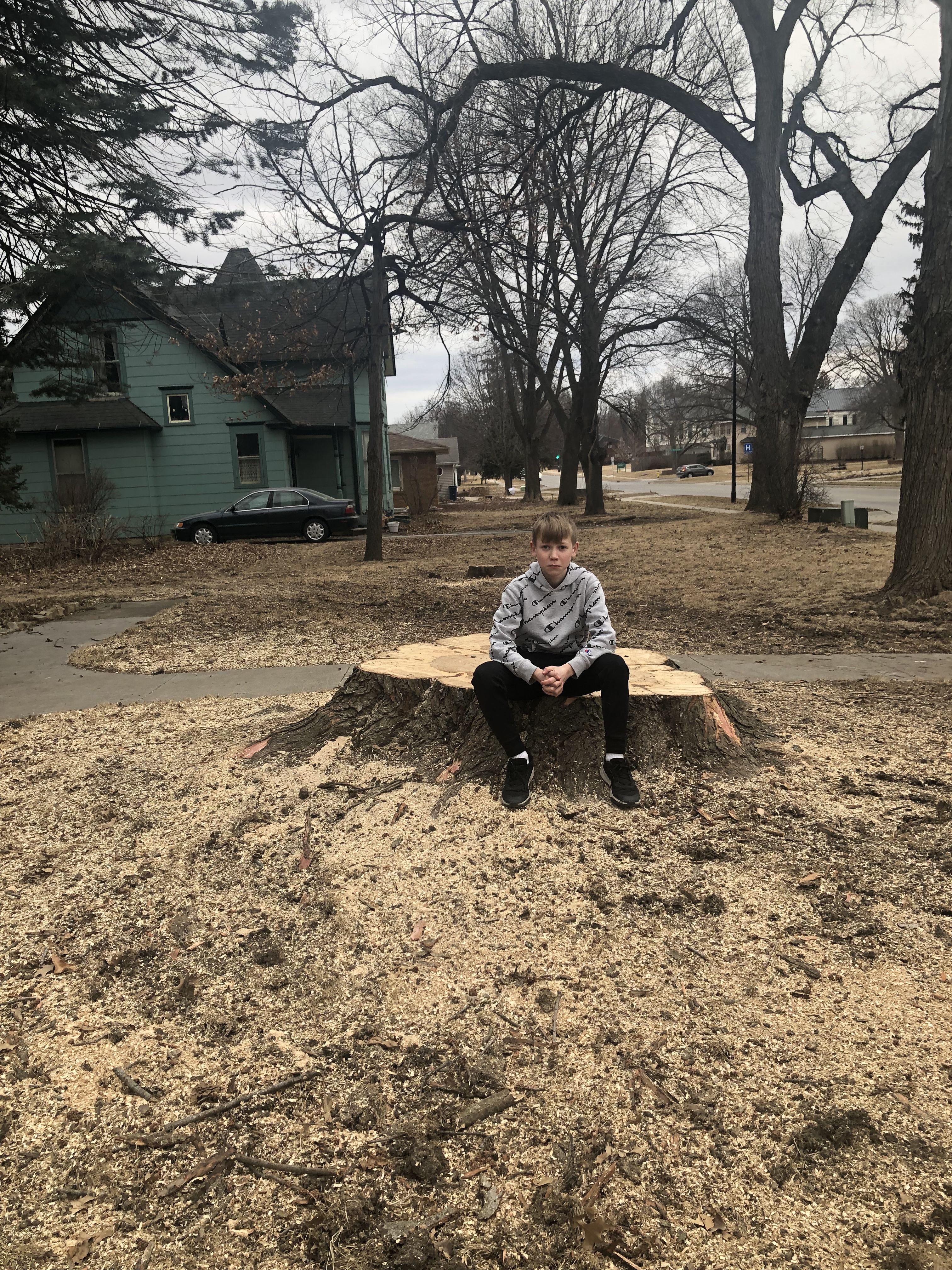
I must explain why we killed the magnificent silver maple tree in our yard. It’s gone, cut down, stump soon to be ground to bits.
It was planted over a half century ago for quick shade and it grew dangerously large. The branches were soft and the roots of were shallow. We were advised to remove it before it plugged the sewer line. Due to their girth, the roots would be difficult to blast away. Not to mention, our sewer line to the street is PVC so the line being plugged would be a good distance away under the street. It might involve digging up the street!
We didn’t prune it until it was elderly, not knowing this could give it a hollow spot or two in the trunk eventually. If someone had pruned it when young, it would have maintained a smaller root volume. It was very close to the house and the driveway. The roots cracked a walkway. We didn’t plant it. My parents did when they owned the house, which we bought from them. I recall watching it grow over the years and thinking it was the equivalent of having a baby elephant.
Part of the reason for removal was the worry about it falling on our house during bad weather. Even the Iowa legislature is admitting it, bad weather has accelerated, as scientists predicted. But instead of doing anything to prevent worse weather, the Iowa legislature has proposed tax free disaster savings accounts. I don’t need a tax break as much as I need them to take steps to keep us safe. I haven’t felt safe with them lately.
I saw danger not only of it dropping big branches but, we were told by an arborist, it was probably going to split down the middle someday. Why did he say this? It also had a lot of branching, along with knot holes fairly low down which meant, eventually, it was going to weaken. Silver maples are among the trees most likely to fall in a storm. If it was in the way back of the yard, it would be tempting to let nature take its course, but it wasn’t. It was in the front yard, closer to the house than the street. The house is old but it’s well-built. The house won out.
The tree had been part of my life for so long, something always there. Because of this, I always took its autumn splendor for granted and don’t seem to have a photo of it.
Here it is in winter, peeking over the house. It’s starting to flower already. The squirrels are going to miss the flowers and seeds, although we have another very large maple in the back yard to keep them busy.
In the neighborhood, several big old trees have been lost to disease or due to sewer line entanglement. One 130-year-old tree was removed because branch fell in a neighbor’s yard during the derecho of 2020. The neighbor freaked out and so did the homeowner. We also removed a sugar maple that was struck by lightning and slowly dying.
The tree’s branches fell with tremendous thumps and sawdust rained like snow. Despite all my rationalization about why this had to be, it made me sad. The tree was fairly healthy. It posed no immediate threat of falling.
The trunk fell with an earthshaking crash and light streamed into my window.
Ironically, the last branch came down on what would have been my Mom’s 93rd birthday. She planted this tree, after she moved to Iowa more than thirty years before the house got air conditioning in 1999. It might have been free from the bank for opening an account. Her childhood home, a place in the Western Michigan country known as Maple Brook Farm, had a similar tree too close to the house. It’s also gone and in fact, the entire farmhouse was bulldozed and replaced.
I want to plant a climate change resistant tree or ornamental tree in its place. That side of the yard is where the somewhat new sewer line runs so whatever goes there should have non-invasive roots—a tree with roots that grow straight down. There are plenty such trees including other maple species, spruce trees, pine trees, hickory, and sturdy oak trees which fill this neighborhood. Smaller fruit and ornamental trees fit the bill. Silver maple is not one of them. We frequently pruned it to avoid windthrow, which occurs if branches and leaves are thrown by the wind and take the roots with them. Still, I became afraid of it as it grew taller. If you are reading this and feeling throat tightening panic about your tree, relax. Call a tree specialist for an opinion. Most trees can be trimmed to safety. And if you aren’t sure what type of tree you have, use an ap such as Picture This. A well-kept tree is way more benefit than risk.
Needless to say, I’ve been second guessing myself. I can only say I didn’t want to be a penniless retired teacher with axed Social Security paying the city to dig up the street to remove tree roots from the sewer. Tree roots can grow even without the tree, so I tell myself that this was the right time. Still, I’m sad about it all.
Tonight, the winds howl around the house, reminding me that some of my actions are simply preparing for storms to come and let’s be honest, they’re coming.
We’re hearing a lot of hot air about efficiency lately and as a concept, efficiency isn’t all bad.
For example, chemists talk about atom efficiency which compares the atoms in the starting materials with those in the product. If all atoms are used in the product and none are left, the reaction has 100% efficiency. This is a way to assess waste in chemistry.
A Twist on the Everyday is a reader-supported publication. To receive new posts and support my work, consider becoming a free or paid subscriber.
When I look for a car, I take fuel efficiency into account. Efficiency is great, isn’t it?
Sometimes it is, but the concept hasn’t always been with us. When and where did this idea come from?
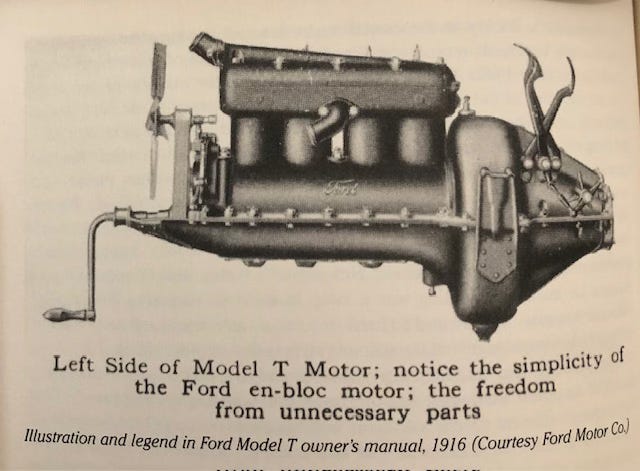
In the 1900s the idea of efficiency, a near worship of it, pervaded society. This idea first came from studies of brewing and of machines. An efficient process lost less heat and did more work. Heat wasn’t lost to the surroundings in an efficient process. For example, an efficient engine got less hot and produces more work. Get your motor running with an efficient engine in 1916.
Thermodynamics began in England with James Joule, the son of a wealthy brewer, who studied thermodynamics but efficiency lurched to life in the juggernaut that was American culture. It even bled into management theory.
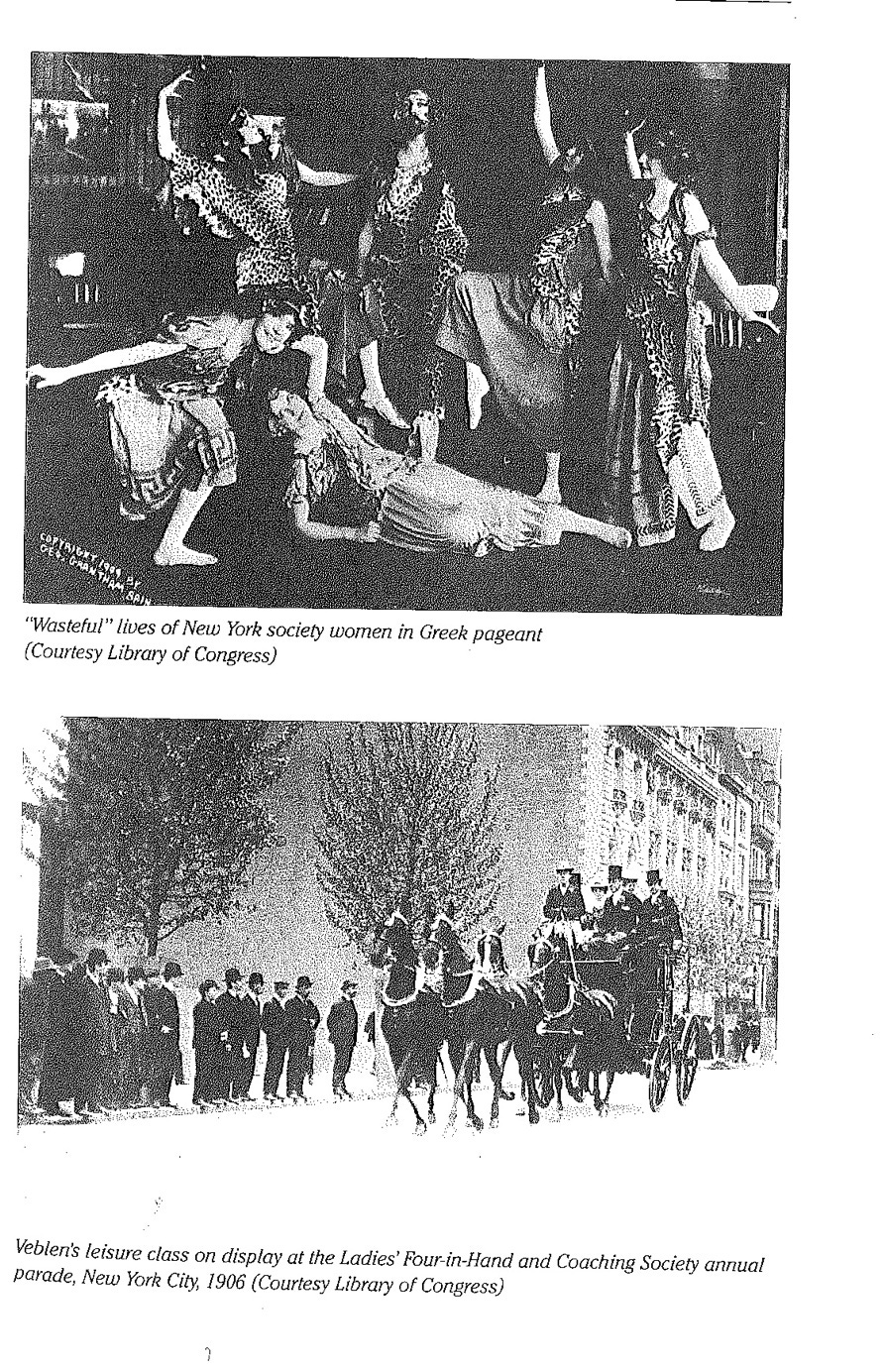
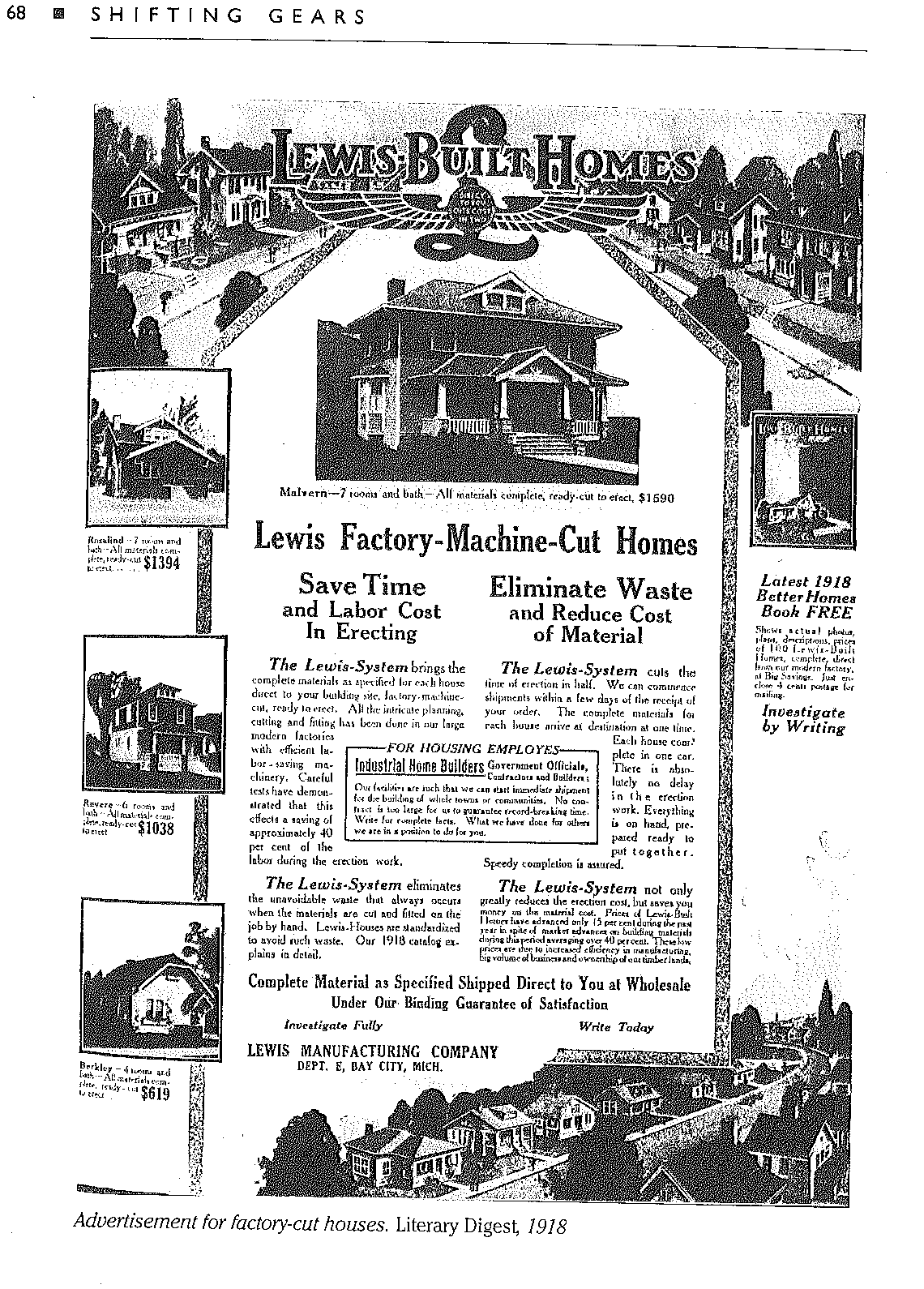
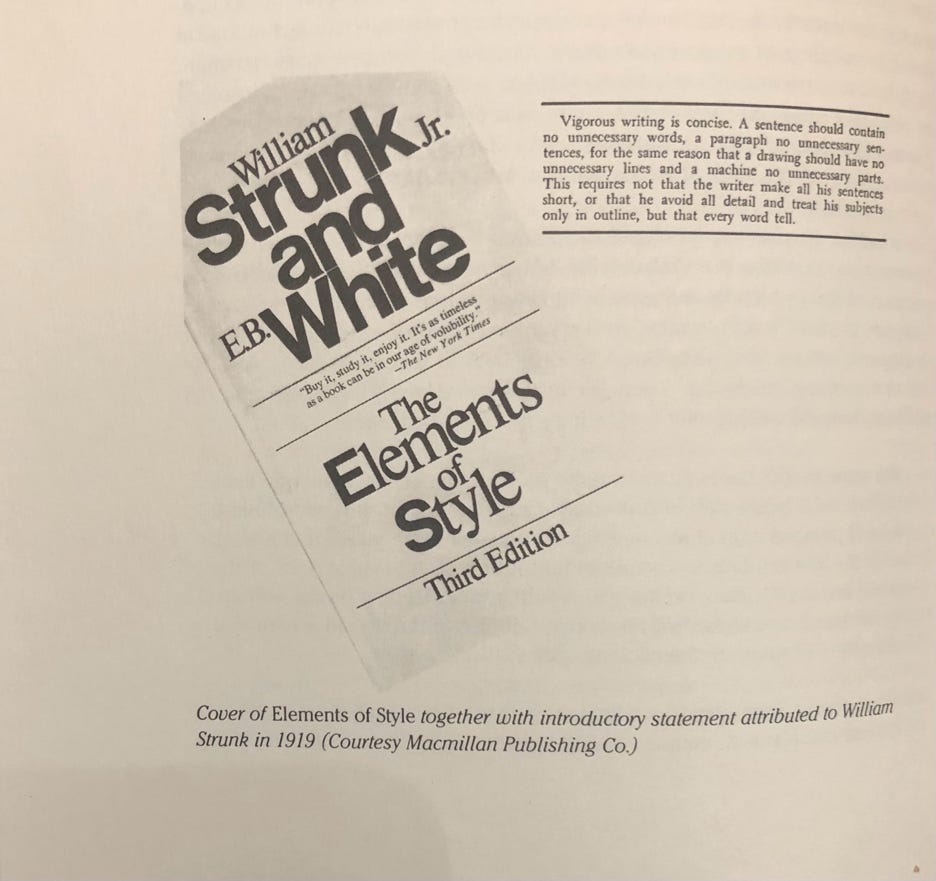
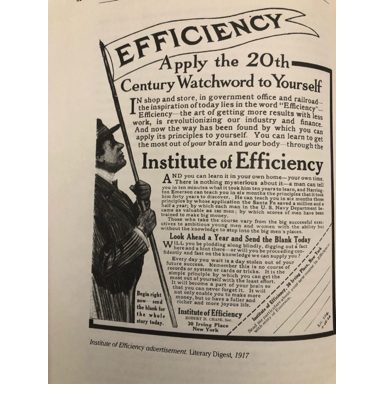
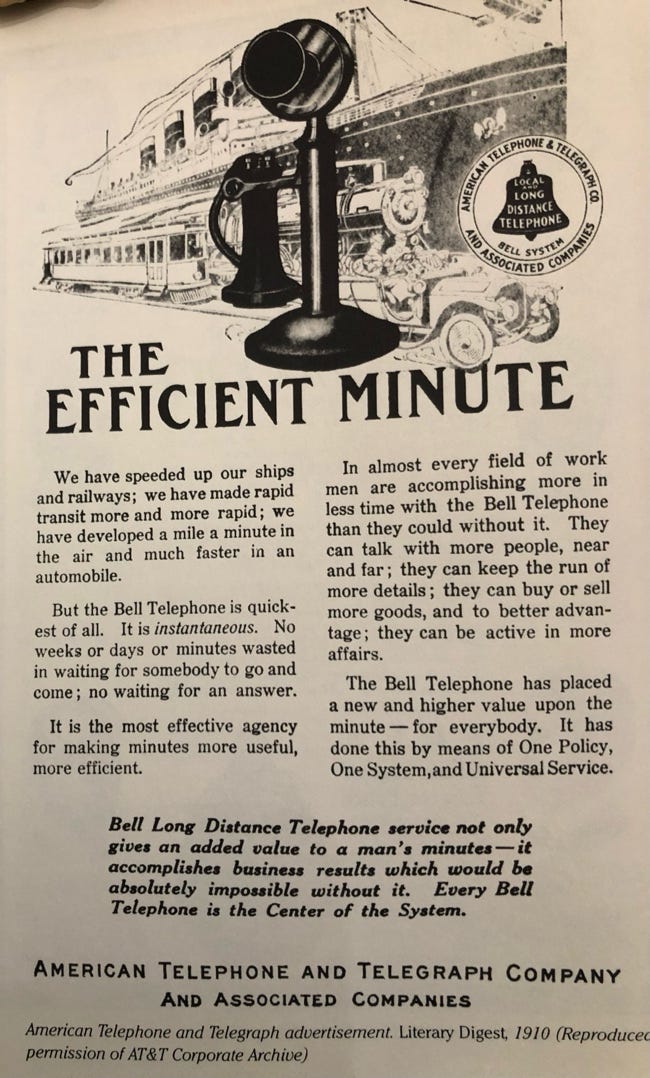
Everyone had to work and be useful. The idle rich were a problem. Inefficiency in buildings was a problem. According to literary critic and munitions engineer Hudson Maxim, inefficient prose was a problem as well. Take a look at some of these photos and advertisements.
One Grecian urn, two Grecian urns, three Grecian urns and a fountain. The inefficient lives of the idle rich, women in particular, were held in contempt.
I grew up learning that Hemingway was a great writer. His prose was so simple and unadorned–just like a punch in the gut. There were characters barely described and given names like “the woman.” He was in a word, efficient. Believe it or not, this whole notion came from science and technology.
Hemingway came about his efficient prose in an honest way. He was a war journalist and telegraphed his stories back to the U.S.. The telegraph coded letters as dots and dashes and each one cost money. And with the advent of photography, people didn’t need or want the long descriptions of scenery that punctuated older fiction. They only needed enough to set the mood and ground the fiction.
Today, the century old efficiency movement is still with us. We are told to want writing to be sleek, like an Apple product. Some publishers even remove the Oxford comma. Professor Cecili Tichi called this new prose “machines made of words,” adopting the phrase from poet William Carlos Williams. The photos I’m using are from her book Shifting Gears.
I like machines. I get frustrated with rambling and babbling. But sometimes, I want something more delicious. I want the rush of pleasure from abundant words and the keen insights of metaphors and turns of phrase, the dappled light of a brilliant day as was today.
Forget long, flowery letters. With the invention of the telegraph and telephone, words counted, ten cents for the first ten words and five cents for the next ten words, and communication was instantaneous. People began writing shorter prose as a result of “telegram style.” Today’s text message style is much the same. Write someone a long, embellished text an see how they react. Long sentences aren’t coming back any time soon.
Above: CEO wants to show he’s doing something efficient so he gets rid of people.
Efficiency can be soul sucking, killing inspiration, and innovation. Over-work goes against the Bible. Inefficiency can be as simple as hanging out, building relationships, looking at the sky and wondering. In other words, it can enhance the workplace and our lives.
Consolidation, while efficient, gives the few producers the ability to raise prices, even when not necessary. We already have seen covid and bird flu blamed for egg price hikes, as markets shifted and the types of chickens remained the same, making them even more likely to experience epidemics. And we only need to look at the dinosaurs or pandas and their limited diet to see that bigger and more specialized isn’t always better.
Let’s also considering who is telling us to be efficient. It’s often people who themselves have wasteful private jets, boats, and excessive real estate holdings. Additionally, the release of hot air into the environment is a sign of poor efficiency. It’s where the term for insincere speech comes from. There are a few prominent figures who could take a lesson from efficiency and cool off. All those hot takes aren’t doing any work.
More importantly, society is not thermodynamics. People and other living things are much more complicated than brewing–even if it does involve yeast. Where is the morality in efficiency? When it comes to people, The Bible warns against haste. Applying STEM principals to every facet of our lives won’t make them better, only more stressful. It might even kill us. So embrace those inefficient moments at times, and don’t take personal advice from the opulent hot air emitters. Chill.
I like science lab. Science lab doesn’t care about the race or gender of the experimenter. Nature does what it pleases. This doesn’t mean that scientists themselves have done the same. I wrote a novel about this. But it’s out of print. Maybe I’ll revise it and resubmit it. It got good reviews and bad reviews because people are different. We love to classify these differences—give ourselves a Meyers Briggs test or an Enneagram number on the basis of a personality test. As stated by Merve Emry of Oxford University, “We are seduced by the fact that it presents that knowledge in a painless and easily digestible way.”
Probably we have always classified ourselves and others in a form of efficient thinking, but science helped us do this. The familiar “Genus species classification” was developed in the mid 1700s by Carl Linnaeus – who saw plants, animals and rocks as each having their own Kingdom and broke the distinctions down from there. His description of Homo Sapiens includes four distinct varieties: “H. sapiens europaeus, H. sapiens afer, H. sapiens asiaticus, and H. sapiens americanus” , ranging from H. sapiens europaeus on the one (best) end, to H. sapiens afer at the other.” By the way, the notion of strict gender roles took off in the 1800s along with the rise of classification. Look different, are different. It lead to scientific racism.
Classification was a hot topic back in the 1800s. Naturalists ran all over the globe catching insects, other animals, and plants to classify them. Classification relied on morphology, which in this case means physical traits. This classification system made it easy for scientist to talk to each other and compare notes. It inspired Charles Darwin’s adventures and Gregor Mendel’s study of pea plants which led to modern genetics.
Yes, scientists had a racism problem. Almost from the start of the classification scheme, scientists attempted to prove some were better than others. Beautiful people were innately superior and of course, people from non-European cultures were inferior. Science had a racism problem.
A distinction between science and scientific racism is that the creation of separate racial categories was not solely for the sake of a biological system of classification, but rather for political means:
Scientific magical thinking about European superiority led to a nonscientific justification for European colonialism and slavery. The “preconceptions” were based on the idea that nature, and not social forces, created social classes. Poor people were scientifically ordained by Nature to be usd by the upper class. It explains social inequalities not in terms of the society failing to provide for its citizens, but rather a group’s failure to have superior breeding.
One example of personal racism in science that I’m acutely aware of is that of Percy Julian. This brilliant chemist faced numerous barriers in his life because he was black African American. You can read about them here in the appropriately titled “Percy Julian and the False Promise of Exceptionalism.” Despite being a brilliant synthetic and natural products chemist, he faced everything from having his ideas nearly stolen to having his home set on fire. He would show up to college and later job interviews thanks to his impressive resume, only to be turned away by other scientists because once they saw him, the place which invited him to interview didn’t like his morphology. Fortunately, a few anti-racists recognized his potential and he made many advances in steroid chemistry and in products made from soybeans, including paint.
Scientists now use DNA to help them study and classify. They can tell you about many times when morphology will lead you wrong—a fly can look like a bee for example. Even Darwin suspected as much.
When you live in an old house, you’re never sure how much money you should put into it. Will it maintain its value? Usually, yes, a well-maintained one will hold value. My house is 100 years old and I sometimes ponder moving, encouraged by my kids to find a home with one floor–an older person home where I won’t fall down the stairs. But I haven’t fallen down stairs since that one time in Detroit. And this year, my husband fell in the kitchen, not on stairs, and broke his neck–no home is safe if you aren’t paying attention. And my house has a fallout shelter so I’m not moving for at least four years.
Throughout the years, my older home has gotten –among other things–new basement floors, some new wiring, radon remediation, new paint, a new front porch, a new driveway, and refinished wood floors. As for redecorating, I’ve done some, but old bedrooms and their archaic wallpaper borders hold happy memories. The upstairs bathroom wallpaper is a relic, but I can still picture my happy kids splashing beneath that paper. Back in the day, my husband was handy, but he’s lost his enjoyment of it. I can paint but I’m too short for some spots even with a decent ladder. There’s been a comfortable sameness, a sentimental inertia. But recently, something has pushed me toward doing more than just preserving the status quo. My husband got locked in the bathroom.
A too- old lock broke. His neck was as broken as the lock so climbing out the window wasn’t an option. The screwdriver handed through a transom didn’t remedy the situation. He had to bust the whole lock and in the process, the hollow core door cracked. Memories or not, it was kind of ugly and cheap. And now busted.
We replaced it and the companion door to the basement with some oak doors to match the floors. Oak may be out or maybe it’s back in. No matter. The contractor was a perfectionist and the doors are beautiful. They bring me joy, even a calmness, because they aren’t janky. The locks are new and so are the latches. We can close the doors with confidence.
The doors tell me what Aerosmith tried to back when I was a part time DJ (although Dream On was on oldie by then): the past is gone. Maybe after I paint the hall to the bathroom, I’ll find something new to spruce up, and not let sentimentality hold me back. Then, someday, I’ll move on to my one floor dream house in a liberal area. Dream on.
Above: a new door, and although I did love the beagle mutt that scratched the old frame, it’s time for a new coat of paint. And yes, my husband’s neck has healed.
You’ve no doubt read the news, in the US our mental health has been damaged by lead. Not only does lead lower IQ and damage areas of the brain that control aggression, it disrupts thyroid function. Lead impairs brain growth and poisons neurons. It contributes to ADHD. It encourages cancer. Even teen-pregnancy has been linked to lead exposure. The poorer a person is, the more likely they are to have a high blood lead level but this hasn’t always been so.
I used lead test swabs to follow up and the ringing glass tested positive, along with several older glassware items and a new dish from Italy. This photo shows the items with positive lead swabs, shown by a pink color.
I decided to test all my glassware and cull the leaded items. I am a depository for hand-me-downs from the ancestors and some of them were far too materialistic. I needed some sort of reason not to keep all this burdensome stuff. The bag of leaded items will go to a recycling center or maybe a few will be used for laboratory demonstrations.
Of note, lead in glassware was banned in the late 70s. An Alvin and the Chipmunk glass bearing a date of 1985 was lead free.
My question is: are we all brain damaged? The answer very well could be yes for those born not so recently. The reason is not our glassware as it is about leaded gasoline. And perhaps guns.
The link between lead and crime has been published everywhere from science journals to Forbes to Mother Jones. Violent crime in the United States rose in the 1960s, spiked in the 90s, and has plummeted since then. Why did the generation associated with peace signs and hippies turn out to be the most violent in recent history? Many scientists point to one reason–lead in gasoline during their childhoods.
Lead in the form of tetraethyl lead was added to gasoline in the 1920s in to help electric igniting engines operate more smoothly. It worked well despite one problem with it. The additive was known to cause “madness” and hallucinations. This had been first documented in the 1850s. In fact, workers at the first lead additive manufacturing plant died after going “looney.” Despite this, the additive worked effectively and was cheap so the companies that made it pushed forward to add it to gasoline. It was temporarily banned in parts of the nation–not the Midwest however–making the breadbasket of our nation a rich source of environmental lead. With careful marketing and lobbying by the companies that made the additive, the health effects were down-played and the new technology was given a clean bill of health by the U.S. Surgeon General in the late 1920s. Thus, leaded gasoline was heavily used across the United States for over forty years.
Analytical chemistry upped its game in the 1970s, finding that the lead persisted in the environment and in people. Many states began phasing it out in the 70s and 80s. It was banned state by state and eliminated from car gasoline in 1996. But since it is an element, lead can’t break down into anything simpler. Scientists believe that everyone over 40 in the U.S. has some degree of lead poisoning. Lead can be cleared from blood by the body, but it resides in bones for 30 years or longer. Lead still lingers in many locations in the U.S.– thanks to corroding old pipes, old paint and even old cans and glassware.
It’s no surprise that lead is found at high levels in shooting ranges. These are regulated by OSHA and there are rules demanding clean up but these rules are not always followed. People who work at firing ranges & those who go to firing ranges often show elevated blood lead levels, especially if the ranges are indoor ranges. Air propelled bullets and those with copper jackets can help reduce the lead exposure to an extent. Another precaution is not allowing children to engage in gun play. However, gun ownership itself is a hazard for children of gun owners and increases their blood lead levels. Yes, an adult having a gun is linked to higher blood levels in their kids.
Eating meat shot with lead is also dangerous, especially for children. Adding vinegar to game shot with lead bullets makes the lead even more soluble in the meat and increases the toxicity. However, lead in gasoline has been by far the most egregious contributor. As use was curtailed, lead in blood began to drop dramatically. Crime did as well.
Fuel for small airplanes contains lead and they are one of the major contributors to lead pollution today. However, lead in gasoline has been by far the most egregious contributor. As use was curtailed, lead in blood began to drop dramatically. Crime did as well.
The tragedy of lead poisoning in the Unites States is a sad tale of greed and lack of regulation. Every one of us has suffered to some extent from exposure to lead. The cautionary take-away is that when it comes to chemicals, we need more regulations and more care taken before approving them for use in consumer products.
Thank you to all my subscribers for supporting and reading my work.
For New Year’s Eve, I watched Wicked with family. It was good, especially in the coziness of a family living room with loved ones and snuggly pets. Some parts left me on the edge of my seat. The scene where the professor was hauled away was a little too believable. It’s happened before and it can happen again. Anti-intellectualism is a tool of dictators and we’ve see it crop up in the US, as shown in the historical movie Oppenheimer.
The story of Jay Robert Oppenheimer is well known to scientists my age. Many people have mused about why the movie Oppenheimer didn’t show the destruction of the bomb. Clearly a terrible weapon was created but the film is about the people and what came after in the US.
The movie did a good job of showing the motivation of the scientists. Germany had discovered fission, the atom smashing power of the bomb. How was fission, the splitting of the atomic nucleus discovered? At the time, uranium was the heaviest naturally occurring element. German scientists at Otto Hahn, Fritz Strassman, and Lisa Meitner were trying to make a heavier element by knocking heavyweight uraniumwith a neutral particle—a neutron–to make it heavier. There were probing the secrets of the inside of an atom. When hit with a nucleus, the uranium didn’t get bigger. It broke into bits and released a lot of energy. (Read more here)
An aside here. Most atomic action occurs on the outside of the atom, the electron cloud. Electrons move around to create bonds and break bonds, and that’s most of what happens in a chemistry lab. It causes rust and powers our cells. But with nuclear reactions, we deal with the inside of the atom, and the inside of the atom is held together with the tremendous force. Einstein’s famous equation E equals MC squared dictates the immense force that’s holding the inside of an atom together. And all of this was being studied at the time of World War 2.
Hitler was a bad guy and a lot of the scientists in Germany were Jewish. They either fled to another country in Europe, as Lisa Meitner did, or they, emigrated to the US. They came with a lot of understanding and people were scared. I can kind of understand working on a horrible weapon. And as the movie Oppenheimer points out, scientists were not 100% sure how destructive this might be or how the US government would use it.
There was tremendous fallout from the bomb, pun intended. And. It created a lot of sickness. A lot of doubt. The movie doesn’t really cover that. It starts and ends with Oppenheimer being grilled by dim bulb senators. Why? He did everything his country asked of him and he did it well. However, he dared to go to a couple communist meetings. His brother was for a while a communist and he’d had a communist girlfriend. Clearly, that didn’t stop him from helping his country. It didn’t stop him from stepping up and using his genius to create this deadly weapon for his country. If you watched carefully the Senators are the villains. The Conservative senators are the villains. They use science. And scientists. And then? They dismissed them. Like any narcissist would do.
I’ve written before about hate mail I’ve personally gotten as a scientist in Pella, Iowa. You can never be conservative enough for conservatives unless you 100% agree with them. You can be their friends. You can build a weapon for them, but they’ll turn on you because these are all or nothing people. As a scientist, I once felt obligated to point out inconsistencies in public policy to elected officials. And I’ve gotten some pretty mean comments and letters from more than one of them. I’ve given up thinking that they write these crazy bills and say these crazy things because their staff hasn’t informed them enough. These are all or nothing people. They don’t tolerate any opposition to their values without totally smearing the people who are questioning them.
Science, on the other hand moves forward when scientists put ego aside and admit some uncertainty and ignorance as they argue about evidence gathered according to the sanctioned best practices of the time. Moving forward needs some questioning the reigning values and building on them.
Many US scientists worked on the bomb. You know who didn’t? Lisa Meitner, the person who first recognized the fission reaction, who’d fled to England. And here’s another thing to think about: Germany wasn’t close to developing an atomic bomb. A lot of their scientists had left the country. (That’s what you get when you don’t appreciate intelligence and diversity.) They couldn’t enrich uranium. The scientists thought such a weapon would be a bad look for Germany. And Hitler was basically too dumb to appreciate the science. Naziism was anti-intellectual and experienced a brain drain.
(Kind of like Iowa is seeing.) The German scientists saw the destructive power and restrained themselves. It should be pointed out that Nazi doctors did nothing of the sort.
Scientists are curiosity driven and they like to have a project. They are somewhat mission oriented in their research. Fundamental questions really fascinate them. Messing with the inside of an atom when the outside had been what was studied was like catnip to scientists. This is a criticism of scientists—they look at their accomplishments with rose-colored glasses. This means we as citizens need to elect thoughtful leaders, too. Leaders can make bad science decisions. Leaders influence the morality of a society. As this article points out, it’s not the scientists who shape the ethics of a nation, it’s the leaders. History (and fiction) shows that having a mad-man for a leader will give scientists (and sorceresses) pause, or, as in Wicked, will drive away your best talent. They might even take a few of your secrets with them. And that is a ray of sunshine.
My first novel is out of print but my second novel is on sale at Kobo. Like most of my fiction, it satirizes the ethical problems scientists face as they search for romance and try to understand society.
My first novel is out of print but my second novel, Mixed In, is on sale at Kobo. Like most of my fiction, it satirizes the ethical problems scientists face as they search for romance and try to understand society.
The protagonist, Catrina, moves to a place that’s technologically innovative but socially backwards. For a while, she thinks she can rise above the social dysfunction and concentrate on being useful to her employer. She’s young and full of ideas. With the money and encouragement of her boss, she sees her designs come true. But as she gets to know the locals, she questions what she’s doing. It becomes time to make a decision.
The question for all of us right now becomes, do I stay and adapt, do I stay and resist, or do I go? Our lives on social media are a clear example of this. I began on a blogging platform called Xanga and enjoyed it until my feed became overrun with pro-lifers crying about their miscarriages. I don’t want to be insensitive about a traumatic event, but part of every lament was “and I know it was a girl.” Statistically, these posts seemed fake. I sensed a lack of honesty, a misuse of trauma to push an agenda. It’s hard to have community when everyone you meet seems to be telling a lie. I abandoned Xanga, as did many others.
I met my publisher on Twitter. It was hard to give Twitter up as it descended but as the saying goes, who needs that kind of negativity in their lives? Now we have Facebook which has become clogged with ads and misinformation. It used to be a source of traffic to my blogs and books but now accounts for less and less. I’ve heard from people who are leaving it. When you feel unsafe with a platform, if it’s lying to you or derailing your brain, it’s time to make a decision.
I also ask myself how long I will pay to be on this platform. I have the business plan. If I allow some advertisements, it’s free. But it will make me feel less professional, won’t it?
I wrote Mixed In nearly ten years ago, when a nation overtaken by unaccountable greed, isolation, and citizen complacency seemed a possibility worth joking about. Hopefully, it still is.
Of note, Kobo is associated with Walmart so if you aren’t excited about that, here is a universal link.
I spent the holidays on a journey of 5,000. First, we drove with our dog to Charlotte NC to see family. We drove so we could take our dog and she could be with the pet sitter and her cousin dogs and cat while we humans flew to our holiday destination. By the way, she was very naughty and ate out of the litter box when we were gone.
I would say something about this grin but it would be cliché.
Then we flew with family to Seattle and drove a little further onto Kitsap Peninsula. It was beautiful and shrouded in mist, giving way to sun on occasion.
We returned to Charlotte for more time together. At last weather and upcoming school forced our hand and it was time to leave.
You might ask why we drive. I wonder this myself when I’m on the highway. My parents and my in-laws were from the Road Trip Generation of the 1950s and my family is from Michigan. My uncle even worked for the auto industry as an accountant. My husband’s family took a cross-country trip, starting in San Diego. We grew up on car trips. And our dog loves a car trip and is an excellent traveler. The anxiety about a road trip come from planning the route due to weather issues. Weather is becoming more extreme, and I know people who have given up road trips entirely after encountering fires, flood, and tornados on a single trip!
On the way back, we traveled through the area damaged by Hurricane Helene. (map here)
I-40 through the Blue Ridge Mountain region was washed away by Helene. It was being repaired and the repair collapsed, so travelers must resort to various detours. GPS suggested some detours but once we got close to the site, the North Carolina Highway department had huge signs suggesting other paths and fortunately, we went with the highway department. Trucks took a much longer detour (complete with bad weather on the day we left) and cars had a road with one lane open in each direction. (here’s a map for those interested)
All along the route, starting in Asheville, we saw trees lying flat after being pushed down the mountain. Quite a lot of the damage has clearly been cleaned up. We were guided by signs with signs telling truckers not to take the car route. Here are some photos of trucks crashed along the by-pass in the area known as The Rattler. Highway Patrol were staked out along the way to keep trucks off and for good reason. The one lane road was no passing all the way but somewhat peaceful despite twists and flurries. DOT workers even directed traffic at one turn along the way, which was good because that area had no cell service and the GPS went down. Below is a photo of the town of Hot Springs, population 520 About 40% of the surrounding area had no cell serviceeven before the hurricane. The hurricane knocked out most cell service in the area. You can see where the people in this region would not get information about a pending flood.
I don’t want a government dictatorship but on this part of the trip, the government and government workers were extremely helpful and reliable. GPS uses AI for the directions and our car-only shortcut wasn’t among the routes mapped out by AI. When I read this article about UPS shutting down some rural drop off areas, I got to thinking about how rural areas are underserved populations. They don’t have enough profit in them, and they truly need equality and inclusion, yet vote against it.
Cell service relies on private carriers. When my kids lived in Detroit, US Cellular service was terrible and even charged me for being in Canada when I wasn’t. In Kitsap County Washington, also fairly rural, my Verizon carrier was so slow I thought my phone was broken. Yet here we are in the US voting for the politicians who want to privatize services and cut government. I can’t see this working out well for the rural areas. Think about applying this patchwork of services to the entire country. As a nation, we’ve already tossed out Net Neutralityso our carriers can do whatever they want to us. Who knows what lies ahead for rural areas. They might become less and less desirable places to live, as before the rural electrification act.
Below, traveling on the detour, Hot Springs in the snow.
For now, I’m home safely before the impending snowstorm, having a cup of coffee, watching the world go by, and wishing those on the road safe travels.