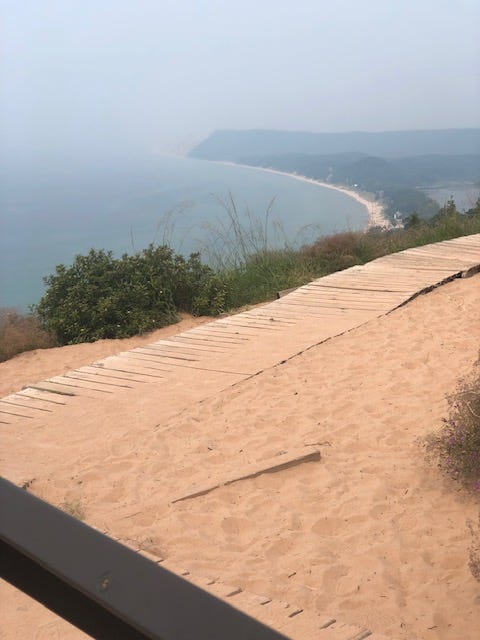
I spent my childhood in the Great Lakes dunes, climbing them and watching the dune creatures including numerous spiders and ant lions. Mostly what I remember is the joy (and challenge) of climbing and the feeling of being isolated, except for the company of my best pal, Kathi, who shared my love of nature and curiosity.
My son inherited the dune joy and when he and his family proposed a trip to Western Michigan including my hometown of Holland (and beloved relatives) and Sleeping Bear Dunes, I jumped at the chance.
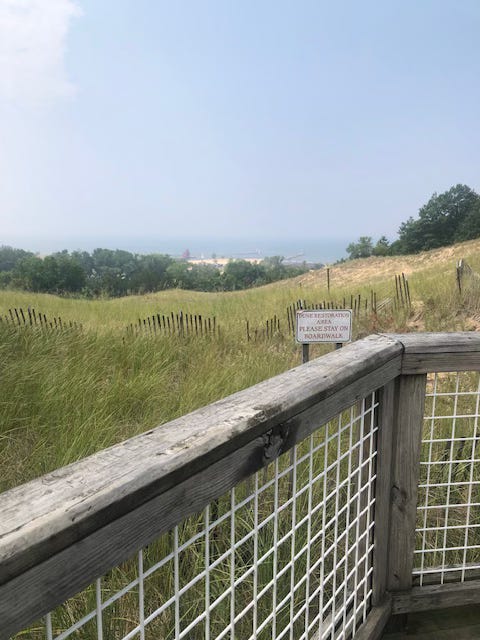
For those unfamiliar, the dune ecosystem is characterized by shifting mounds of sand. It was formed by glaciers and can be parabolic or perched.
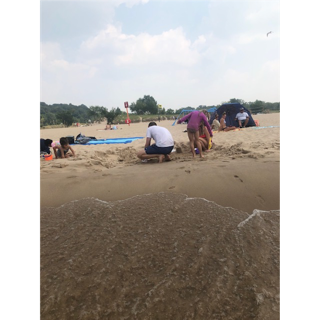
The Holland area features the parabolic dunes which extend all the way to the shore and provide beautiful beaches.
.
We did more hiking in the Sleeping Bear Dunes, perched dunes with some rigorous and beautiful hikes.
Some trails are easier than others and well stabilized. This is a National Park after all.
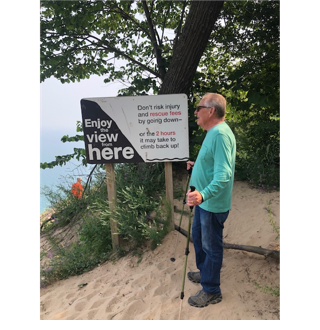
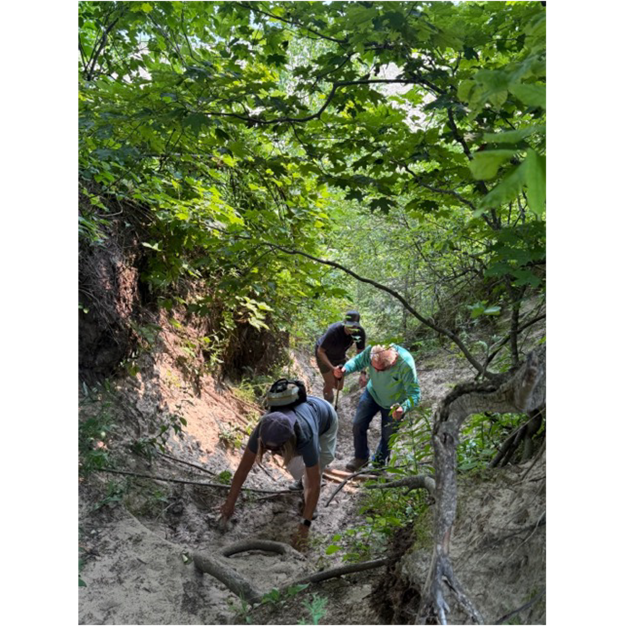
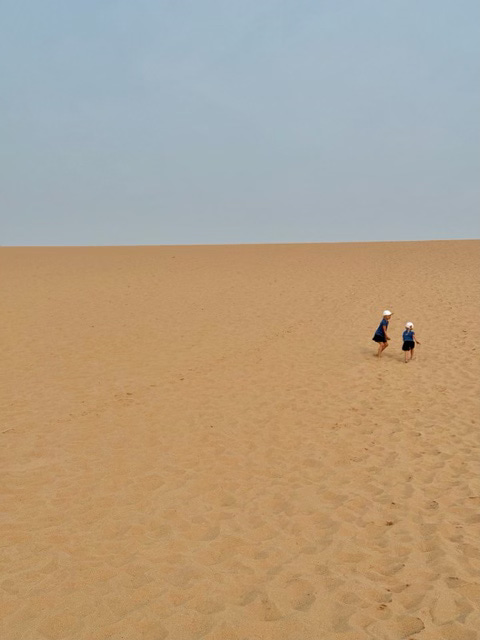
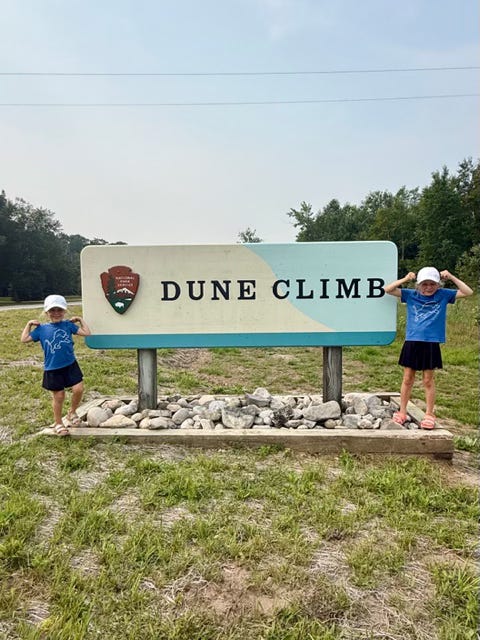
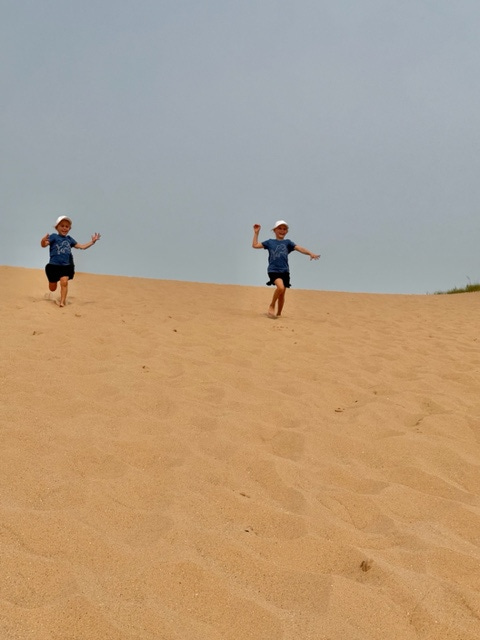
The dunes range from 200 to 450 feet tall (on the Dune Climb shown in the next photos. Don’t go down if you can’t climb up. Sand isn’t easy to climb on because it isn’t stable. If you need a rescue, the rate is rumored to be $3,000. Here I am below (front), displaying my dune climbing skills.
We made it back after taking a less easy path.
The most challenging hike was the “double dunes” or as it is officially called, Dune Climb. Not all of us participated but for those who did, the two plus hour walk rewarded them with an otherworldly view and a fun run to the bottom.
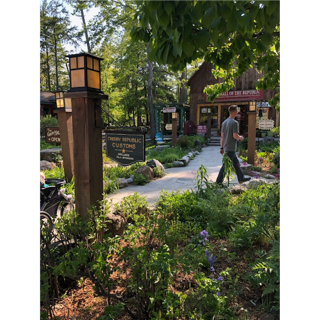
After a day of duneing, stop by Cherry Republic, for a large assortment of cherry products, ice cream and sit down casual dining.
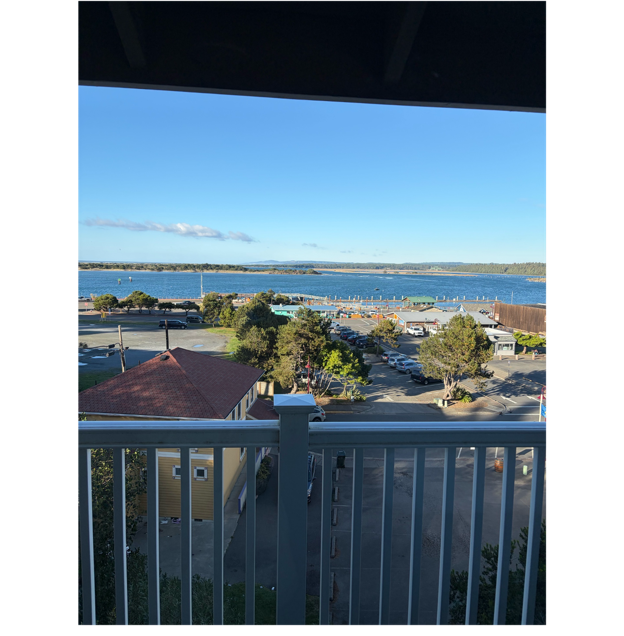
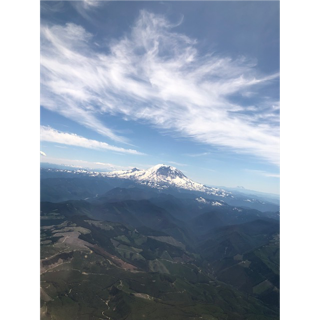
No, I don’t mean Washington DC, I recently took a trip to the Pacific Northwest to hang out with family in Washington State. I was greeted by a view of Mt. Rainier, an active, but beautiful, volcano.
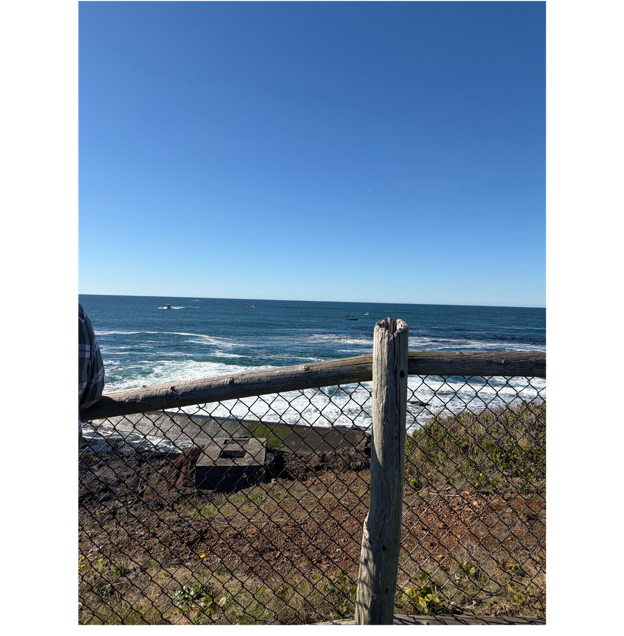
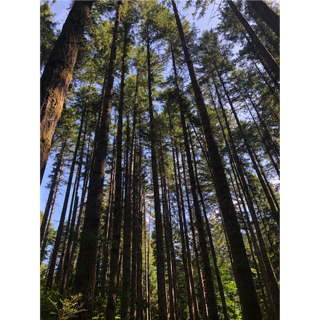
There’s plenty to do in the Pacific Northwest and we stuck close to where we were staying on Hood Canal. If you haven’t been to the area, it’s filled with hiking trails and for a Midwesterner, otherworldly sights.
We travel with kids, and this was a kid friendly, casual adventure—no passport or make-up required. As a bonus, we encountered few mosquitos.
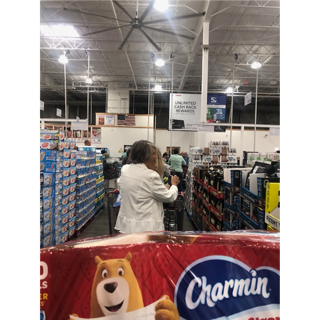
We stocked up at Costco and a seafood market,
My dreams of a new life owning a family oyster farm were dashed when I actually had an oyster slider (not shown above. )The water is cool enough that Vibrio was unlikely (more of a Florida thing) but I won’t be doing it again.
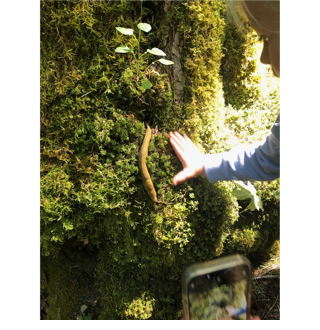
We started our hiking at Guillemot Cove. The kids were delighted by the stump house and all the baby crabs on the shore. It’s the dry season right now but we managed to see a few banana slugs.
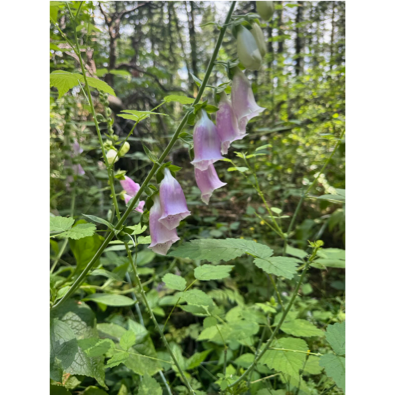
This area had lots of toxic but pretty foxglove.
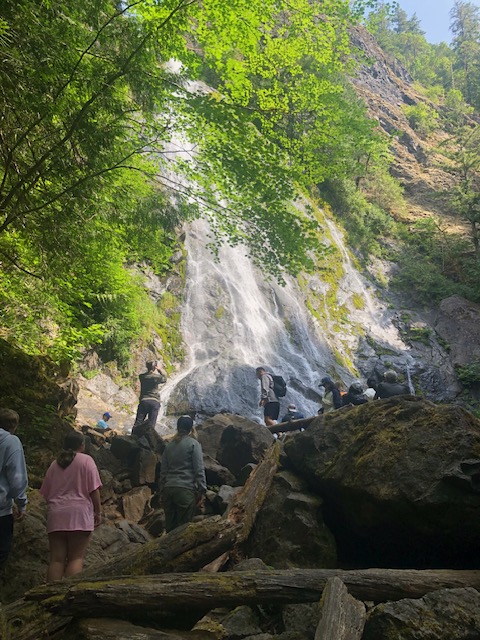
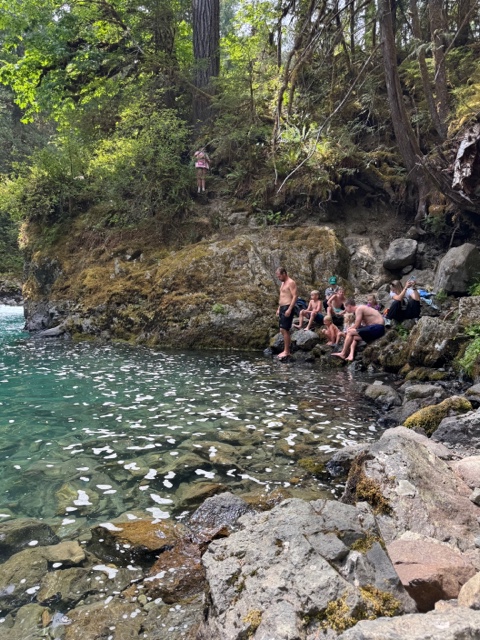
The next day we traveled to Ranger Hole Trail and saw a glacial waterfall. Some of us took a cold plunge. I did not.
.
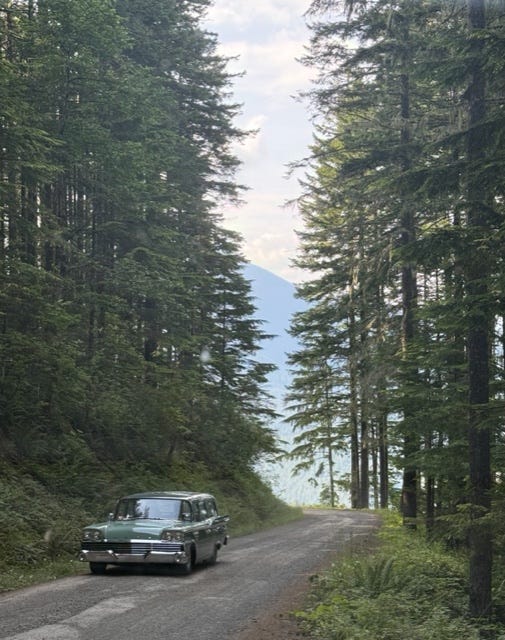
From there we traveled to Mount Walker to look across Hood Canal, a western lobe of Puget Sound, and view the eastern Olympic mountains and Mt. Rainier. It was a narrow, bumpy road to the top. My DIL captured this brave classic car ascending.
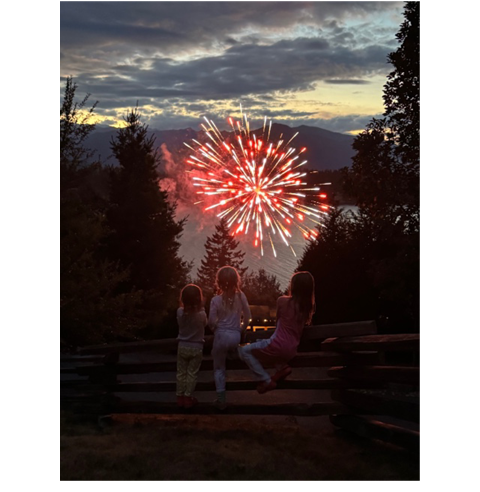
We celebrated the 4th of July in a very US way, with fireworks and unexpectedly viewing a protest. One child didn’t know why ICE would be dangerous.
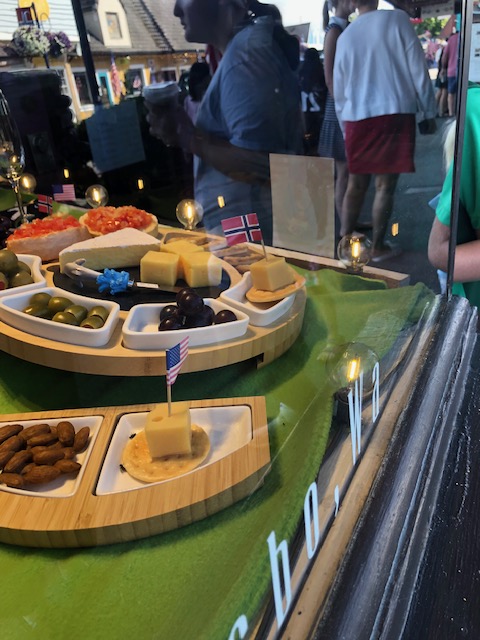
And let’s be honest, why would we achieve independence from a mad king with divine rights, only to let flies die around our cheese?
The following day, we hiked a small portion of the vast Olympic National Park, viewing Lake Cushman and hiking at Staircase for yet another cold plunge and a climb on a downed Western Cedar.
(The following week, this area was closed due to fire.)
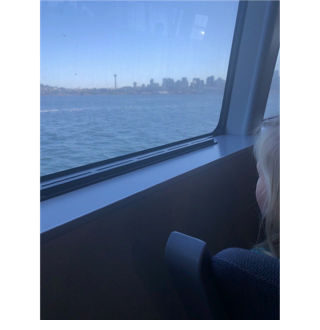
We ended our trip by taking a commuter ferry (from Bremerton) to Seattle for sightseeing and shopping. One of the kids thought the ferry ride was the best part.
Here are a few other details, should you wish to avoid the weak dollar and just stay in the country for an upcoming vacation to Washington. We used the All Trails app to find our hiking spots and our trails were designated as easy. That doesn’t mean they were flat or rock free. We flew into SeaTac and rented a car. The nearest big town was Silverdale. Washington has no income tax but other taxes, including gas taxes, make up for it. I’m not a fan of this tax structure but look at all this beauty ready to be publicly accessed!
Sadly, I returned to Iowa to find out the state was abandoning one of the last shreds of public lands. Outdoorsy folks here have to leave to get satisfaction. I bet every Iowan knows someone who is going to Canada, Michigan, the Smokies, or the West Coast this summer. Meanwhile, I’m back in Iowa itching my new mosquito bites and cursing the stressful corn sweat. Once again, the kids are turning to their screens. Hopefully, Iowa will get new leadership, and our state will stop taking things from the public to reward the private.
Remember 2002, when Getting’ Hot in Herre was popular? This song’s claim to fame in my mind was when my pre-teen and his friends called a radio station to request a song and this is what they asked for.
This song could be the theme song for a new generation because, yes it is getting Hot in Herre and unlike in the song, taking off all our clothes isn’t going to be enough.
How will this heat affect us?
When the weather heats up, people tend to drink more rose wine. They also commit more violent crimes.Some are due to youths out of school but also because of the discomfort heat causes. “Hot weather increases body temperature, which in turn increases heart rate and blood pressure. Increased blood pressure and heart rate can lead to discomfort, which researchers attribute to the correlation between high heat and increased anger and violence.”
People make poor decisions when it is hot, and this is exacerbated by sun exposure. Working in the sun decreases attention and vigilance, probably due to increased skin temperature. The body’s attempt to cool the skin robs the brain of oxygen. Added heat affects the hippocampus—responsible for memory and learning. Heat can break down the blood brain barrier, making people more vulnerable to drugs, pollution, and oxidative stress. Over time, this will lead to brain inflammation and permanent cell death. Heat increases the risk of suicide and epileptic seizures. Women have more problems regulating heat due to biological and physical factors. They have a greater connection between brain hemispheres which makes them more vulnerable to brain heat stress. (citation)
Heat exhaustion is an extreme manifestation of the effect of high temperatures-above body temperature of 98.6 F or 37 C- on the brain. “When the weather is hot and dry, the body becomes dehydrated, the blood thickens, and the heart may not be able to pump enough oxygen to the brain. Additionally, the human brain burns up 20 percent of the body’s energy and therefore needs to dissipate heat efficiently. In hot and humid conditions, sweating cannot cool the body and brain enough. This can lead to heat exhaustion, which has symptoms such as weakness, dizziness and headaches and, in extreme cases, heat stroke—which can then trigger delirium and loss of consciousness. A significant fraction of heat stroke survivors suffer neurological complications.” (citation)
As temperatures rise and people work in the heat, they risk Kidney disease. Intense labor in extreme heat is one of the major drivers of heat related kidney disease. Those disproportionally affected include rice farmers, construction workers, and miners. Climate change will increase the prevalence of chronic kidney disease throughout the world.
Botox is an injection made from purified botulinum toxin, a protein derived from a bacterium called Clostridium botulinum. This bacteria is widely found in nature including in dust and notably in an aquatic, anerobic environments, such as found when plants or animals, including algae decompose. Many living things, alga, and invertebrates, are not harmed by this toxin. Fish and water birds are generally immune but can be killed by high concentrations of it. Pollution encourages its growth. (citation)
In most warm-blooded animals, it produces muscle paralysis which can cause death. It is associated with eating poorly preserved food, often caused by the spores which resist high temperatures associated with cooking. Farm animals can get it from spoiled hay or silage. (citation)
In medicine, when extracted from algae, purified, and administered in controlled doses, the toxin becomes a treatment ranging from wrinkle reduction to alleviating certain medical conditions like chronic migraines, crossed eyes, and other muscle problems. (citation)
Botox works by temporarily blocking nerve signals to the muscles where it is injected. This process prevents the targeted muscles from contracting, paralyzing them, which smooths wrinkles caused by repeated facial expressions like frowning or squinting. Effects typically last three to six months, after which the muscles regain their activity. However, repeated Botox injections can train the muscles to stop working, banishing the wrinkles but causing sagging and skin damage.
There’s another wrinkle to this whole Botox thing: people who are “too beautiful” can be seen as less trustworthy. This is one reason the occasionally unattractive photo of a politician probably doesn’t inflict much harm.
No one wants to be reminded of the advancement of old age, and being older can set you apart from the rest of society, so the Botox trend is understandable. The other day, my granddaughter studied me—with no makeup—finally said, “When you are really old and have no teeth, I’ll give you popsicles.”
The last time I saw my grandmothers, I’d stopped by on my way to a conference. We shed tears upon parting which became lonely sobs in the car. I didn’t know it was the final good-bye but the poignancy of the moment, the raw humanity, the love and advancing loss, the tenderness and the sorrow, has stuck with me forever since. I’m not sure why some of our leaders are so inhumanly calloused, but I for one, will be watching their brows and voting for empathy.
The US became strong by investing in science. Now it will lose ground to China. Cuts to agencies like NOAA, the CDC, and EPA will leave the average citizen less able to protect themselves. Is the intent of this to create a crisis or to set up another expense we all must shoulder such as private weather information or a medical treatment? I’ve got to wonder, especially given the assault on science.
Fortunately for the rich people, they’ve found a workaround: fund politicians and set up phony news sources (including the White House itself) to spread lies about science and to top it off, fire scientists and defund education. They are well on their way to becoming the deities they think they deserve to be. After all, lightning does strike twice.
There is so much on my mind right now, I had to take a break from thinking and I had to plant a tree to replace one I lost. The problem is, of course, thinking through what tree to plant took some thinking.
First of all, did I want to plant a tree at all? I live near the hospital, and I do like where I live. The hospital is ambitious but it has a lot of nice trees including ginkgoes, oaks, and apples. Will they someday take my house and kill the tree? Despite this worry, I like being near the hospital. Several members of my family have been in the health care profession and the pulse of the ambulances and medical helicopters is familiar to me, and not as noisy as you might think. When my neighbor got stabbed by his wife, he was quickly saved by the quick emergency responders and ER docs and the hospital was close at hand. He’s back home now, sans wife. Additionally, I’m a short walk from Pella’s beautiful downtown and gardens.
But will the hospital buy up my house someday and cut down the trees? I didn’t want to doom another tree, having recently murdered one.
Several people mentioned how nice my house looked—they hadn’t noticed when the tree blocked the view. I agreed but also found the expanse of yard bare. I pushed through my fears about the hospital someday killing my trees. And since I don’t like to kill my dandelions, I wanted something else out there to detract from them, something medium sized with non-invasive roots.
The city of Pella has a tree planting program, now probably in its final year. They’d pay you back if you planted a desirable tree and followed their rules. Here’s the list of trees and my notes, in case you live in Pella and want to plant a tree.
My friend and neighbor, Elise, provided me with several books about trees and I studied them. I decided on a deciduous tree. Even though most evergreens are mostly non-invasive, they can grow bigger than I wanted for that space. I fixated on the Ironwood (hop hornbeam) and hornbeam. They are varieties of birch, and I liked the photos of their little catkins. Plus, they are strong trees. We all know it’s windy here these days. They were on the Pella tree list.
The problem was, to get paid back I had to buy the tree in town and those two trees weren’t available in town. Oh well, I was focused on these trees now and I’d foot the bill. Elise mentioned a nursery near Des Moines. I thought she said it was in Norwalk but really she’d said Johnston. In any case, I found a place in Norwalk, Bedwell, that had these trees. They even called me back to confirm that yes, they did have hop-hornbeams.
Elise and I, in her pickup, drove to look at the trees. If I had acres of land, I’d fill it with all of the beautiful trees we saw. In the end, yes, I bought a sturdy looking hop-hornbeam with its catkins popping out. Hop-hornbeams are hermaphrodites, monoecious in plant talk, having both male and female on the same tree. We drove it home very slowly.
Elise helped me place it in the yard and a grandchild fond of working out planted it.
Here it is with the planter. As you can see, the removal of the hug tree has left us with a bit of a mess. Fortunately, I don’t mind a mess:
And here are the catkins which are really pollen dissemination devices:
Another neighbor remarked that it was going to be a long time before the tree gets big. I said, “Then someone else can enjoy it.” And that is the true meaning, the, hope, the power, and the promise of Earth Day.
Microsoft word has upgraded to include an AI program called Copilot. Since I potentially will be teaching Short Story Writing next fall, I tried it out to see what I’ll be facing.
As if on cue, the AI suggested a love scene set in a bustling coffee shop. She imagined two characters, both engrossed in their books, colliding as they reached for the same caffeine fix. Their eyes met over a spilt latte, and laughter bubbled up despite the mess. He offered to buy her a new drink, and soon they were deep in conversation, discovering a shared love for obscure sci-fi novels and bad puns. By the time their cups were empty, they had planned their first date to a quirky bookstore downtown. It was a charmingly chaotic start, fitting for a pair brought together by a combination of coffee stains and serendipity.
Next, I asked it to complete a scene in the novel I’m working on. I’ve been quite slow about writing this one, Book 2 in a series. I asked it to write about two characters resistant to taking off an article of clothing. The program captured details from the previous scene, in which the main character, Gormley, is sent to work at a fertilizer plant as a clandestine spy. She meets a worker with his jaw covered and suspects it has much to do with the poison and attempts to get a closer look.
Co-pilot came up with this:
His eyes narrowed with suspicion.
“This isn’t about trust,” I sighed, frustrated. “It’s about your health. Isn’t that more important?”
He shook his head stubbornly. “Not if it means exposing myself to you. I’ve got my pride. I won’t compromise my dignity.”
It’s stock, uncreative, and clearly favoring the enemies to lovers trope, but it did give me an idea of expanding the scene. Again, it’s sparse, like Hemmingway, and standard but I’ve read things like this. For someone wanting to stay in the “familiar” it’s okay.
Next, I asked it to add humor. Here goes;
He hesitated, then slowly, as if it pained him, he tugged his collar down to reveal his jaw. The sight was shocking. His skin was red and inflamed, with patches of what looked like chemical burns.
I winced, trying to keep my reaction to myself. “That looks serious. How long has it been like this?” I asked, reaching out to examine the area without touching it.
“A few weeks,” he admitted, his voice a mix of embarrassment and defiance. “I thought it would get better on its own.”
“Clearly, it hasn’t,” I said, frowning. “You need more than just salve. This looks like a reaction to something you’re exposed to regularly. Does your work involve handling chemicals without proper protection?”
He nodded reluctantly. “Yeah, you could say that. But I can’t afford to be picky about jobs.”
“Well, you need to be careful. This could get worse,” I said, my concern evident. “Have you tried using any protective gear?”
He shrugged. “Sometimes, but it gets in the way.”
“Not as much as this,” I pointed out, gesturing to his jaw. “You need to take care of yourself. Your health is more important than any job.”
He sighed, the weight of my words sinking in. “I know, but it’s not that easy.”
“Nothing worthwhile ever is,” I said softly. “We’ll start with the salve and see if it helps. But you need to promise me you’ll be more cautious. Deal?”
He nodded, a small smile lifting the corners of his mouth. “Deal. Thanks for the salve. And for the advice.”
“You’re welcome,” I said, relieved. “Now, let’s get you patched up.”
As I applied the salve to his jaw, I couldn’t help but feel a sense of hope. Maybe this was the first step in helping him turn things around. Only time would tell.
I highlighted a part which resembles something I might have written it on my own, minus the part about nodding. Nodding, shrugging, sighing, and smirking are overused gestures, small smiles. They are, it seems, part of AI writing.
I asked Copilot to add setting details. It reads as if Copilot has taken in a lot of steam-punk but it does add some vague and foreboding details of setting, which is good. It also adds more head nodding and it is really fixated on the “time will tell” line. In other words, AI brings about a sense of conformity to writing. One problem is, young writers often dwell in the land of conformity as they seek to fit in with their peers. Conformity lessens disagreement, or in the case of an author, lessens the chance of a bad review. As with Copilot, conformity teaches social expectations. Conformity can teach social norms. It can lead to a polarized society with an in and an out group, and in the case of Copilot, dampen aesthetics and bring about a certain dullness. Where are the figures of speech? Where is the originality?
We stepped outside the small clinic, the harsh midday sun beating down on us. The air was heavy with the unmistakable odor of chemicals, a constant reminder of the fertilizer plant nearby. The plant’s towering silos and sprawling pipelines dominated the landscape, casting long shadows over the surrounding area.
A group of workers in worn-out overalls and stained gloves trudged by, their faces etched with fatigue. The rhythmic hum of machinery filled the air, punctuated by the occasional hiss of steam or the distant clang of metal.
“You work here, don’t you?” I asked, breaking the silence.
He nodded, his gaze fixed on the plant. “Yeah, it’s not the best place, but it’s work. And work is hard to come by these days.”
As he walked away, disappearing into the sea of workers, I hoped he would take the advice to heart. The plant loomed behind him, a symbol of both livelihood and hazard. Only time would tell if he could find a balance between the two.
I fully subscribe to the Edgar Allen Poe school of fiction writing, in which you embrace some strangeness. Fortunately, my genre also embraces strangeness. However, I’m sure I’ve already been reading AI generated content in the news especially when it comes to tips such as how to paint your bathroom.
We’ve got a saying in analytical chemistry: an experiment can’t be any better than the sample itself. AI takes samples of writing from on-line content. Meta’s AI has taken two of my novels. For all you thinkers, keep putting out quality thoughts, keep thinking. AI can’t be any better than you are but it can be worse. It can make mistakes and push bad ideas.
Will the conformity of AI make us all less unique and more dulled? Only time will tell.
The White House’s definition of two genders as “a person belonging, at conception, to the sex that produces the large reproductive cell [or] a person belonging, at conception, to the sex that produces the small reproductive cell” has been called wrong and simplistic. It’s outdated and some in high places want to keep the outdated ideas.
Many animals can be both sexes and can have a fluid sexual attraction. The whole notion of binary sexuality is only one form of normal. Why would anyone care? Clearly, this is paving the way to look into our pants and apply discrimination.
We even work against nature in our society. Throughout history, dressing like a woman has been harmful to health. In a gender-biased human society, women spend much more time grooming because they need to look like they will accept pain in order to get male approval. We even have a “conservative bad make-up” trend that’s easy to spot and doesn’t look great close up. In fact, it’s based on pageantry and can be easily replicated for drag shows. It’s part of the reason people go to drag shows and pay for it—the pageantry and recognition that gender roles are kind of funny. Maybe drag shows will be banned as well.
In most species, it’s the males who need to preen and look pretty. Why do we think it’s how human women should look? Women are supposed to have kids, run after them, clean the house, and gob on drag-show level make-up. The animal world is laughing at us.
I must explain why we killed the magnificent silver maple tree in our yard. It’s gone, cut down, stump soon to be ground to bits.
It was planted over a half century ago for quick shade and it grew dangerously large. The branches were soft and the roots of were shallow. We were advised to remove it before it plugged the sewer line. Due to their girth, the roots would be difficult to blast away. Not to mention, our sewer line to the street is PVC so the line being plugged would be a good distance away under the street. It might involve digging up the street!
We didn’t prune it until it was elderly, not knowing this could give it a hollow spot or two in the trunk eventually. If someone had pruned it when young, it would have maintained a smaller root volume. It was very close to the house and the driveway. The roots cracked a walkway. We didn’t plant it. My parents did when they owned the house, which we bought from them. I recall watching it grow over the years and thinking it was the equivalent of having a baby elephant.
Part of the reason for removal was the worry about it falling on our house during bad weather. Even the Iowa legislature is admitting it, bad weather has accelerated, as scientists predicted. But instead of doing anything to prevent worse weather, the Iowa legislature has proposed tax free disaster savings accounts. I don’t need a tax break as much as I need them to take steps to keep us safe. I haven’t felt safe with them lately.
I saw danger not only of it dropping big branches but, we were told by an arborist, it was probably going to split down the middle someday. Why did he say this? It also had a lot of branching, along with knot holes fairly low down which meant, eventually, it was going to weaken. Silver maples are among the trees most likely to fall in a storm. If it was in the way back of the yard, it would be tempting to let nature take its course, but it wasn’t. It was in the front yard, closer to the house than the street. The house is old but it’s well-built. The house won out.
The tree had been part of my life for so long, something always there. Because of this, I always took its autumn splendor for granted and don’t seem to have a photo of it.
Here it is in winter, peeking over the house. It’s starting to flower already. The squirrels are going to miss the flowers and seeds, although we have another very large maple in the back yard to keep them busy.
In the neighborhood, several big old trees have been lost to disease or due to sewer line entanglement. One 130-year-old tree was removed because branch fell in a neighbor’s yard during the derecho of 2020. The neighbor freaked out and so did the homeowner. We also removed a sugar maple that was struck by lightning and slowly dying.
The tree’s branches fell with tremendous thumps and sawdust rained like snow. Despite all my rationalization about why this had to be, it made me sad. The tree was fairly healthy. It posed no immediate threat of falling.
The trunk fell with an earthshaking crash and light streamed into my window.
Ironically, the last branch came down on what would have been my Mom’s 93rd birthday. She planted this tree, after she moved to Iowa more than thirty years before the house got air conditioning in 1999. It might have been free from the bank for opening an account. Her childhood home, a place in the Western Michigan country known as Maple Brook Farm, had a similar tree too close to the house. It’s also gone and in fact, the entire farmhouse was bulldozed and replaced.
I want to plant a climate change resistant tree or ornamental tree in its place. That side of the yard is where the somewhat new sewer line runs so whatever goes there should have non-invasive roots—a tree with roots that grow straight down. There are plenty such trees including other maple species, spruce trees, pine trees, hickory, and sturdy oak trees which fill this neighborhood. Smaller fruit and ornamental trees fit the bill. Silver maple is not one of them. We frequently pruned it to avoid windthrow, which occurs if branches and leaves are thrown by the wind and take the roots with them. Still, I became afraid of it as it grew taller. If you are reading this and feeling throat tightening panic about your tree, relax. Call a tree specialist for an opinion. Most trees can be trimmed to safety. And if you aren’t sure what type of tree you have, use an ap such as Picture This. A well-kept tree is way more benefit than risk.
Needless to say, I’ve been second guessing myself. I can only say I didn’t want to be a penniless retired teacher with axed Social Security paying the city to dig up the street to remove tree roots from the sewer. Tree roots can grow even without the tree, so I tell myself that this was the right time. Still, I’m sad about it all.
Tonight, the winds howl around the house, reminding me that some of my actions are simply preparing for storms to come and let’s be honest, they’re coming.
We’re hearing a lot of hot air about efficiency lately and as a concept, efficiency isn’t all bad.
For example, chemists talk about atom efficiency which compares the atoms in the starting materials with those in the product. If all atoms are used in the product and none are left, the reaction has 100% efficiency. This is a way to assess waste in chemistry.
A Twist on the Everyday is a reader-supported publication. To receive new posts and support my work, consider becoming a free or paid subscriber.
When I look for a car, I take fuel efficiency into account. Efficiency is great, isn’t it?
Sometimes it is, but the concept hasn’t always been with us. When and where did this idea come from?
In the 1900s the idea of efficiency, a near worship of it, pervaded society. This idea first came from studies of brewing and of machines. An efficient process lost less heat and did more work. Heat wasn’t lost to the surroundings in an efficient process. For example, an efficient engine got less hot and produces more work. Get your motor running with an efficient engine in 1916.
Thermodynamics began in England with James Joule, the son of a wealthy brewer, who studied thermodynamics but efficiency lurched to life in the juggernaut that was American culture. It even bled into management theory.
Everyone had to work and be useful. The idle rich were a problem. Inefficiency in buildings was a problem. According to literary critic and munitions engineer Hudson Maxim, inefficient prose was a problem as well. Take a look at some of these photos and advertisements.
One Grecian urn, two Grecian urns, three Grecian urns and a fountain. The inefficient lives of the idle rich, women in particular, were held in contempt.
I grew up learning that Hemingway was a great writer. His prose was so simple and unadorned–just like a punch in the gut. There were characters barely described and given names like “the woman.” He was in a word, efficient. Believe it or not, this whole notion came from science and technology.
Hemingway came about his efficient prose in an honest way. He was a war journalist and telegraphed his stories back to the U.S.. The telegraph coded letters as dots and dashes and each one cost money. And with the advent of photography, people didn’t need or want the long descriptions of scenery that punctuated older fiction. They only needed enough to set the mood and ground the fiction.
Today, the century old efficiency movement is still with us. We are told to want writing to be sleek, like an Apple product. Some publishers even remove the Oxford comma. Professor Cecili Tichi called this new prose “machines made of words,” adopting the phrase from poet William Carlos Williams. The photos I’m using are from her book Shifting Gears.
I like machines. I get frustrated with rambling and babbling. But sometimes, I want something more delicious. I want the rush of pleasure from abundant words and the keen insights of metaphors and turns of phrase, the dappled light of a brilliant day as was today.
Forget long, flowery letters. With the invention of the telegraph and telephone, words counted, ten cents for the first ten words and five cents for the next ten words, and communication was instantaneous. People began writing shorter prose as a result of “telegram style.” Today’s text message style is much the same. Write someone a long, embellished text an see how they react. Long sentences aren’t coming back any time soon.
Above: CEO wants to show he’s doing something efficient so he gets rid of people.
Efficiency can be soul sucking, killing inspiration, and innovation. Over-work goes against the Bible. Inefficiency can be as simple as hanging out, building relationships, looking at the sky and wondering. In other words, it can enhance the workplace and our lives.
Consolidation, while efficient, gives the few producers the ability to raise prices, even when not necessary. We already have seen covid and bird flu blamed for egg price hikes, as markets shifted and the types of chickens remained the same, making them even more likely to experience epidemics. And we only need to look at the dinosaurs or pandas and their limited diet to see that bigger and more specialized isn’t always better.
Let’s also considering who is telling us to be efficient. It’s often people who themselves have wasteful private jets, boats, and excessive real estate holdings. Additionally, the release of hot air into the environment is a sign of poor efficiency. It’s where the term for insincere speech comes from. There are a few prominent figures who could take a lesson from efficiency and cool off. All those hot takes aren’t doing any work.
More importantly, society is not thermodynamics. People and other living things are much more complicated than brewing–even if it does involve yeast. Where is the morality in efficiency? When it comes to people, The Bible warns against haste. Applying STEM principals to every facet of our lives won’t make them better, only more stressful. It might even kill us. So embrace those inefficient moments at times, and don’t take personal advice from the opulent hot air emitters. Chill.