HPV —human papillomavirus—has been around a long time. Modern humans possibly even gave it to the Neanderthals. HPV is a category of viruses, some of which cause genital and throat cancers. It’s responsible for most cervical, mouth, and throat cancers. It spreads most easily through sexual contact but can theoretically be spread simply by contact with surfaces. Around 80% of sexually active humans will carry a form of HPV at some point in their lives.
Not all forms of HPV cause cancer, although they do cause warts. Some humans, especially younger people, will clear the virus on their own. Many HPV infections cause no symptoms at all. Sometimes cancer is the first and only symptom. Vaccines for HPV have been available since 2006. They prevent infection from the more deadly, cancer promoting forms of HPV.
Scientists recently discovered that Otzi, Europe’s most famous mummy, carried a deadly form of HPV, HPV 16. Otzi, also known as the Iceman, is 5000 years old, and was discovered frozen in the alps in 1991.
I’m interested in Otzi because a DNA test revealed that he and I had the same mitochondrial DNA. Mitochondrial DNA is inherited from the mother in nearly all animals. Thus, at one point, Otzi and I were related. Otzi and I also, allegedly, have the same mitochondrial DNA as Mary Magdalene.
In an under the radar announcement, the EPA has decided to rebuild the endocrine disruptor screening program. I’m pretty happy about this. It’s an example of the kind of protection I expect from the government.
Endocrine systems, aka hormone systems, are found in all mammals, birds, fish, and many other animals. Hormones are chemical messengers and they regulate many biological processes.
Many modern synthetic chemicals can act as hormones or interfere with their workings. Chemists have blessed us with over 85,000 synthetic chemicals. About 1000 of these are thought to be endocrine disruptors. These chemicals range in use from plasticizers to explosives. The EPA is the agency charged with testing and regulating these chemicals. Testing requirements began in 1998. The idea was to make sure people and animals weren’t being exposed to disruptors. It stalled out and then stopped altogether in 2015. The program is one of those that doesn’t get funded, depending who is in charge of the government. In particular, the EPA staff received little to no support and direction from the Trump Administration.
Why would the average person care at all about endocrine disruption?
Here are a few reasons:
Endocrine disruptors, or EDs, can harm the thyroid. These chemicals can exhaust the thyroid, resulting in conditions such as obesity, heart problems, and insulin resistance. In fact, this harm can begin when a person is a small fetus– your mother’s exposure might give you obesity and fertility problems.
Endocrine disruptors harm testicles, decreasing sperm function and testicular health. Being exposed to disruptors before birth can cause a short testicle to anus distance which is often associated with male infertility. They can also create hypospadias, in which the opening to the penis isn’t at the tip.
Other problems which can result are cancer, including childhood, thyroid, breast, and prostate cancers along with decreased immune function, including a lowered response to vaccines.
The newly announced study focuses on endocrine disruptors found in pesticides. Since the year 2000, data from across the globe has been collected on people living in and near agricultural areas and those employed in agriculture and gardening. These populations experience high rates of birth defects, especially genital defects, along with higher rates of hormone dependent cancers, and poor semen quality. Most prior studies have been epidemiological, meaning they look at overall health of populations.
Although people living and working on and near farms bear a lot of pesticide exposure, people can get exposure from foods and manufacturing sites as well. The chemicals can get into air and water and travel long distances. Besides humans, wild animals are affected by endocrine disruptors. And epidemiological studies take years to complete which is why the new study is needed. (Information comes from this source.)
The new study will systematically look at the pesticide chemicals themselves and screen them for endocrine disrupting properties.
Thirty pesticides will get added scrutiny in this project. The EPA has 403 pesticides to review in total and of this, 86 have enough data to be shown as not concerning. Additionally, 161 look to be safe from endocrine disrupting properties. This study will by no means forbid pesticide usage—it aims to do what the companies did not and test for safety of chemicals widely distributed in our environment.
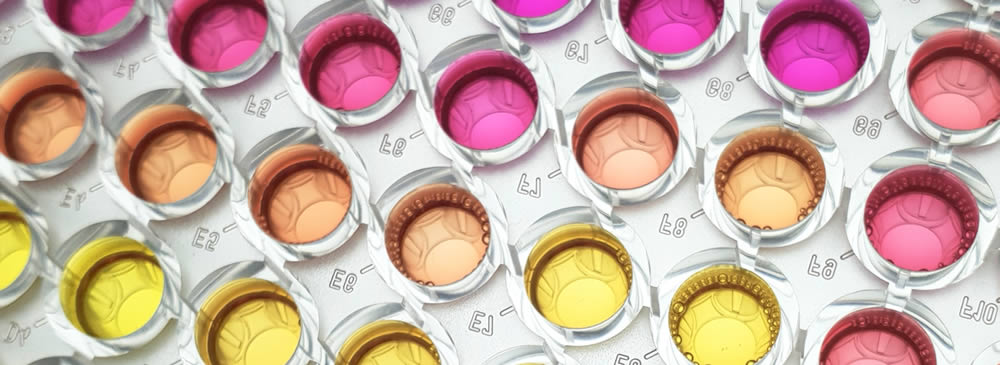
The screening tests mix cells with the possible endocrine disruptors and look for reactions between them. Often times, the chemicals being tested will fluoresce or change color when they interact. This new study will help look at pesticides and their by-products in an efficient way. Getting politicians to care enough to protect us will be a whole different challenge. Thankfully, the Biden administration has begun the process.
In order to keep us safe from synthetic chemicals, we need studies of their safety and most often the government, must do these studies. A color changing or fluorescence screening is an efficient way to look for Eds.



 Catherine Haustein