A scientist’s guide to refrigeration: Will freezing kill bacteria in food?

A well-publicized recall of frozen foods due to bacterial contamination lead a friend to ask a question: why didn’t the freezing kill the bacteria?

My first thought was the somewhat well-known idea (among science types) that freezing doesn’t kill the bacteria, only slows it down. The answer, however, is more complex.

It’s logical to think that putting food into the freezer or buying frozen foods will cut down on the bacteria and thus the food poisoning. However, freezing doesn’t kill the bacteria in foods.Freezing and thawing cycles can reduce the number of bacteria but doesn’t kill them all. Bacteria can respond to freezing by producing a type of antifreeze or by forming a biofilm. The susceptibility of the bacteria to freezing varies across the type of bacteria correlates to the freezing and thawing cycles as well.

In a study of soil bacteria exposed to freezing and thawing conditions, freezing reduced the number of bacteria but did not totally eliminate them. When numerous freezing and thawing events occurred, damage to the bacterial colonies was significant. However, cold-resistant bacteria developed. Quick freezing and thawing reduced bacterial levels less than slow freezing and thawing. This was due to the type of ice formed—slow freezing produces larger ice crystals which are more damaging to bacteria. What does this have to do with a frozen food recall? Consumers don’t like big ice crystals and often additives such as xanthan gum are added to food to prevent them. ( reference here)

Common food related bacterial contamination comes most often from these four horsemen: Campylobacter, E. coli, Listeria, and Salmonella.

Most of the 2025 frozen food recalls have been due to Listeria. Frozen peas and carrotsice cream bars, and the more extensive Chicken Fettuccini Alfredo are recent examples. Listeria is the third most deadly bacterial food toxin here in the US.

Listeria grows best under warm conditions but even continues to grow under refrigeration. It isn’t killed by freezing and in fact, is one of the most freeze resistant bacteria around. Listeria will cause flu-like symptoms and can even lead to seizures since it primarily attacks the central nervous system. It can be deadly for older people, immunocompromised folks, and infants. The mortality rate is as high as 20% in vulnerable populations. It causes miscarriages and stillbirths, too.

Food poisoning is the most common way to encounter Listeria. Listeria is a persistent bacteria and commonly found in slaughter houses, especially on conveyor belts for carcasses. Listeria forms a biofilm, often working symbiotically with other bacteria to strengthen this pervasive film. (reference)

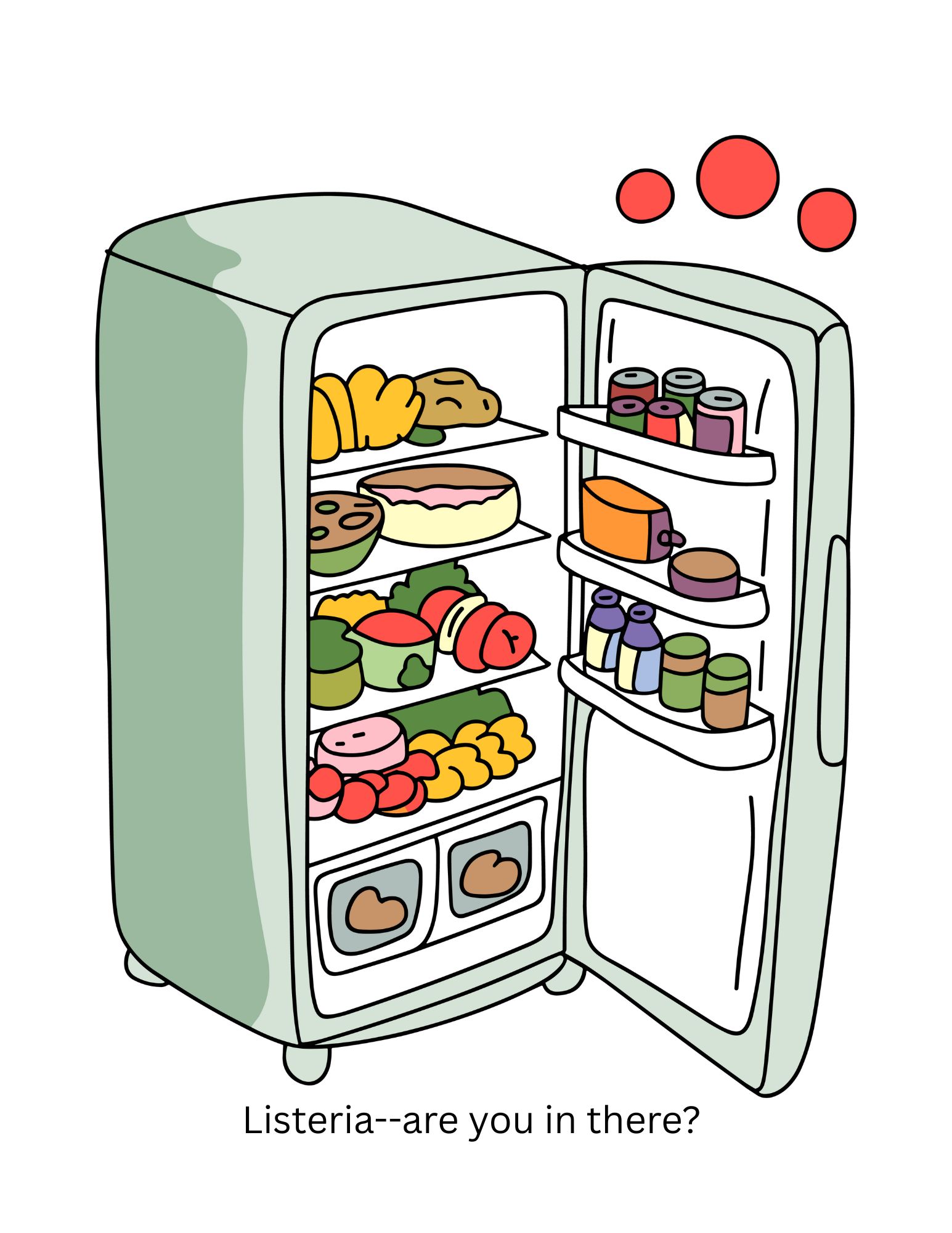
One way for you to keep ahead of Listeria is to keep your refrigerator clean and to wipe down surfaces and cutting tools after use. Washing produce with warm water before eating it is another recommendation, although produce is not major carrier for Listeria. Use leftovers within three to four days and don’t just let them sit in there until you find time to throw them out. Toss them immediately—they could contaminate other food. Be sure to cook foods thoroughly, even leftovers. (reference)

I don’t eat lunch at work anymore but I’m a fan of frozen burritos. What should I do? A food thermometer is more than a luxury–it’s an important safety tool. Don’t simply reheat a frozen meal. Make sure to cook your frozen meals that least 165 degrees F. Steam should rise from the product. If storing a heated up frozen meal, put it in the refrigerator within two hours and eat it promptly.

Besides contaminated frozen foods, Listeria can be found in soft cheeses and raw milk products. (reference) It’s even been found in ice cream bars this year. Sugar helps it grow! Vinegar and low pH can discourage it. 

Taking a step back, frozen foods have only been around for about 100 years. They were introduced to Western society by Clarence Birdseye, who leaned techniques from Inuit and Metis communities in Labrador, where he appropriated their knowledge while failing to acknowledge their contributions. Beginning with frozen fish in 1922, Birdseye moved on to become synonymous with frozen foods, thanks to the quick freeze technique he learned in Canada. Freezing prevents food waste. About 30% of all food in the US becomes waste while only 6% of this is frozen foods. Freezing food preserves nutrients, especially Vitamin C and when used within a year.

One recent study found that improper storage and handing of foods was responsible for the most food poisoning deaths. (reference) For mass produced foods, food safety regulations and well-paid, well-trained employees are an essential part of food safety. (reference) The infamous deli meat Listeria outbreak was linked to poor plant hygiene. It’s important to have proper regulations and to enforce them. However, e have taken a step backwards since November 2025. Thanks to lobbying from the grocery and restaurant industries, our food is now inspected less and outbreaks not tracked.

The frozen food industry has a new trick for keeping ahead of bacteria without adding additives to prevent large ice particles–Freezing in the presence of a magnetic field to reduce ice formation. However, the effect on bacterial formation hasn’t yet been determined.

As for me, I’m making ample use of my food thermometer and cleaning out my refrigerator! 

Iceman, HPV, and Me

HPV —human papillomavirus—has been around a long time. Modern humans possibly even gave it to the Neanderthals. HPV is a category of viruses, some of which cause genital and throat cancers. It’s responsible for most cervical, mouth, and throat cancers. It spreads most easily through sexual contact but can theoretically be spread simply by contact with surfaces. Around 80% of sexually active humans will carry a form of HPV at some point in their lives.

Not all forms of HPV cause cancer, although they do cause warts. Some humans, especially younger people, will clear the virus on their own. Many HPV infections cause no symptoms at all. Sometimes cancer is the first and only symptom. Vaccines for HPV have been available since 2006. They prevent infection from the more deadly, cancer promoting forms of HPV.

Scientists recently discovered that Otzi, Europe’s most famous mummy, carried a deadly form of HPV, HPV 16. Otzi, also known as the Iceman, is 5000 years old, and was discovered frozen in the alps in 1991.

I’m interested in Otzi because a DNA test revealed that he and I had the same mitochondrial DNA. Mitochondrial DNA is inherited from the mother in nearly all animals. Thus, at one point, Otzi and I were related. Otzi and I also, allegedly, have the same mitochondrial DNA as Mary Magdalene.

In 2023, the Iowa Legislature passed a law that removes the state mandate to teach about HPV in health class. Iowa is first in the nation in head and neck cancers, related to HPV infections. Iowa also lags behind other states in the rate of vaccination for HPV. The average rate in the US is around 60% of kids vaccinated but in Iowa, we hover around 40%.

Death from HPV related cancer is no joke. It’s too bad our state legislature is not promoting a vaccine to prevent it, taking us back at least 5000 years.

A person in a caveman garment

AI-generated content may be incorrect.

COVID Vax Mess

Do you ever get mad at people who voted for Trump? He said he was going to make a mess of our healthcare system, giving RFK permission to go wild about anything health related except oil.  And yes, it is a mess right now. Take for example, getting a COVID vaccine.

For a while, some states required a doctor’s permission to get a COVID vaccine. That restriction was removed this month. At least, I think so.

I don’t live in one of those states that formed a health alliance to counteract the madness. Anyone over 6 months of age can get a COVID shot there. So naturally, getting a COVID shot became a challenge for me, even though I am old enough. I asked about getting a COVID vaccine at my local Hy-Vee. They said they had no information but might in a month. Hy-Vee by the way has donated to politicians, including “mean Ken.”

I then called the pharmacy associated with my local hospital, PRH. They said they didn’t know what was going on. After all that happened with COVID, the CEO of PRH has donated to Republicans recently

However, I went to Costco in West Des Moines and got a COVID shot. I’m over 65 so eligible and had no trouble getting one, except that Costco was packed. 

I’m one of those people who so far doesn’t suffer much from COVID. I’m a teacher and exposed to many germs and have had frequent colds. Since COVID is a killer cold, it’s possible my body knows how to fight it. I had it once and thought it was just a weird fever. I had a test kit about to expire, I used it, and yes, it was COVID. I believe I might have had COVID once before, in February 2020. My research students and I felt “kinda weird” and although I never had a fever, I had strange dreams.

Sadly, the government is no longer offering free COVID tests. What they are offering is photos of Trump along with a theory that scientists don’t support. How unprofessional! And untrustworthy. And unhelpful, at least to the average citizen. I’m going to have a hard time trusting other information. There was even a little Fauci bashing on a government websiteThis kind of thing has gotten the CDC attacked and someone killed.

Even if you don’t get very sick, COVID persists in your body. It’s aging. It can promote heart disease. It can harm veins. Long COVID is most prominent in young people and women. It can even cause anemia and heavy, painful periods.

How to debunk COVID misinformation? There’s a study for that.

Here’s an example.

Myth: COVID doesn’t affect kids. 

Reality: Pediatric COVID is more common and harmful than people think! Memory problems and anxiety are some of the persistent symptoms. 

What isn’t a myth? This year, COVID confusion abounds. I wonder why? 

Midyear Science News

1.Many men wish to control their fertility, and a few new products might be on the market soon. Some work by changing hormone balance, including a cream, and a newly developed pill might block the gene that directs sperm production. The later has just passed human safety standards in clinical trials.

2. July was one of the worst flooding seasons in global history. At last 134 pople were killed in Texas, 34 in China,69 in the Himalayas, and in early August, hundreds were missing in Pakistan and India.  The chemistry of why flash flooding is getting worse is outlined here. “Though floods naturally occur, increased moisture and rising temperatures from climate change are in some cases supercharging storms. According to a study in Nature, between 2020 and 2100, the size of the global population exposed to flood hazards is estimated to increase by 15.8%.”

3. Uncontrolled rage has sweeping societal consequences. A new study confirms that childhood aggression that persists into adulthood can be caused by early trauma. “Trauma during childhood can alter brain circuits that regulate attention and impulse control, increasing the risk of pathological aggression and cognitive decline in adulthood.”

5. The mysterious Shroud of Turin has captivated Christians for a long time. Is it really the burial garment laid over Jesus following his crucifixion? Radiocarbon dating has been inconclusive.  Now, the art world steps forward to suggest that the image was made from a statue and not a body.

6. Trump is dismantling science in the US . Why do we have a government that no longer serves the people and our futures? Because this is the will of at least one political party. This story dominates much of the science news so far this year.

7. mRNA vaccines are being badmouthed for no good reason. A detailed analysis of their promises and mild perils is presented here.

8. As the saying goes, we are done with COVID but COVID is not done with us. Since the government no longer approves COVID vaccines for many of us despite CDC warnings, the pharmaceutical industry is coming up with a new anti-viral drug, ibuzatrelvir. (Perhaps not in time. The COVID Vaccine even faces a ban.)

Still Hot in Here

Remember 2002, when Getting’ Hot in Herre was popular? This song’s claim to fame in my mind was when my pre-teen and his friends called a radio station to request a song and this is what they asked for.

This song could be the theme song for a new generation because, yes it is getting Hot in Herre and unlike in the song, taking off all our clothes isn’t going to be enough. 

How will this heat affect us?

When the weather heats up, people tend to drink more rose wine. They also commit more violent crimes.Some are due to youths out of school but also because of  the discomfort heat causes. “Hot weather increases body temperature, which in turn increases heart rate and blood pressure. Increased blood pressure and heart rate can lead to discomfort, which researchers attribute to the correlation between high heat and increased anger and violence.”

People make poor decisions when it is hot, and this is exacerbated by sun exposure. Working in the sun decreases attention and vigilance, probably due to increased skin temperature. The body’s attempt to cool the skin robs the brain of oxygen. Added heat affects the hippocampus—responsible for memory and learning. Heat can break down the blood brain barrier, making people more vulnerable to drugs, pollution, and oxidative stress. Over time, this will lead to brain inflammation and permanent cell death. Heat increases the risk of suicide and epileptic seizures. Women have more problems regulating heat due to biological and physical factors. They have a greater connection between brain hemispheres which makes them more vulnerable to brain heat stress.   (citation)

Heat exhaustion is an extreme manifestation of the effect of high temperatures-above body temperature of 98.6 F or 37 C- on the brain.  “When the weather is hot and dry, the body becomes dehydrated, the blood thickens, and the heart may not be able to pump enough oxygen to the brain. Additionally, the human brain burns up 20 percent of the body’s energy and therefore needs to dissipate heat efficiently. In hot and humid conditions, sweating cannot cool the body and brain enough. This can lead to heat exhaustion, which has symptoms such as weakness, dizziness and headaches and, in extreme cases, heat stroke—which can then trigger delirium and loss of consciousness. A significant fraction of heat stroke survivors suffer neurological complications.” (citation)

As temperatures rise and people work in the heat, they risk Kidney disease. Intense labor in extreme heat is one of the major drivers of heat related kidney disease. Those disproportionally affected include rice farmers, construction workers, and miners. Climate change will increase the prevalence of chronic kidney disease throughout the world.

Heat strikes the world’s poor much more harshly. Above 35 degrees C ( 95F) heat mortality due to heat stroke, dehydration, and heat exhaustion increases along with heat related respiratory problems. The elderly, children, babies, and even fetuses, are also more vulnerable. Worker productivity slows in the summer as well.  It also raises costs for businesses, puts stress on infrastructure, and increases the spread of damaging mold and fungi.

Since the release of Getting’ Hot in Herre, global temperatures have increased about 0.66 C or a little over 1 degree Fahrenheit. The oligarchs have decided that a hotter climate is a price worth paying for enriching themselves. There will be consequences. Meanwhile, Nelly is debuting a new reality show this month.

The sweet ring of leaded glass and other dilemmas

You’ve no doubt read the news, in the US our mental health has been damaged by lead. Not only does lead lower IQ and damage areas of the brain that control aggression, it disrupts thyroid function. Lead impairs brain growth and poisons neurons. It contributes to ADHD. It encourages cancer. Even teen-pregnancy has been linked to lead exposure. The poorer a person is, the more likely they are to have a high blood lead level but this hasn’t always been so. 

In the Colonial US, higher lead levels were found in bones of wealthy slave owners in the US than were found in their slaves. Why? Lead was used in white pottery glazes such as in dishes. Lead was applied amply to decorative pottery such as Delft. It was also used in pewter. Slaves, who had to make their own plates and had no access to leaded glazes. It was also used extensively in white paint. It was used in pipes. It gives a “ring” to wine glasses as shown below.

I used lead test swabs to follow up and the ringing glass tested positive, along with several older glassware items and a new dish from Italy. This photo shows the items with positive lead swabs, shown by a pink color.

 I decided to test all my glassware and cull the leaded items. I am a depository for hand-me-downs from the ancestors and some of them were far too materialistic. I needed some sort of reason not to keep all this burdensome stuff. The bag of leaded items will go to a recycling center or maybe a few will be used for laboratory demonstrations. 

Of note, lead in glassware was banned in the late 70s. An Alvin and the Chipmunk glass bearing a date of 1985 was lead free.

For more about lead testing at home, here is a great article

My question is: are we all brain damaged? The answer very well could be yes for those born not so recently. The reason is not our glassware as it is about leaded gasoline. And perhaps guns.

The link between lead and crime has been published everywhere from science journals to  Forbes to Mother Jones. Violent crime in the United States rose in the 1960s, spiked in the 90s, and has plummeted since then. Why did the generation associated with peace signs and hippies turn out to be the most violent in recent history?  Many scientists point to one reason–lead in gasoline during their childhoods.

Lead in the form of tetraethyl lead was added to gasoline in the 1920s in to help electric igniting engines operate more smoothly. It worked well despite one problem with it. The additive was known to cause “madness” and hallucinations. This had been first documented in the 1850s. In fact, workers at the first lead additive manufacturing plant died after going “looney.” Despite this, the additive worked effectively and was cheap so the companies that made it pushed forward to add it to gasoline. It was temporarily banned in parts of the nation–not the Midwest however–making the breadbasket of our nation a rich source of environmental lead. With careful marketing and lobbying by the companies that made the additive, the health effects were down-played and the new technology was given a clean bill of health by the U.S. Surgeon General in the late 1920s. Thus, leaded gasoline was heavily used across the United States for over forty years.

Analytical chemistry upped its game in the 1970s, finding that the lead persisted in the environment and in people. Many states began phasing it out in the 70s and 80s. It was banned state by state and eliminated from car gasoline in 1996.  But since it is an element, lead can’t break down into anything simpler. Scientists believe that everyone over 40 in the U.S. has some degree of lead poisoning. Lead can be cleared from blood by the body, but it resides in bones for 30 years or longer. Lead still lingers in many locations in the U.S.– thanks to corroding old pipes, old paint and even old cans and glassware. 

It’s no surprise that lead is found at high levels in shooting ranges. These are regulated by OSHA and there are rules demanding clean up but these rules are not always followed. People who work at firing ranges & those who go to firing ranges often show elevated blood lead levels, especially if the ranges are indoor ranges. Air propelled bullets and those with copper jackets can help reduce the lead exposure to an extent. Another precaution is not allowing children to engage in gun play. However, gun ownership itself is a hazard for children of gun owners and increases their blood lead levels. Yes, an adult having a gun is linked to higher blood levels in their kids.

Eating meat shot with lead is also dangerous, especially for children. Adding vinegar to game shot with lead bullets makes the lead even more soluble in the meat and increases the toxicity. However, lead in gasoline has been by far the most egregious contributor. As use was curtailed, lead in blood began to drop dramatically. Crime did as well.

Fuel for small airplanes contains lead and they are one of the major contributors to lead pollution today. However, lead in gasoline has been by far the most egregious contributor. As use was curtailed, lead in blood began to drop dramatically. Crime did as well.

The tragedy of lead poisoning in the Unites States is a sad tale of greed and lack of regulation. Every one of us has suffered to some extent from exposure to lead. The cautionary take-away is that when it comes to chemicals, we need more regulations and more care taken before approving them for use in consumer products.

Thank you to all my subscribers for supporting and reading my work.

The beautiful ring of leaded glass

2024 Science News

2024 science news

Trust in science has fallen, not across the globe but in the US among conservative people This began during the pandemic when people decided to trust their conservative politicians instead of infectious disease experts. Project 2025, the sweeping right-wing blueprint for a new kind of U.S. presidency, will sabotage science-based policies that address climate change, the environment, abortion, health care access, technology and education...and even cancer research. The government funds 40% of basic science, science done to advance knowledge and improve health, and the research is shared with the public and other scientists.  Now, scientific research is on the chopping block.

The US isn’t the only country giving science funding an ill-advised overhaul. New Zeeland is cutting research into social sciences, favoring research into the economy. This raises concerns because this fundamental discipline is an important tool for understanding social cohesion.

Bad news for Boomers and Gen X—the lead from leaded gas probably has made you a little psychotic.

Gun violence is declared a public health crisis.

Consolidation in the fertilizer industry, made worse when Koch Industries bought the taxpayer subsidized Wever Fertilizer plant,

Fructose promotes tumor growth by helping the cancer cells make their outer membranes. Fructose is a simple sugar found in fruits.  Its use in the form of high fructose corn syrup, developed in 1964, has been criticized for causing pollution as well as detrimental health effects such as high cholesterol and obesity. Now we know that it helps promote tumor lipid growth. Lipids are fatty compounds like cholesterol and triglycerides. Lipids make up the membranes around all cells, including cancer cells. Shouldn’t some forms of fructose carry a warning label?

There’s mounting evidence that pesticides, plastics, and other pollutants harm our bones & butterflies & cause heart problems. Are we going to demand more regulations or will we accept our fate?

Getting some new pavement, as I did? It causes 8% of the world carbon emissions. Good news ahead! Climate friendly concrete will soon become available.

Unwashed men pose danger. You may have heard of VOCs, volatile organic compounds, which are released into the air from synthetic products such as carpet, gasoline engines, and paint. These compounds can cause health issues ranging from irritation, headaches, organ damage, and cancer. And, when men don’t wash, they emit them.

Climate change caused 150 billion dollars in damage in 2023, yet few people in the US think they will be affected. Is weather becoming more severe? Yes, it appears so. Hurricane Helene, which washed out a highway I take when I visit my daughter, was an example of heat fueled rain and winds.

Bird flu marches on, with new testing done on milk to ensure safety and track the disease. Pasteurization keeps milk safe. Yet here in Iowa, one of the dirtiest states ever, the bird flu is concentrating and progressing due to lack of any regulations.

Speaking of tests, a blood test to supplement the more invasive colonoscopy has been approved. With colorectal rates skyrocketing, this test should make getting screened easier, although it will not entirely replace colonoscopies.

Plenty of unhealthy synthetic chemicals have been banned this year, including those used in the airline and dry cleaning industries.

The US delayed acting on the Covid -19 virus, setting the vaccine development back. Are you one of those people who think the virus came from a lab? Scientists don’t agree with that.

Humans have predicted eclipses for thousands of years and yet, it’s a pretty tricky calculation. On April 8, many in the US came together to view an Eclipse. Thanks Mother Nature!

How we got The Pill

I remember the birth of the birth control pill much like many might remember Kennedy’s assassination or the Challenger blowing up. No, I wasn’t ready for birth control, but my mom sure was and as the oldest, I was deeply sensitive to her frustrations as a being a housewife who was frequently pregnant. My mom had gone to college and chosen one of the three paths available for women who were educated:  secretary, nurse or teacher. She was a teacher who had to quit her job when she was pregnant with me because showing might tell the students that she’d been up to something.  As the oldest, I must have been her confidant because I do remember her in the living room of our split level in Rockville, Maryland, sun streaming onto the wood floors,  saying how happy she was that she could just take a pill and not have kids anymore. Having some symptoms of eldest daughter syndrome at a young age, I shared her joy.

To quote Janis Joplin, my mom was searching for a life very different than what she had known. It was common for girls to look at their future in horror back then–marriage and children. That’s it. My mom was a loving mother, but being a homemaker bored her and I could sense it.

Wanting to control family size is nothing new. Some of the earliest records from ancient Egypt contain recipes for birth control, primarily soaking lint in substances such as honey and acacia leaves putting it you know where. Nursing for many years was also a suggested method. The techniques, put forth by female doctors and midwives, were for avoiding overpopulation and keeping women beautiful. The later was the most important. Interestingly enough, scientists today link an increased biological age to each pregnancy a woman endures.

The ancient Greeks had different approaches from eating pomegranate seeds (hello Persephone, you had no choice but to eat that seed), infanticide and encouraging sex outside of marriage with someone of your own sex. This may seem shocking now, but they were very aware that again, the right family size was best for society.

Women in Aztec societies ate wild yams as birth control and Native Americans used it as a tea to prevent contraception. (Note: don’t try this at home. The Pill much improves the safety and effectiveness of this home remedy.) This plant contains one of the first substances studied as a possible birth control pill ingredient.

A hundred years ago, working with plant steroids was a large push in scientific research, with numerous substances isolated from plants such as soybeans. One, cortisol and cortisol related compounds, was effective in treating rheumatoid arthritis and was hailed as a miracle cure in the 1940s. Scientists were sure that other modified steroids would provide other miracle cures, including ability to control ovulation.

The birth control pill chemically manipulates a person’s natural sex hormones. Sex hormones are steroids with a somewhat simple structure, many of them being almost identical and similar to the structure of cholesterol. The basic secret behind the birth control pill is progesterone. This hormone is secreted during pregnancy to prevent ovulation and thicken the uterus. This tells the body to prepare for pregnancy and to stop further ovulation- no eggs are prepared to be released.

Progesterone alone is not a great birth control pill material. It breaks down in the stomach too quickly. Scientists set about to modify progesterone so that it could survive being taken as a pill.

Why were people so keen on a birth control pill? For one thing, public health measures including sanitation, vaccines, and antibiotics resulted in fewer childhood deaths. As a result, family size was burgeoning, and children were becoming a financial burden. There were many reasons given for developing the birth control pill : to control population, to free women to enjoy sex, and to help people out of poverty. Many people working on and funding he perfect birth control formula  the noble goal of making sure that every person born was wanted and had a chance in life. They knew, as we do now, too many children too close together depletes the mother who is more likely to have complications in childbirth with subsequent pregnancies.  In some cases, women were fitted with IUDs to ”correct uterine problems.” Although often illegal, diaphragms were also women-centric birth control tools. However, the idea of a discretely taken medication which didn’t require insertion of a foreign object, an idea as old as time, was appealing

Katharine McCormick worked in conjunction with Gregory Pincus to find the ideal hormone. She provided funds to Pincus, an animal reproductive biologist, searching for the perfect progesterone like molecule. He tested several forms of progesterone on lab animals in a ramshackle lab in Massachusetts

When it was time for human trails, ethical and practical dilemmas raised their ugly heads. Finding test subjects wasn’t easy. One of the goals was to have ovulating and intelligent women who could be relied on to carry out the instructions to take the medication each day. It wasn’t so easy to find healthy people who wanted to take a new medication, especially when birth control still had a stigma for some.

Women in Puerto Rico stepped up to the task. Many of them thought there was no escape from poverty if they had more than a couple children. Abortion was legal fairly common in Puerto Rico. Many women from the mainland went there to have a “San Juan weekend.”  A pill was a better alternative. The trials were successful in preventing pregnancy, however, shady, in that the women who volunteered were not clearly informed that this was an experimental drug not previously tested on humans! In fact, one of the people involved in setting up the trial was on a mission to sterilize woman in Puerto Rico because he saw them as unfit. I can look back at this time and see why people can be afraid of a new medication. Thankfully, some guidelines have been put into place including informed consent. (Hopefully, these won’t be tossed out.)

Another set of patients was found at the Worcester State Hospital for the Chronically Ill, a mental asylum. Many of the women here were suffering from abuse and domestic conditions that were not bearable. Even men there were given the prototype pill to see how men reacted. These trails were a flop because no one was having sex.

The development of the Pill can fill a book. A formulation containing Norethynodrel and dubbed Enovid was developed. It was eventually called The Pill. Selling the idea to religious and social groups was a struggle. Some called it un-natural, and others compared it to permitting sexual gluttony, like being able to constantly eat cake. People still considered talking about birth control to be “porn” as shown in this comic where the woman has not used birth control but her children are naked inside the home, showing how anything can be called porn.

The first woman take The Pill, before it gained FDA approval, was not a poverty stricken over-worked mother but a well-to do white woman, Sue Dixson Searle, daughter of the Searle family, whose pharmaceutical business developed the formulation.  After two closely spaced babies, she decided she wanted a break and was happy to be “a pioneer.”  She lived to 91, dying recently in 2022, after being an enthusiastic patron of art of public lands in the Chicago area and a mother to three and great grandmother to many.  It must have been a disappointment to those who saw birth control as a means to reduce “undesirables” in the population, but the reason Dixson took the Pill harkens back to birth control in ancient Egypt—she wanted to be happy.

On Oct 1, 1957, the Pill was offered clandestinely to women since birth control was still a felony in 17 states.

The Pill was approved by the FDA May 6, 1960.

By 1965, more than 6.5 million women were taking the Pill. In 1963 the Dial Pak was introduced.

Slowly laws against contraception fell, and it was fully legalized in 1972.

 In 2023, a non-prescription alternative, the OPill was approved for purchase.

Yellow dots on blueAs for my mom, she stopped having babies and went back to work as a teacher and she and my dad resumed an active social life. People just want to be happy and limiting family size to your individual choice can make it easier.  But who knows, laws restricting its use may arise again.

The two books in the center of this snapshot of part of my messy bookcase were sources for this blog.

Zoonose News–what’s happening with the latest bird flu?

I don’t know about you but when the last pandemic swept the globe, I got the distinct impression that beyond my family, nobody cared much about my health. Here in Iowa, masks were panned and mask mandates were banned. The unfortunate were ordered back to work. With that in mind, I decided to brush off my notes from the last round of bird flu and give them an update just in case this hits the fan. 

Perhaps you recall your biology and remember that a virus can’t reproduce on its own. It needs a host which was why lockdowns and masks were recommended during COVID.

Bird flu, H5N1, is an Influenza A (A as in Avian).

According to the CDC, Influenza A viruses are divided into subtypes based on two proteins on the surface of the virus: hemagglutinin (H) and neuraminidase (N). These are parts of the virus (which has a protein coat) that are easily identifiable—like IDing a perpetrator. If you want to read more about that here is a great description.  Let’s just say that it takes a matchup of the right H and N to allow a virus to invade your cells, hijack them, create “baby” viruses, and pop the cells to release more viruses. That is how we get the designations such as H1H1 (the deadly Swine flu) and H2N3 (another virulent strain.) Both of these, and all influenzas, are zoonoses–infections that can move between people and animals.

Viruses reproduce by injecting themselves into cells and replacing cellular RNA with their own. Influenza A, the type deadly to humans, has eight strands of RNA bundled together to give our poor cells a big punch.

Here is an old diagram showing Influenza A and the animals it traditionally infects. Note that H5N1is deadly to humans.

IIB-InfluVennZa-2018-1276x2-1

I’d like to thank https://informationisbeautiful.net/licensing for letting me use this for free because fewer than 100,000 people visit me here.

Many Type A viruses can creep between birds, humans, pigs, and now dairy cows. Birds are a significant reservoir of these viruses. Shore birds including geese are potent carriers, but other types of domestic and wild birds also carry viruses. For example, N3 viruses are associated with ducks.

Most Influenza A viruses originate in birds. However, not many of these are easily transmitted to people. They can be transmitted to pigs. Pigs are a common go-between for viruses. It’s known that pigs act as mixing vessels for bird flu which is hard for people to catch and pig flu which people can catch.  They create new types of flu inside them–possibly in their snouts/respiratory tracts. There are several other diseases that can be transmitted between pigs and people. Pigs and humans can infect each other with influenza more easily than birds and humans can infect each other. Pig flu symptoms are much like human flu symptoms.

Iowa is home to about 24 million hogs, with the number of hogs per farm on an ever-uphill climb. Iowa also has over 60 million chickens. What could go wrong?

We can’t directly blame the chickens. Domestic pigs get wild bird viruses when birds interact with water used for cleaning their housing facilities that sits on site in ponds. In my opinion, deregulation of such facilities is asking for a new flu to be created.

A new wrinkle is that the Influenza A virus is now being detected in dairy cows and catsDairy farms in Texas noticed that the cows were producing less milk, and thick milk, and all of the farm cats died. The cats are thought to have eaten infected birds or more likely unpasteurized milk. H5N1 has also been found in marine mammals and foxes.

A few people have gotten it, probably from air born particles laden with virus. Although the most recently infected person got a mild case from a cow, over half of humans infected with H5N1 die of respiratory illness. The good news is, it isn’t transmitted from one human to another, at least not yet. The main worry is that a mutation will allow this.

It is suspected that ground up chicken waste may have introduced the flu virus into dairy cattle. Did you know that dairy cattle in the US are fed “poultry litter” – a mix of poultry excreta, spilled feed, feathers, and other waste scraped from the floors of industrial chicken and turkey production plants? I sure didn’t! Besides being found in cattle and cats, this new bird flu breaks the global flu pattern where influenzas originate in Asia.

Now, Iowa will be welcoming even more cows to the state. And besides eating a diet of chicken scraps, dairy cattle are often shipped across the country, posing more of a threat of the spread of bird flu.

I’m remaining cautiously optimistic that once spring migration of wild birds is over, this flu will die down. I really don’t want to run on a wing and a prayer like we did during COVID. In the meantime, there are a few ways to get ahead of this potential pandemic.

1.     Cook eggs thoroughly. Make sure any chicken is cooked to an internal temperature of 165 degrees. The virus will denature and fall apart.

2.     Don’t let raw meat touch surfaces in your kitchen. Cook beef to at least 145 degrees. (Note: bird flu has not been found in non-dairy herds.)

3.     If cats can get the virus from unpasteurized milk, maybe you could too. Best avoid it. (Pasteurized milk has been found to contain virus particles.) 

4.     Move to California. Buy California products. California regulates the use of bird litter as food.

5.     If you use manure as fertilizer and it isn’t from a bag that reads “composted”, compost it. Please don’t use raw manure. It can burn plants and introduce pathogens.

6.     Wash hands and clothing after touching birds. You should also wear a facemask.

7.     Hunters should field dress birds while wearing protective equipment.

8.     Take an antiviral medication if you are sick after contact with infected animals. Bird flu symptoms in humans are similar to other flu symptoms: fever, fatigue, sore throat, muscle aches, vomiting, diarrhea, stuffy nose.

9.     Other states have taken steps such as killing infected birds and limiting cattle shipments.

10.  If you have pet birds, keep them in a covered location away from wild birds and wild bird droppings. Know the symptoms of bird flu: sudden death, nasal discharge, low appetite, limited egg production, soft or misshaped eggs, diarrhea, and un-coordination. It’s wild bird migration season so keep flocks inside and covered up.

The Secretary of Agriculture, Tom Vilsack, points out that cattle appear to be recovering from bird flu quite quickly. And no one has yet to become sick from consuming contaminated foods, at least as far as we know. Vaccines for cattle and humans (although we might not have enough) are being developed.

No doubt if COVID had affected farm animals, our governor might have taken it more seriously. She really was a dumb-dumb when it came to that virus. Or should I use the term bird brain?

Biden cares about your ED

Endocrine disruptors face government scrutiny

Unlike Trump, BIDEN CARES ABOUT YOUR ED

In an under the radar announcement, the EPA has decided to rebuild the endocrine disruptor screening program. I’m pretty happy about this. It’s an example of the kind of protection I expect from the government.

Endocrine systems, aka hormone systems, are found in all mammals, birds, fish, and many other animals. Hormones are chemical messengers and they regulate many biological processes.

 Here’s a cute poster of all of our hormones and what they do.

Many modern synthetic chemicals can act as hormones or interfere with their workings. Chemists have blessed us with over 85,000 synthetic chemicals. About 1000 of these are thought to be endocrine disruptors. These chemicals range in use from plasticizers to explosives. The EPA is the agency charged with testing and regulating these chemicals. Testing requirements began in 1998.  The idea was to make sure people and animals weren’t being exposed to disruptors. It stalled out and then stopped altogether in 2015. The program is one of those that doesn’t get funded, depending who is in charge of the government.  In particular, the EPA staff received little to no support and direction from the Trump Administration. 

Why would the average person care at all about endocrine disruption? 

Here are a few reasons: 

Endocrine disruptors, or EDs, can harm the thyroid. These chemicals can exhaust the thyroid, resulting in conditions such as obesity, heart problems, and insulin resistance. In fact, this harm can begin when a person is a small fetus– your mother’s exposure might give you obesity and fertility problems

Endocrine disruptors harm testicles, decreasing sperm function and testicular health. Being exposed to disruptors before birth can cause a short testicle to anus distance which is often associated with male infertility. They can also create hypospadias, in which the opening to the penis isn’t at the tip. 

They can cause ADHD which can be passed on to offspring, even grandchildren,  of people exposed.

Other problems which can result are cancer, including childhood, thyroid, breast, and prostate cancers along with decreased immune function, including a lowered response to vaccines.

The newly announced study focuses on endocrine disruptors found in pesticides. Since the year 2000, data from across the globe has been collected on people living in and near agricultural areas and those employed in agriculture and gardening. These populations experience high rates of birth defects, especially genital defects, along with higher rates of hormone dependent cancers, and poor semen quality.  Most prior studies have been epidemiological, meaning they look at overall health of populations. 

Although people living and working on and near farms bear a lot of pesticide exposure, people can get exposure from foods and manufacturing sites as well. The chemicals can get into air and water and travel long distances. Besides humans, wild animals are affected by endocrine disruptors. And epidemiological studies take years to complete which is why the new study is needed.  (Information comes from this source.)

The new study will systematically look at the pesticide chemicals themselves and screen them for endocrine disrupting properties.

Thirty pesticides will get added scrutiny in this project. The EPA has 403 pesticides to review in total and of this, 86 have enough data to be shown as not concerning. Additionally, 161 look to be safe from endocrine disrupting properties. This study will by no means forbid pesticide usage—it aims to do what the companies did not and test for safety of chemicals widely distributed in our environment. 

The screening tests mix cells with the possible endocrine disruptors and look for reactions between them. Often times, the chemicals being tested will fluoresce or change color when they interact. This new study will help look at pesticides and their by-products in an efficient way. Getting politicians to care enough to protect us will be a whole different challenge. Thankfully, the Biden administration has begun the process. 

(Photo below is from this test site.)

In order to keep us safe from synthetic chemicals, we need studies of their safety and most often the government, must do these studies. A color changing or fluorescence screening is an efficient way to look for Eds.