
A well-publicized recall of frozen foods due to bacterial contamination lead a friend to ask a question: why didn’t the freezing kill the bacteria?
My first thought was the somewhat well-known idea (among science types) that freezing doesn’t kill the bacteria, only slows it down. The answer, however, is more complex.
It’s logical to think that putting food into the freezer or buying frozen foods will cut down on the bacteria and thus the food poisoning. However, freezing doesn’t kill the bacteria in foods.Freezing and thawing cycles can reduce the number of bacteria but doesn’t kill them all. Bacteria can respond to freezing by producing a type of antifreeze or by forming a biofilm. The susceptibility of the bacteria to freezing varies across the type of bacteria correlates to the freezing and thawing cycles as well.
In a study of soil bacteria exposed to freezing and thawing conditions, freezing reduced the number of bacteria but did not totally eliminate them. When numerous freezing and thawing events occurred, damage to the bacterial colonies was significant. However, cold-resistant bacteria developed. Quick freezing and thawing reduced bacterial levels less than slow freezing and thawing. This was due to the type of ice formed—slow freezing produces larger ice crystals which are more damaging to bacteria. What does this have to do with a frozen food recall? Consumers don’t like big ice crystals and often additives such as xanthan gum are added to food to prevent them. ( reference here)
Common food related bacterial contamination comes most often from these four horsemen: Campylobacter, E. coli, Listeria, and Salmonella.
Most of the 2025 frozen food recalls have been due to Listeria. Frozen peas and carrots, ice cream bars, and the more extensive Chicken Fettuccini Alfredo are recent examples. Listeria is the third most deadly bacterial food toxin here in the US.
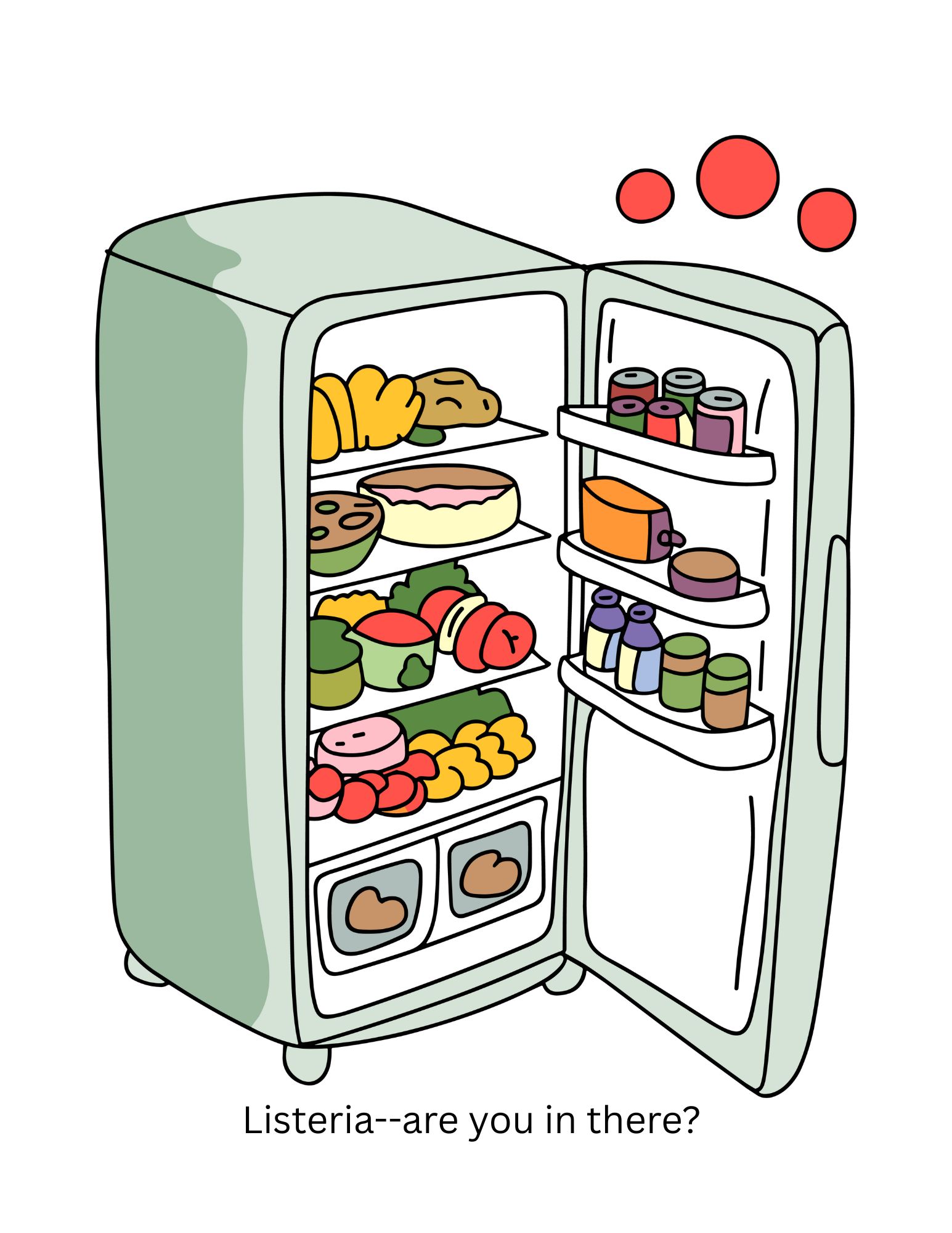
Listeria grows best under warm conditions but even continues to grow under refrigeration. It isn’t killed by freezing and in fact, is one of the most freeze resistant bacteria around. Listeria will cause flu-like symptoms and can even lead to seizures since it primarily attacks the central nervous system. It can be deadly for older people, immunocompromised folks, and infants. The mortality rate is as high as 20% in vulnerable populations. It causes miscarriages and stillbirths, too.
Food poisoning is the most common way to encounter Listeria. Listeria is a persistent bacteria and commonly found in slaughter houses, especially on conveyor belts for carcasses. Listeria forms a biofilm, often working symbiotically with other bacteria to strengthen this pervasive film. (reference)
One way for you to keep ahead of Listeria is to keep your refrigerator clean and to wipe down surfaces and cutting tools after use. Washing produce with warm water before eating it is another recommendation, although produce is not major carrier for Listeria. Use leftovers within three to four days and don’t just let them sit in there until you find time to throw them out. Toss them immediately—they could contaminate other food. Be sure to cook foods thoroughly, even leftovers. (reference)
I don’t eat lunch at work anymore but I’m a fan of frozen burritos. What should I do? A food thermometer is more than a luxury–it’s an important safety tool. Don’t simply reheat a frozen meal. Make sure to cook your frozen meals that least 165 degrees F. Steam should rise from the product. If storing a heated up frozen meal, put it in the refrigerator within two hours and eat it promptly.
Besides contaminated frozen foods, Listeria can be found in soft cheeses and raw milk products. (reference) It’s even been found in ice cream bars this year. Sugar helps it grow! Vinegar and low pH can discourage it.
Taking a step back, frozen foods have only been around for about 100 years. They were introduced to Western society by Clarence Birdseye, who leaned techniques from Inuit and Metis communities in Labrador, where he appropriated their knowledge while failing to acknowledge their contributions. Beginning with frozen fish in 1922, Birdseye moved on to become synonymous with frozen foods, thanks to the quick freeze technique he learned in Canada. Freezing prevents food waste. About 30% of all food in the US becomes waste while only 6% of this is frozen foods. Freezing food preserves nutrients, especially Vitamin C and when used within a year.
One recent study found that improper storage and handing of foods was responsible for the most food poisoning deaths. (reference) For mass produced foods, food safety regulations and well-paid, well-trained employees are an essential part of food safety. (reference) The infamous deli meat Listeria outbreak was linked to poor plant hygiene. It’s important to have proper regulations and to enforce them. However, e have taken a step backwards since November 2025. Thanks to lobbying from the grocery and restaurant industries, our food is now inspected less and outbreaks not tracked.
The frozen food industry has a new trick for keeping ahead of bacteria without adding additives to prevent large ice particles–Freezing in the presence of a magnetic field to reduce ice formation. However, the effect on bacterial formation hasn’t yet been determined.
As for me, I’m making ample use of my food thermometer and cleaning out my refrigerator!

 Catherine Haustein