

If you want to understand how living populations work together, a walk through Big Rock Park to view the spring ephemerals will do it. Kristen Siewert and Tom Rosberg each lead a foray into the Big Rock Park bur oak savanna this spring to help nature lovers do just that.
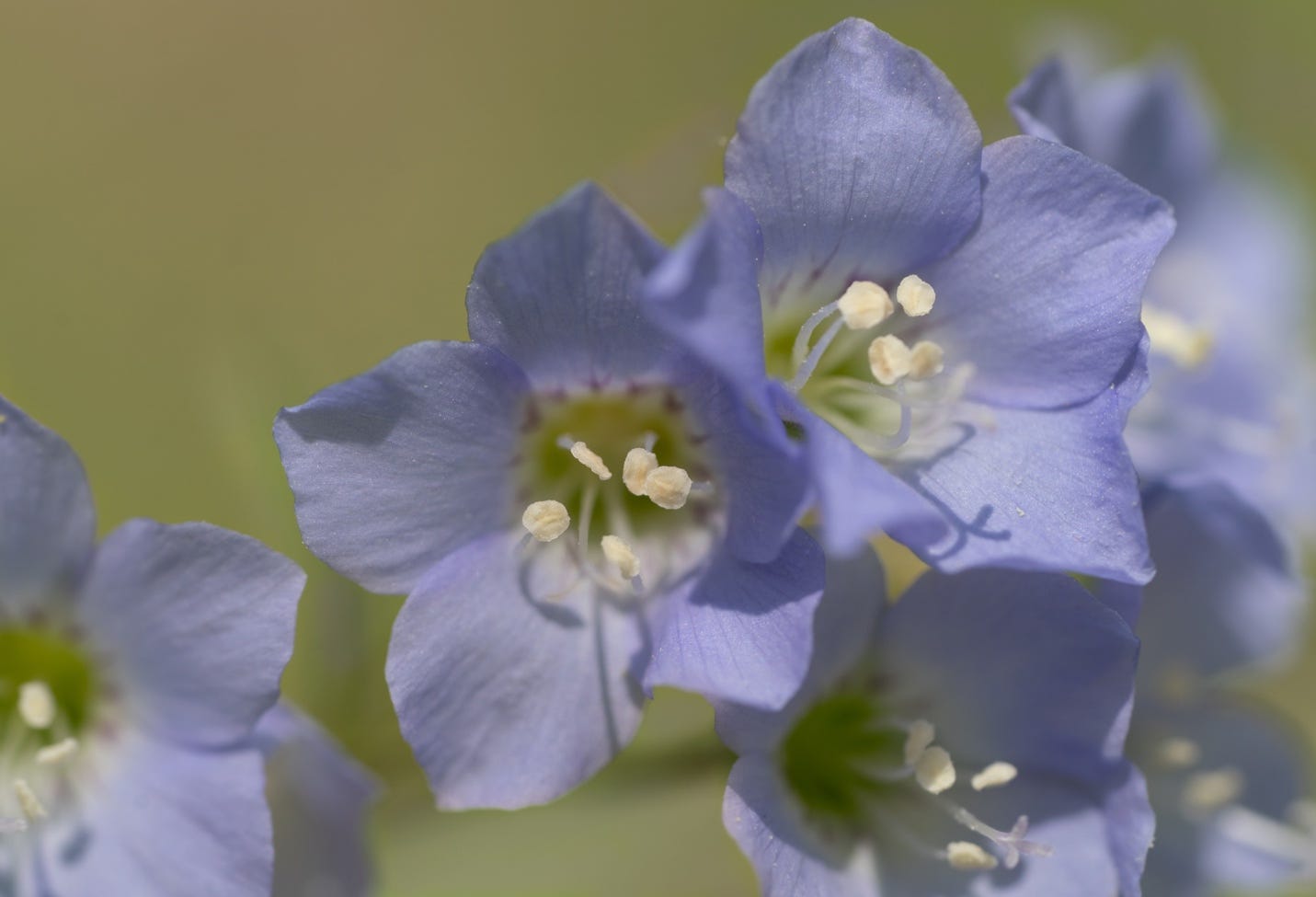
Pictured above: Jacob’s ladder by Kayla Lindquist.
Although the trips were only a few weeks apart, the flowering plants weren’t the same because they were, well, ephemeral. Ephemeral plants have a brief blooming season, popping up sequentially and providing pollinators’ first food. They almost take turns flowering and as Tom Rosberg explained, this means they don’t compete with each other for pollinators. When the trees leaf out and the forest light dims, they stop flowering.
Spring ephemerals are an important source of food for bees and butterflies. The red admiral butterfly winters here in Iowa, making these first flowers of spring necessary for their survival. A popular ephemeral with them is the Spring Beauty.
Garter snake eyes a Dutchman’s Britches. Copywrite of Kayla Lindquist Photography©
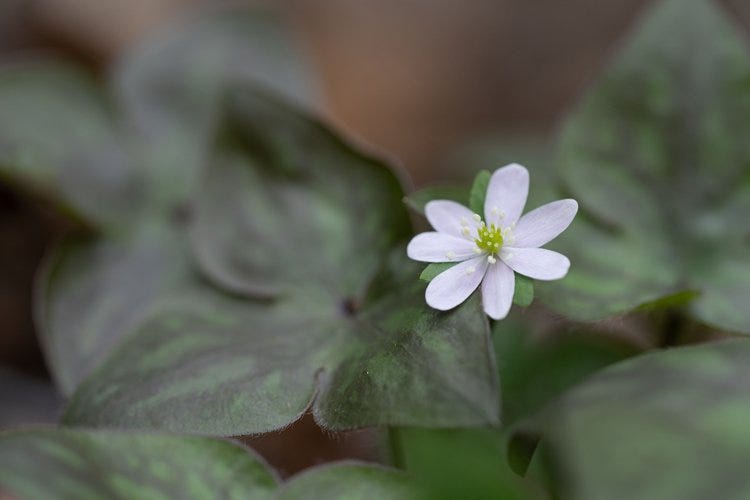
Copywrite of Kayla Lindquist Photography© https://www.kaylalindquistphotography.com/midwest-plants
Spring beauty and Dutchman’s britches, shown above, are plants which rely on ants to disperse their seeds. They produce seeds containing elaiosomes which are oil-rich packets of nutrient which act as smorgasbords for ant. The ants carry the seeds, discard them, and feed their larva the elaiosomes. You can read more about this here.
Spring beauty can be white or pink and variations in-between, including white with pink stripes. Pink seems to be the favorite for pollinators and those with pink pollen are especially prized by miner bees. Deer and rabbits prefer the pink flowers as well.
Some of the earliest spring ephemerals are the trout lilies. Trout lilies are so name because of their leaves resemble trout swimming in a stream. They are listed as being“special concern” and threatened species.
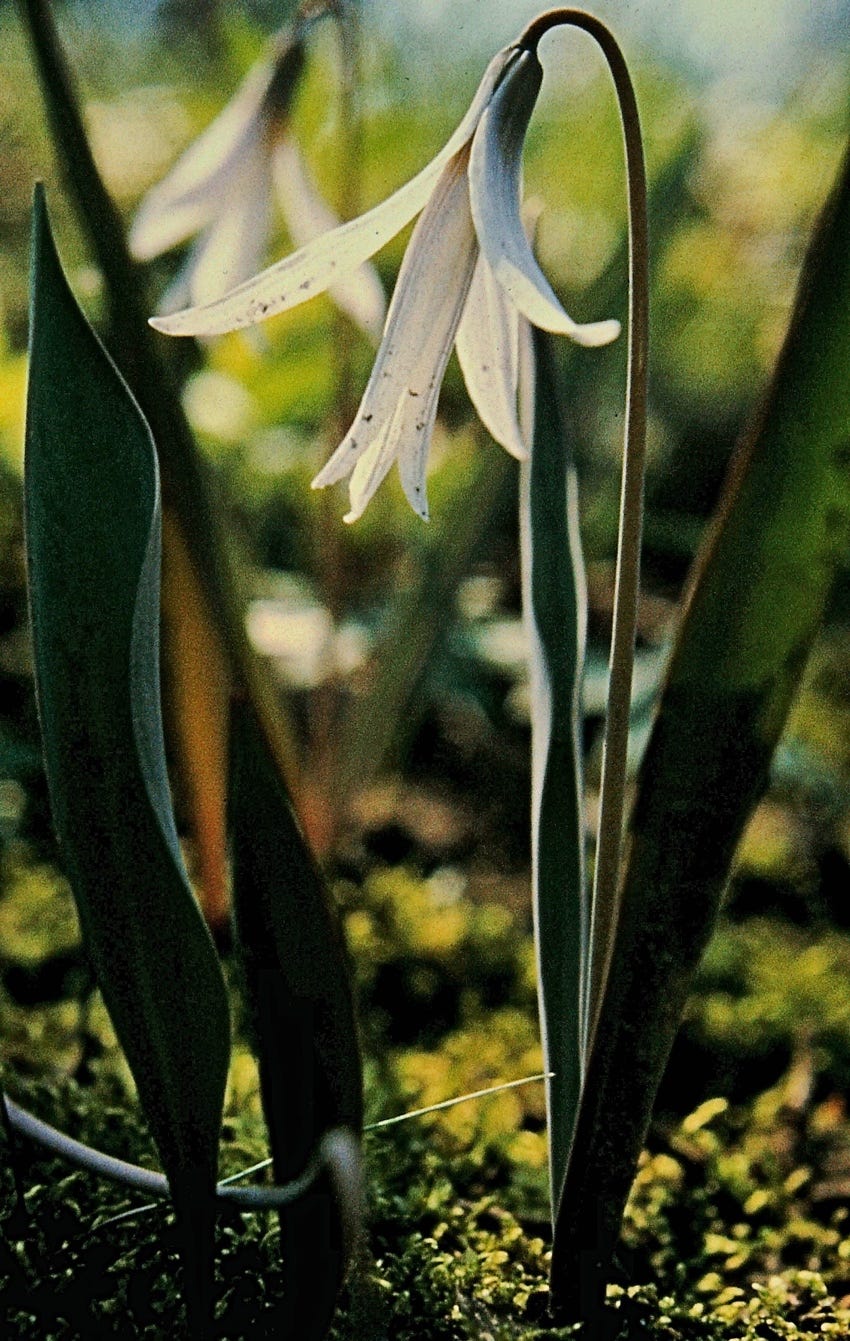
If we had an official flower of Big Rock Park, it might very well be the prairie trout lily also called the white fawn trout lily or Prairie Fawn Lily. Not only does Big Rock Park have a large population, the flower looks like a Dutch bonnet from Volendam, making them a perfect icon for the town of Pella. A very similar species with more mottled leaves, the white trout lily, can be found near the white fawn lily in the more open meadow area of the park.
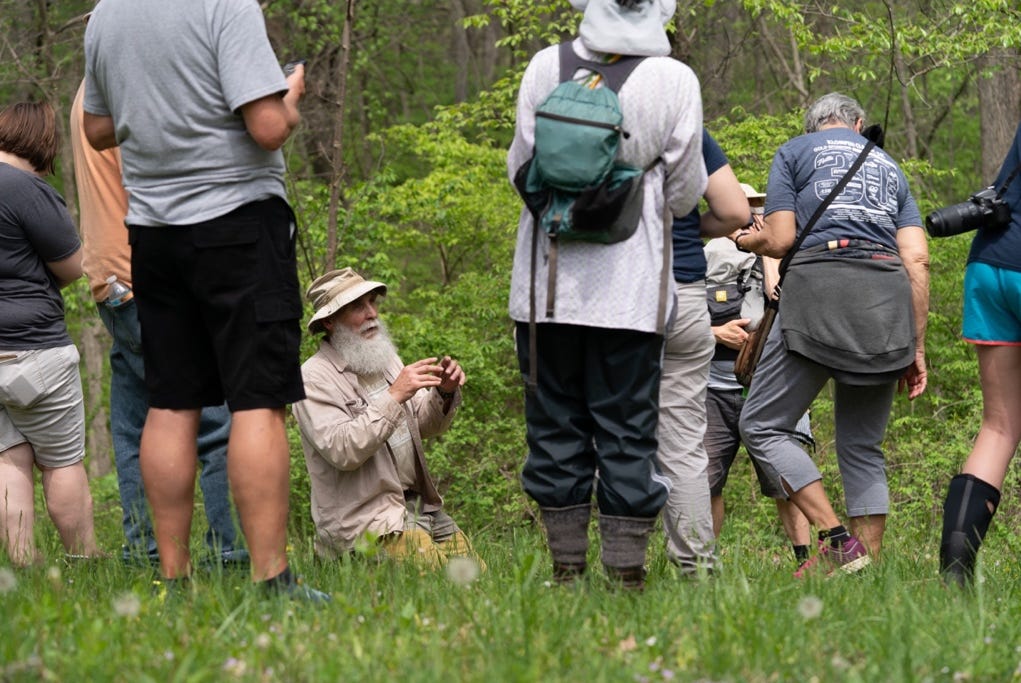
Below: Dr. Rosburg discusses the intricacies of the Prairie Fawn Lily. Photo by Kayla Lindquist.
Below: Prairie Fawn Lily (photo by Steve Johnson) Big Rock Park has the biggest population of this plant in Iowa! They are now in hibernation and will reemerge next April.
For those lucky enough to find it, the showy orchis is one of several native wild orchids in the park. It resides in the southern part of the park but is hard to find. At one time, it was trampled by paintballers! Invasive honeysuckle has spread into its territory, helped along by digging for new sewer lines at the parameter of the park. Hopefully the park can someday be declared a natural wildlife area and the ephemeral orchid will thrive again.
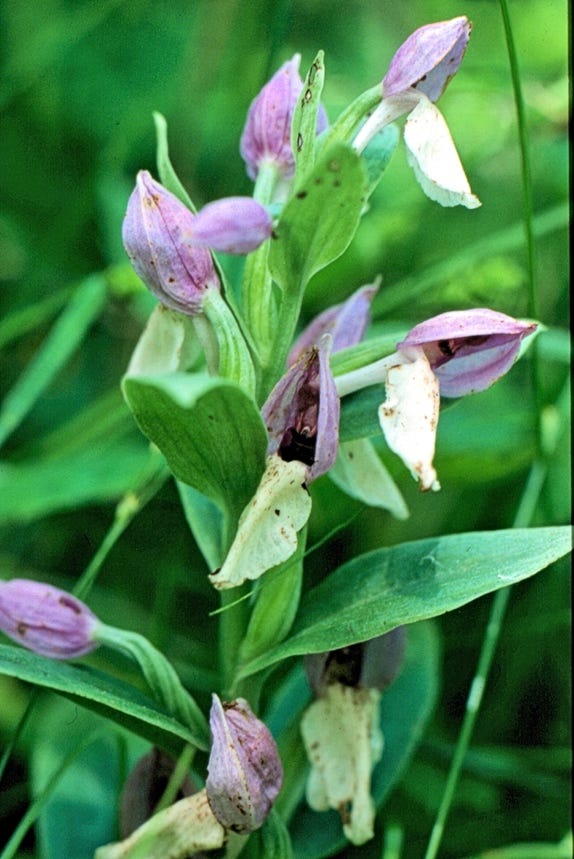
Photo by Steve Johnson

Above: Kristen Siewert and Kayla Lindquist enjoying the fine art of “forest bathing” and standing on the rock.
Although technically not ephemeral, Jack(or Jill) -in -the-pulpit pops up and flourishes from March to June in Big Rock Park. These plants have male and female flowers (the females have two leaves and some biologists say they are greener, photos here). In general, better nourished and more mature plants become females. The flowers can also be bisexual. The plant’s sex can change from year to year.
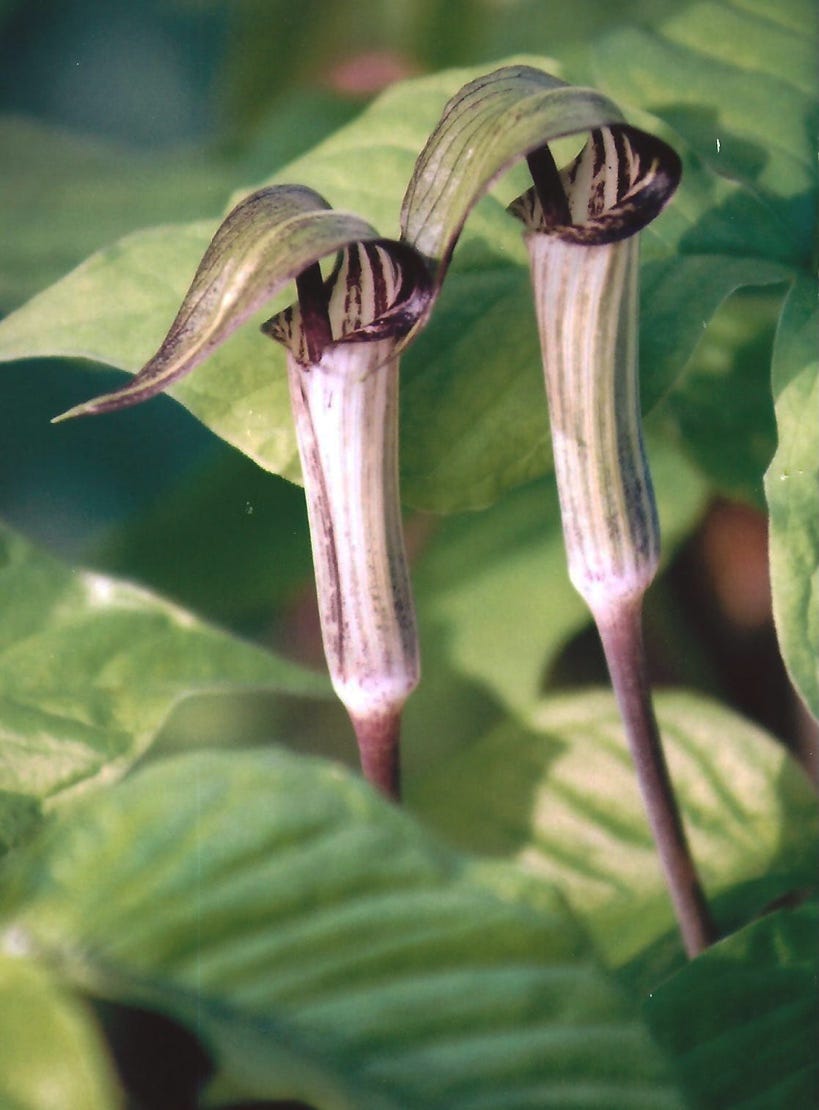
Two jack-in -the -pulpit showing maroon spadix. Dark colors guard plants from too much light and can warm the interior of the flower.
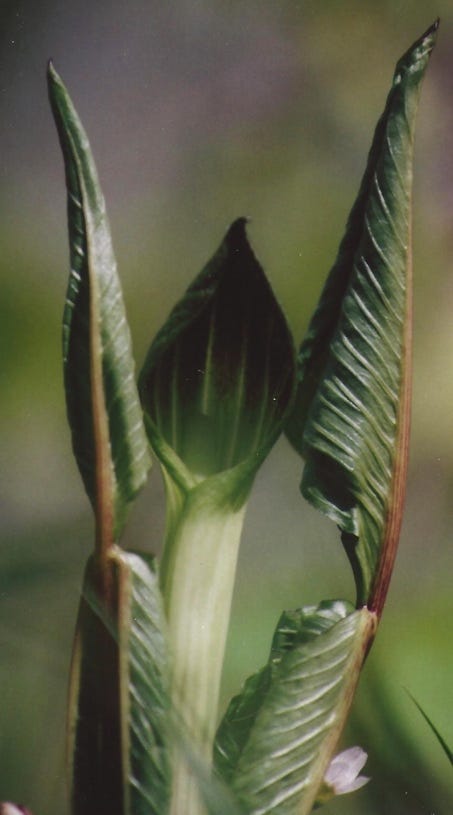
A young Jack or Jill emerging. Photo by Steve Johnson.
One biologist pointed out that maroon flowers often attract flies and don’t smell good. This is true for the jack-in -the -pulpit. They emit a smell that resembles fungus. When fungus eating gnats come to get a meal, they fall into the pulpit. Male flowers coat them with pollen and have an opening for the flies to escape. The females trap the (hopefully) pollinated flies, which have no escape but they bring the pollen. Some studies have found that the flowers emit a smell that resembles a female fungus gnat, luring male gnats into the plant. The female plants will go on to form a stalk of red berries which can be found throughout the park in the fall. Be careful! Every part of this plant is poisonous. Click here for photos.
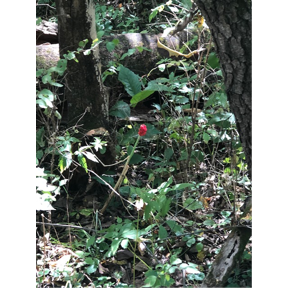
Photos of the Jack and Jills- in-the–pulpit taken by Steve Johnson. Photo of berries taken by Cathy Haustein
Mayapple is another common spring flowering plant at Big Rock Park, prevalent in the north west side of the park. Mayapples are big and green and nearly dwarf their one white flower.
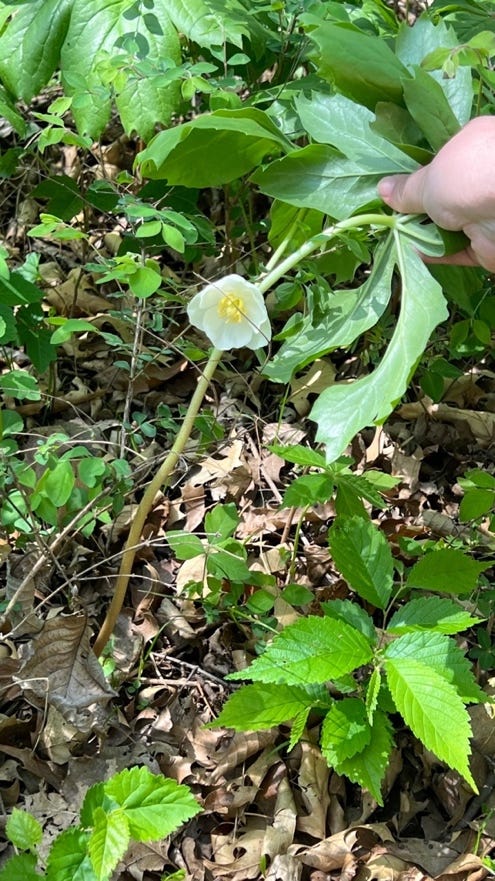
Photo above by Sheril Graham.
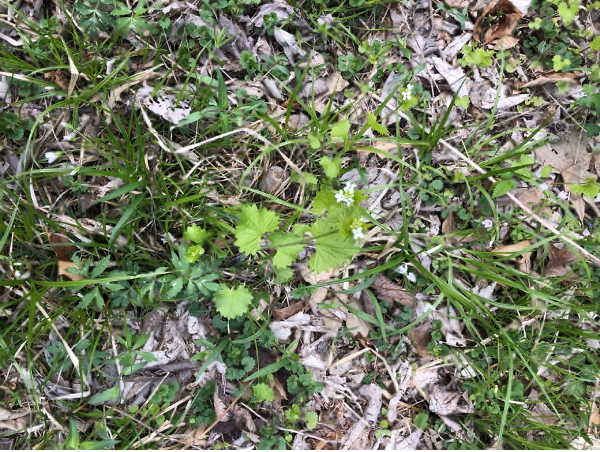
Garlic mustard is an invasive species in the park. Bees love it and it’s edible but it puts out chemicals that kill other plants, including trees, disrupting their symbiotic fungi. We didn’t feel at all guilty pulling it up but to really get rid of it, the plant should be put in a plastic bag, sealed up, and dumped in the trash. If you walk through some of it, brush off the bottom of your shoes or you’ll bring it home.
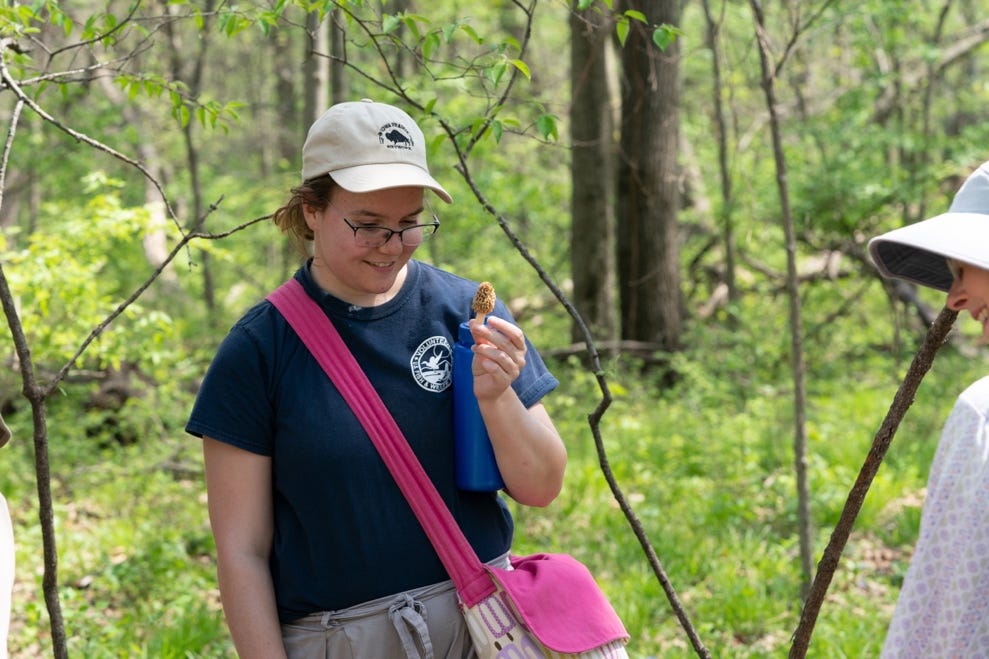
This article has mentioned fungi several times and fungi are prevalent at the park, including the sought-after morel mushroom.
As we transition into summer, most of these spring finds have settled down beneath the surface or have traded blossoms for berries. They’ll be back next spring to nourish our souls along with the pollinators!
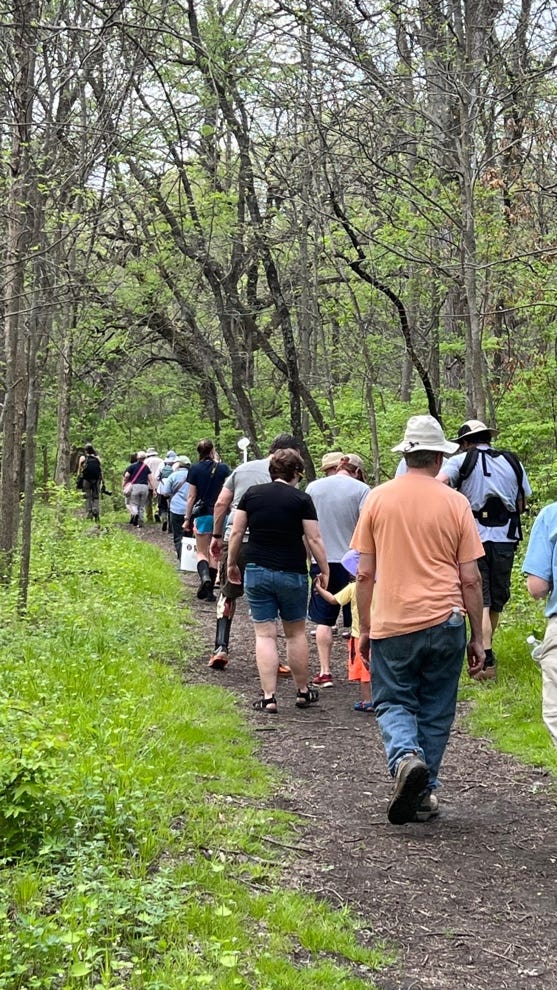
Above: a large group follows Dr. Tom Rosburg on May 7. Photo by Sheril Graham
Thank you to Marion County Community Foundation and Pella Community Foundation for sponsoring the nature walks.
 Catherine Haustein
lovely thread, always amazing how millenniums of genetic aberrations and chance affordances add up to such complex interactions, no wonder it took contemplating geographic shifts for Darwin to begin to grasp the enormity of the timescales necessary.
LikeLiked by 1 person