Birds’ Frenzied Spring

Birds orchestrate frenzied Iowa spring

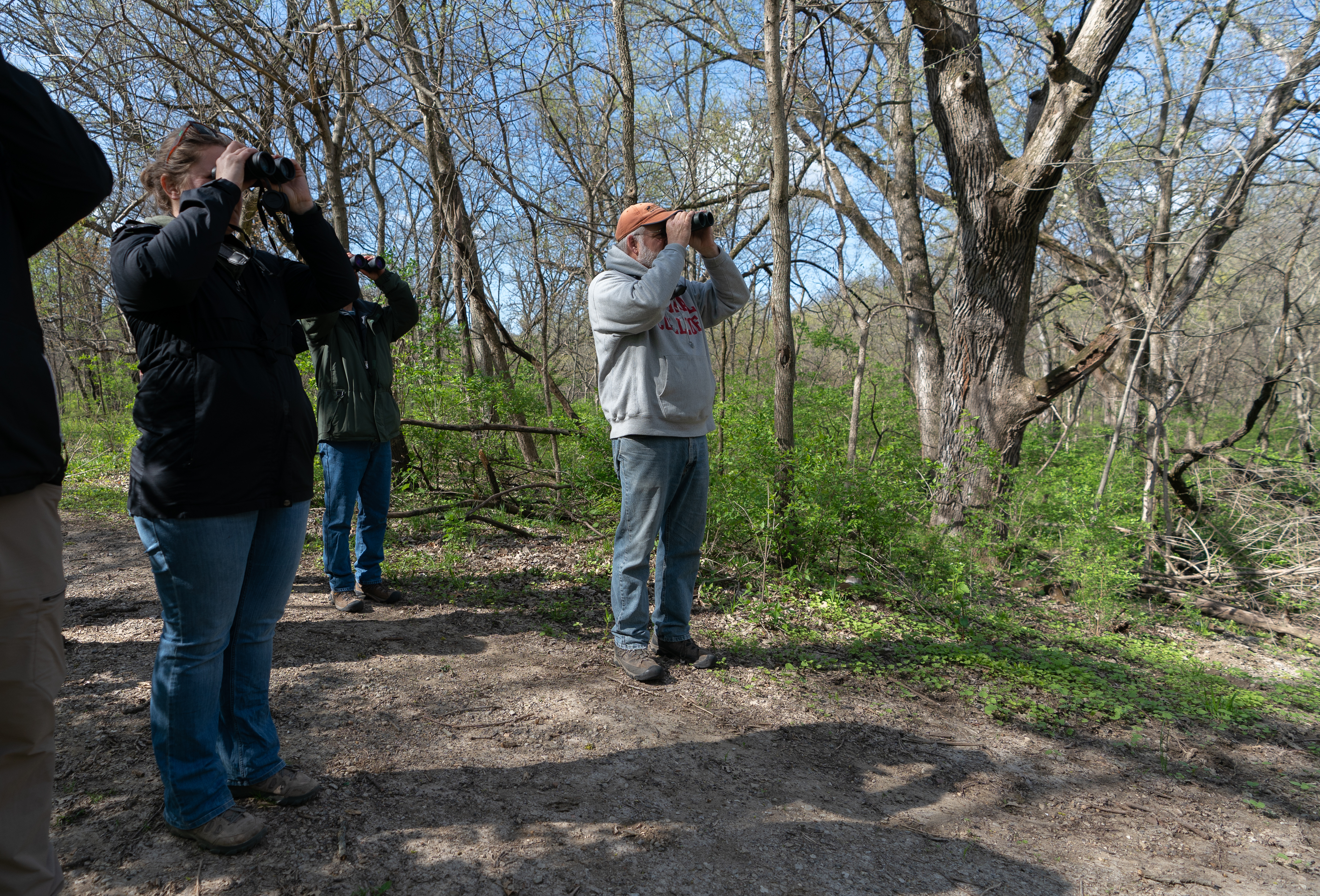
On April 29, a band of nature lovers met with Dr. Russ Benedict to learn about the birds of Big Rock Park. The Central College naturalist began with a lesson on how to use binoculars and then led us on a mile walk around the woodsy exterior of the park while he talked about avian migration patterns and all things bird. Some birds such as robins are generalists and will live anywhere. Others such as the tufted titmouse, are very picky about their habitats and will only nest in diverse oak forests as found at Big Rock Park.  Spring migration is a race against time and weather to establish territory.

Below: Binoculars Up! Focus binoculars, spot the bird, quickly raise the binoculars. Photo by -Kayla Lindquist 
www.kaylalindquistphotography.com 
One prevalent bird was the Yellow-rumped warbler or butter butt—one of the few birds that can eat waxy fruit such as bayberries and will even eat candles! This helps them survive brutal winters.

It was a beautiful and sometimes noisy walk. Carolina wrens popped up and scolded while hairy woodpeckers worked on making their holes in soft wood. A woodpecker will make a new hole every year!

In terms of migration, the over 400 species of Iowa birds fit into one of these categories:

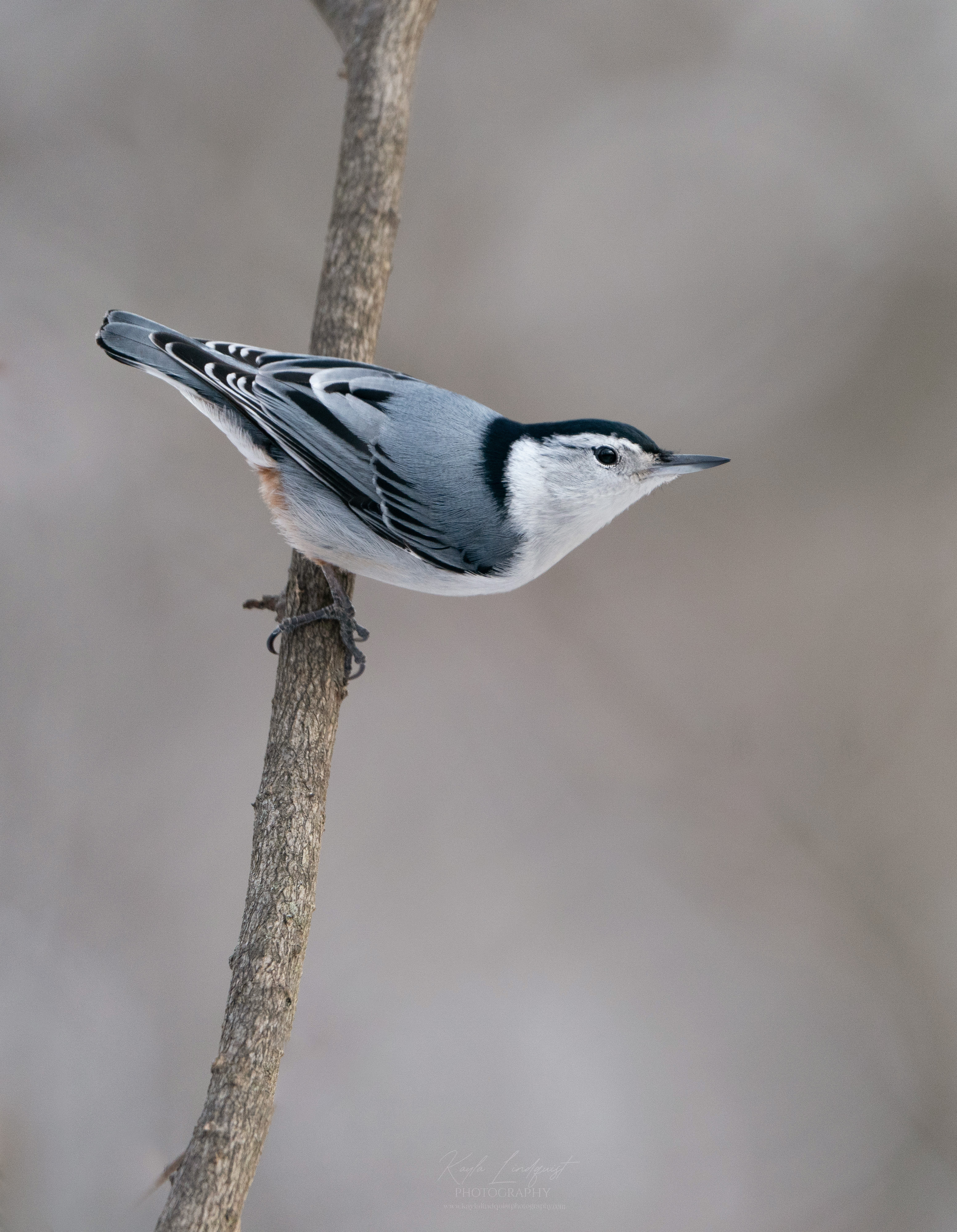
Permanent residents such as cardinals, blue jays, owls, crows, and nuthatches. Chickadees not only are permanent residents, they rarely move more than three miles from their place of birth. Another fun fact about chickadees is their call. The more “dees” you hear, the more alarmed they are about their situation.

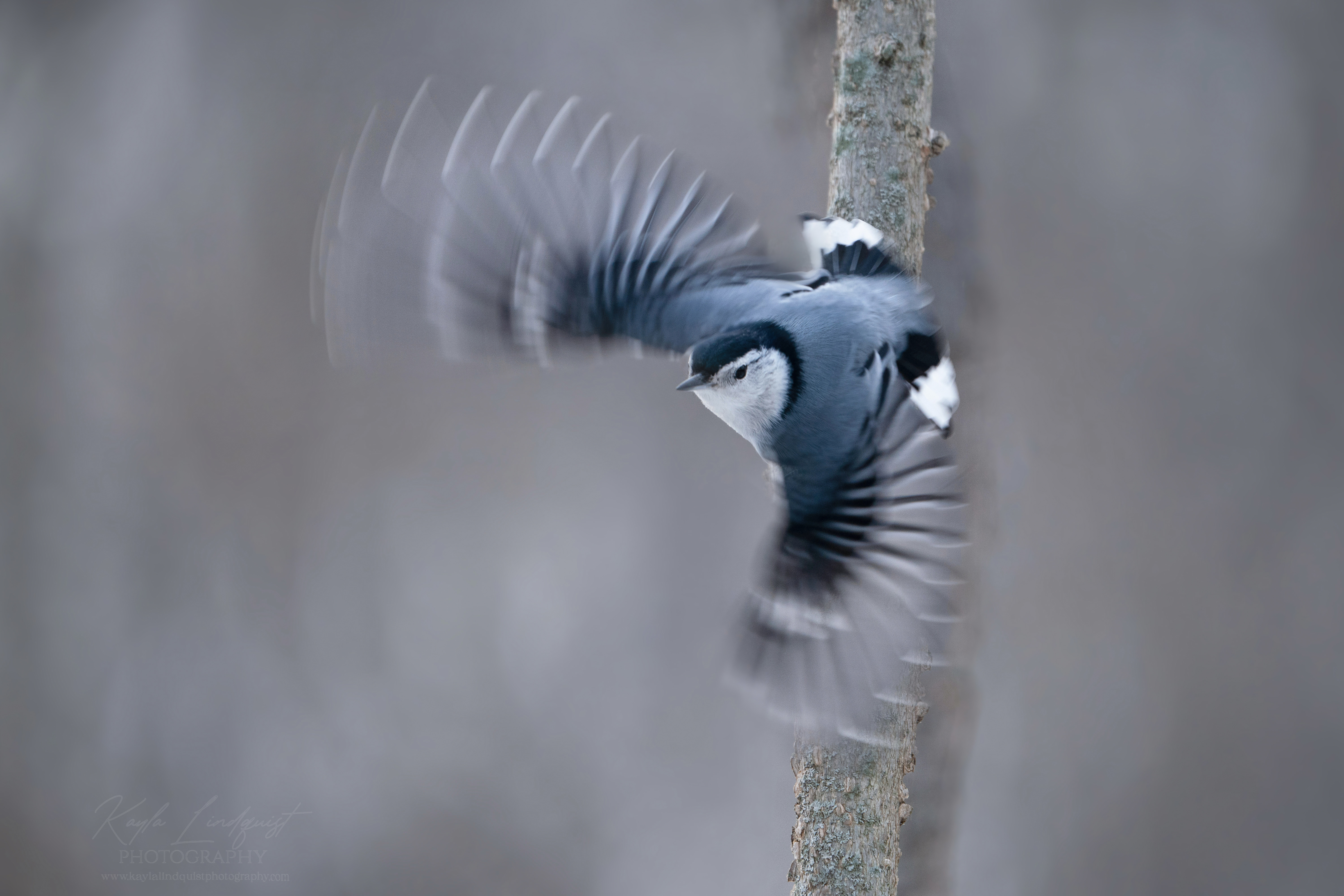
Nuthatches, as shown below, usually don’t migrate and prefer to live near mature trees as found at Big Rock Park. These photos were taken by Central College student Kayla Lindquist. Be sure to take a look at her other photos at  
www.kaylalindquistphotography.com 
Barred owls rarely move from their roost. They can be seen in Big Rock Park year around.
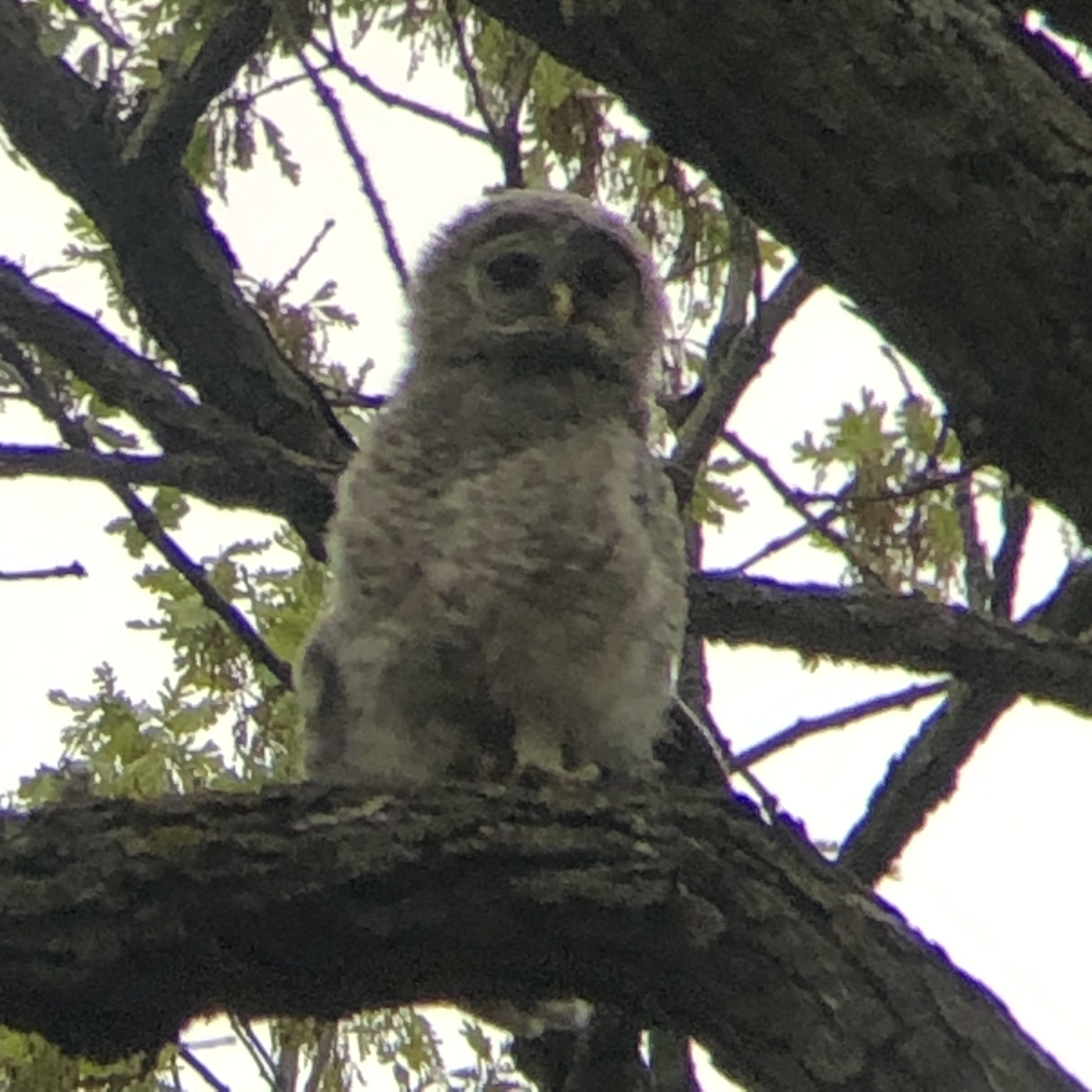
(photo by Sheril Graham)

Regular Breeding residents who migrate here for the spring and summer as seen with many song birds including warblers and thrushes (such as robins), hummingbirds, bluebirds, and catbirds. These birds usually fly at night and stop to eat and rest in daylight. Turkey vultures migrate into Iowa in the spring since they can’t eat frozen roadkill. Turkey vulture watchers say the big birds are arriving earlier and earlier due to climate change.

Snow birds who winter here and fly north to breed such as eagles, juncos, gold finches, and tree sparrows.

Passage birds who fly through on their way to someplace else including many water birds and grackles.

When birds migrate, the males usually take flight first. They want to establish a territory. In the first wave of migrators, you’ll find the seed eaters, followed by insectivores, and lastly, caterpillar eaters.   Usually, daylight patterns (photoperiods) prompt birds to migrate. In the spring, some might try their luck and migrate earlier or farther north than usual. This poor male Summer tanager came here too early and starved.

Females pick males based on territory, but courtship plays a role, too. Birds will have specific behaviors such as twittering their wings and singing to attract a mate. The most appreciated males croon for a long period of time. In birds such as blue jays, catbirds, and mocking birds, the most virile are those who sing up to five minutes without repeating a pattern.

Birds can see ultraviolet light and will display UV active patterns which help them distinguish between males and females. Bird feathers act as tiny diffraction gratings, displaying colors and iridescence.

Bird populations are declining in the US and across the globe.  Grassland birds such as meadow larks are suffering the biggest loss while water birds are faring the best. Here in Iowa, loss of habitat and CRP fields due to ethanol are big contributors to the decline along with fewer insects.

Ways to save birds include putting up nest boxes which was highly successful with bluebirds. Turning off lights and putting up curtains to keep birds from hitting windows and buying shade grown coffee are a few more ways to help birds. Keeping wild places like Big Rock Park is one of the best ways to help keep bird populations alive. (Click the link for more ideas.)

Birdwatching is inexpensive and hip. A helpful resource for newbies and experienced birders is the All About Birds site. Big Rock Park offers an easy walk. Come fall, the migratory birds will leave the park at a much more leisurely pace than they arrived. If you want to hear the chorus and watch their spring frenzy, now’s the time.
The Magnificent Splendor of Native Bees

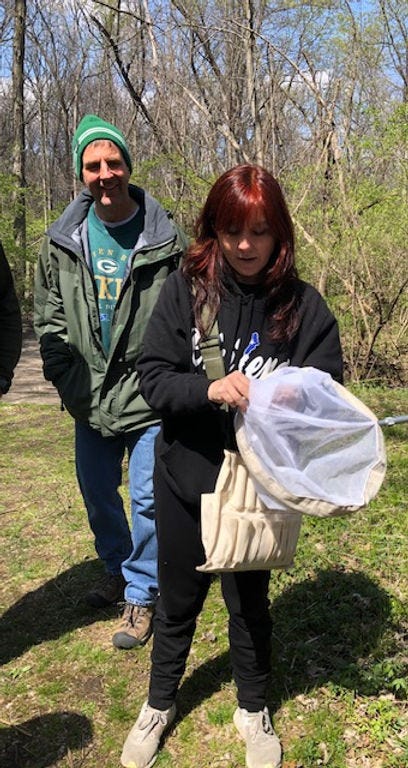
If you want to see bees, find a flowery meadow above 50 degrees F with no wind. April 23 was not one of these days. It was cold and breezy. Despite this, the session on Native Bees of Big Rock Park lead by Dr. Paulina Mena was well-attended and the bees were there for it.

Above: Dr. Mena teaches attendees the proper bee netting technique.

Iowa has over 400 species of native bees, all better pollinators and more well-adapted to our climate than the well-known but non-native honeybee. Iowa bees have co-evolved with native Iowa plants. They are important to our Big Rock old growth savannah ecosystem and to the overall ecosystems of any place that has bees.

Even better, most native bees are mild mannered, having no hives to protect. Unlike honeybees, they can sting many times but without venom, making the stings less painful. Aggressive honeybees and wasps will tag intruders with pheromones and the hive will follow them in attack mode. You’ll get none of this aggression with native bees. 75% of US plant species require pollinators and even those that don’t have higher yields with visits from bees.

Many native bees are specialized pollinators, fitting in well to their plant niches. Squash bees for example are early risers, pollinating the morning blooming squash blossoms and napping in the withered blossoms. Most native Iowa bees are buzz pollinators.

Buzz pollinators such as bumble bees and mason bees are essential for the pollination of plants with deeply held pollen. Food crops such as eggplant, tomatoes, and blueberries rely on these bees to produce fruit. These calm bees are not likely to sting. Bumble bees nest in the ground and the magnificent queens can chose the sex of each egg as they lay it. Each queen will make a honey pot filled with nectar as a food storage for herself as she incubates her eggs and for the emerging young.

Our Big Rock Park group found a beautiful, fertilized bumble bee queen looking for a nesting place. After admiring her, we released her.

It’s incredibly difficult to identify most native bees by sight. People who can do this, taxonomists, are older and retiring. Modern bee enthusiasts use DNA testing to help identify bees.

Over thirty unique species of bees who call Big Rock Park home have been identified by Dr. Mena and her students. The most prevalent bees catalogued have been Augochlora pura, a common bee that nests in rotting wood and is a walnut pollinator, Calliopsis adreneformis, a ground nesting bee and important pollinator of many flowers, including phlox, and Coelioxys modesta, a parasitic species and pollinator which nests in the soft soil in the park. Another common bee is Megachile companulae, also known as the Bellweather resin bee is a special pollinator of tall American Bellflower.

One of Dr. Mena’s exciting findings is that Big Rock Park may be the home of a formerly undiscovered species of bees! This species would be in the genus Andrenaand was first found by Dr. Steve Johnson. This type of bee is an important native pollinator, especially for apples, cherries, strawberries, and blueberries.

Here’s a link to a presentation about the science behind discovering the bees of Big Rock.

Honeybees may be well-known but our native bees are hard-working pollinators and we need them. Ways to help them in your yard are to refrain from planting pesticide treated seeds and to not burn downed wood in the early spring when the young Augochlora bees are emerging. Although they don’t produce commercial honey or wax, native bees are better pollinators and pollen collectors than honey bees and are more friendly. As we found out last Sunday, they are more active on non-sunny, windy days than are honeybees. Since these bees nest in the ground and in old wood, we must preserve their habitats—wild spaces like Big Rock Park—or we’ll lose these splendid, valuable creatures.

Don’t be afraid of WOTUS. A look at a local creek and a federal rule

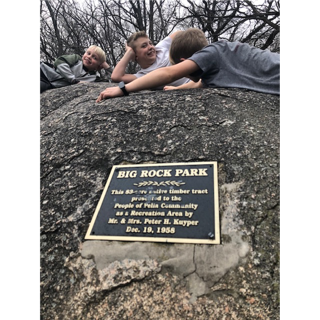
I’ve been an analytical chemist for a long time. For most of my life, I was a professor at Central College. These days, I freelance and right now I’m finishing up a study at Big Rock Park in Pella, Iowa. It has a little creek running through it, totally natural in some places and filled with concrete slabs to prevent erosion in other spots. The creek runs though a west Pella neighborhood. Houses boarder the creek on one side and a farm on the other. The friends of Big Rock Park wanted to know if the water was clean and safe for wading. Kids love to wade there and hike to the rock to climb it and take cheesy photos.

            I started the study not sure what I’d find. One delight was that paper and strip-based color tests, like the ones you use to test an aquarium or swimming pool, have expanded significantly. Paper strip tests were one thing I worked on for my PhD thesis long ago. (Click here for more on my laboratory past.)

For my current project, I made a little laboratory stockroom in a portion of my study and I was all set to go—much like computers getting smaller, so did my lab. Small portable meters such as for dissolved oxygen and dissolved solids became available during the course of the study.  The ease of testing allowed me to engage the public, even kids, with water testing.

The results in the end aren’t surprising. Whatever people put on their land ends up in the water. When salt goes on the roads in the winter, it ends up in the water. When people fertilize their lawns, it ends up in the water. It’s surprising how fast the fertilizer shows up.

One twist to my study which I should have expected but didn’t is that the overwhelmingly most concentrated and persistent pollution was bacteria—particularly E. coli. This bacteria, coming from fecal matter, showed up in early May and persisted through December. Farm run-off has been pin-pointed as a source of this and many other pollutants.

As a water chemist and a chemist in general, I’m in favor of the Waters of the United States or WOTUS Clean Water Rule. As I said before, what goes on the land ends up in our water. We must protect it.Regulated substances include all sorts of chemical and biological hazards including those which “cause death, disease, behavioral abnormalities, cancer, genetic mutations, physiological malfunctions (including malfunctions in reproduction) or physical deformations, in such organisms or their offspring.” Substances which might cause lower oxygen levels in the water, which I did see at Big Rock Park, are regulated and the ruling calls for increased fines for spills as well as more money for “enforcing spill prevention measures, reviewing spill response plans, inspecting spill containment and cleanup equipment.”

WOTUS has met with some puffed up resistance.

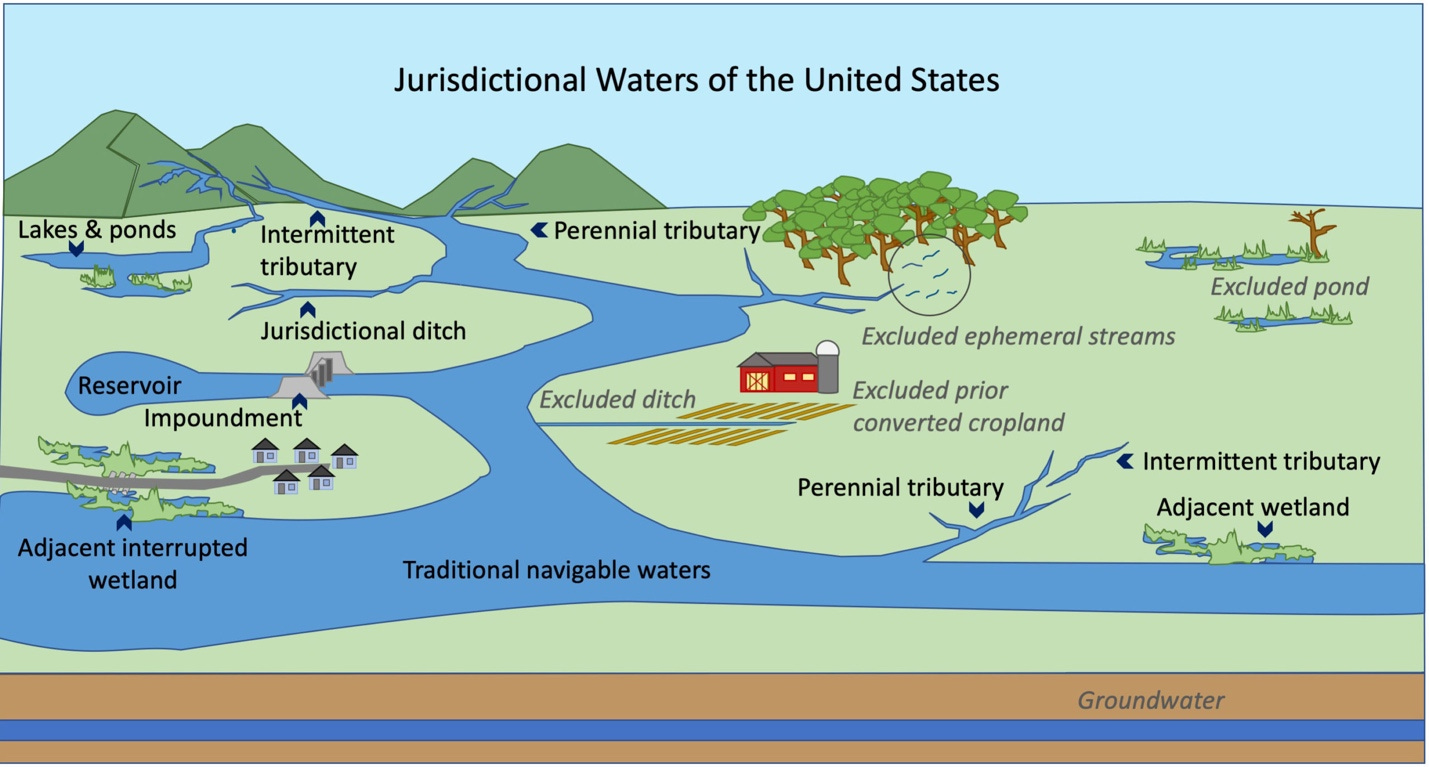
As part of WOTUS, these waters are protected: Navigable waters, Territorial seas, Interstate waters, Impoundments (dam created reservoirs such as Lake Red Rock), and Tributaries

Adjacent wetlands and additional waters are also considered WOTUS if they meet either the “relatively permanent” standard or the “significant nexus” standard, meaning they are likely to affect the other protected types of waters.

Here’s an illustration, also shown below, credit to Sarah A. White of Clemson University.

Diagram

Description automatically generated

These waters are exempt : prior converted cropland, waste treatment systems, ditches, artificially irrigated areas, artificial lakes or ponds, artificial reflecting pools or swimming pools, waterfilled depressions, and swales and erosional features.

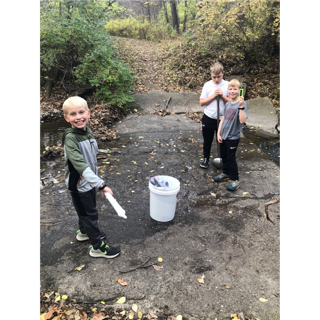
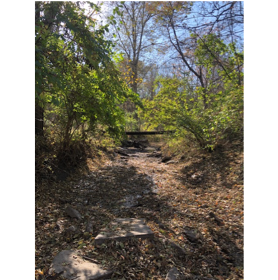
WOTUS covers less than the Obama-era rule but more than the Trump-era rule. It would include the Everglades for example and intermittent streams. Big Rock Park’s creek would fall under this as it dries up at times of drought, as shown in the photo below.

A picture containing tree, outdoor, plant, forest

Description automatically generated

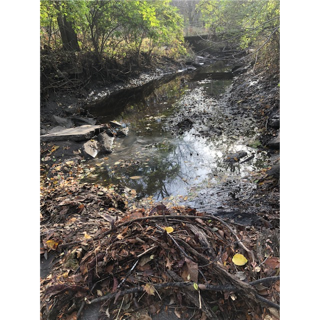
A downpour filled the creek bed and brought all sorts of leaves, sticks, and trash, showing how vulnerable these intermittent creeks are.

A small waterfall in a forest

Description automatically generated with low confidence

The new rule has human health as a focus and looks at both microbial (such as E. coli) as well as chemical pollution. Not only is it projected to lower the cost of clean water, it looks to avert future problems such as pipe corrosion as in Flint, Michigan, where road salt contributed to corrosion. It also supports fisheries.

WOTUS is a good rule which doesn’t go quite far enough in my opinion.

Being mad about WOTUS is more showmanship than anything.  Its controversy is unfounded and made to stoke resentment of rural people, who suffer cancer at a high rate and need to be protected. In the meantime, enjoy our local park. Be sure to use hand sanitizer after touching the water, especially after manure applications on farm fields makes its way into local waters.

As You Like It

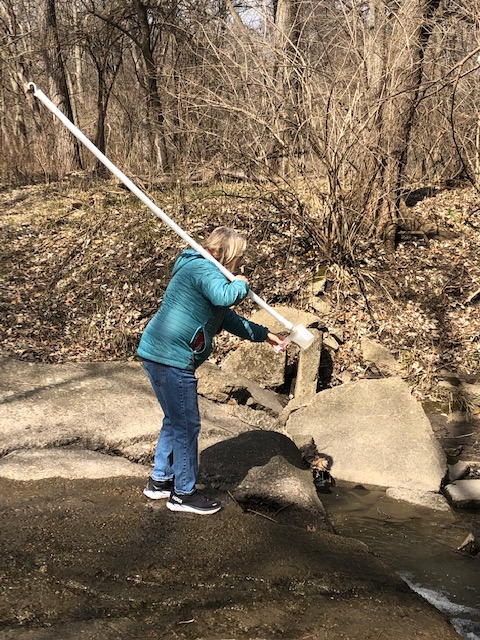
I’ve been doing some water testing for a creek that runs through a local park. You can read about it here. One reason for doing the testing is to determine if the water is safe for people to wade and fish in.

This month, I decided it was time for an arsenic test since arsenic is common in Iowa soil and water. Arsenic occurs naturally and has been known about as far back as the ancient Egyptian and Ming dynasties. It usually occurs in nature as salts and not as a free metal. The first recorded reaction yielding metallic arsenic was done by alchemist Albertus Magnes. Not even a chemist, an alchemist. Let that sink in.

Historical uses include using salts of arsenic as a green pigment and as an insecticide,

Today arsenic is primarily used as a wood preservative, although it’s found in semiconductors and the metal itself is a semiconductor. (Arsenic treated wood will take on a blue or green tint because the preservative is mixed with copper.)

Most arsenic used today is produced by China, Chile, and Kazakhstan.

Why is it toxic? Arsenic, abbreviated As, is the same column as nitrogen on the periodic table and can get involved with biological reactions involving nitrogen in a bad way. We all know it can act as a poison. It can kill slowly as well, causing bladder, skin cancer and other cancers. It can increase cholesterol and mess up your thyroid. High levels in the soil can cause birth defects.

Arsenic in Iowa hasn’t been thoroughly studied but it is concentrated in northern Iowa.

Arsenic as found in food and water has no taste or smell. Testing for arsenic poisoning was tricky until 1836.

Today, testing instruments are used. I’ve put a video of me explaining a similar technique at the bottom of this post. However, this time I didn’t do the testing myself. I sent a water sample off to a lab. It was much cheaper than paying me to run the test.

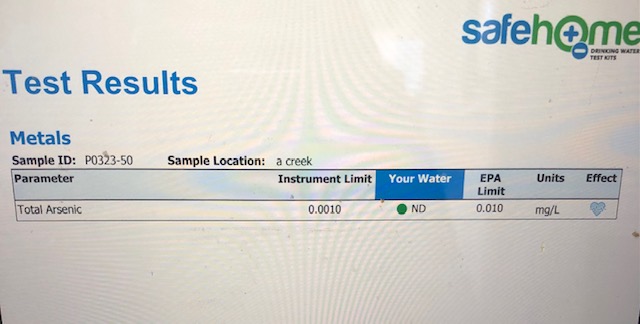
The results came back this week.  The news is good! No arsenic detected!

This is most certainly As you like it!

This technique is similar to the one used to detect arsenic, but a little simpler.

Let’s not talk about it–or even worse, read about it!

A few years ago, I wrote a blog about biologist Frances Hammerstrom (1907-1998). One thing that struck me when I read her biography was that when she and her husband arrived in Wisconsin to study prairie chickens, the local people shyly asked how they could be married and only have a couple of kids. Many Midwesterners of 100 years ago had no idea birth control was possible. Thanks to the Comstock Act, even talking about birth control, much less using it, had been illegal until 1915.

Birth control and sexuality taught in schools didn’t begin until the AIDS epidemic in the 80s. It became part  educating about sexually transmitted infections. Before that time people maybe read pamphlets or possibly a comic book in which sex or disease was discussed.  Confusion reigned. A roommate of mine told me that all her parents mentioned to her about sex was that her mom gave her a douche bag and told her she was going to need it after she was married. I recall being confused when someone gave me the finger and said it was what happens before babies are born. I thought a doctor had to somehow open a woman to release the infant. And let’s not forget the numerous tales, told by men, of those who got blue balls and were made gay because women who were lesbians wouldn’t have sex with them. Sexual coercion wasn’t discussed back then in case you were wondering.

It goes without saying until the 80s a lot of people were in the dark about sex and birth control. I went to school in the 70s and we all had stories about relatives or friends from high school or people we knew who were pregnant and didn’t even know it. One particular case involved someone who went to the hospital with pains nine months after prom and gave birth to a baby. Fortunately for her she thought it was somewhat humorous that her parents never told her anything about sex and she ended up with this surprise kid. 

Possibly people are familiar with the book or movie Carrie in which the main character gets her period and thinks that she is dying of this horrible disease because their parents didn’t tell her anything. Yep. There were people like that in school. It was the job of the PE teacher to tell them about feminine hygiene. Fortunately, around the mid-century point, science decided that sex was worth studying and people began talking about it as an educational compoent.

I was lucky. My mom wasn’t excited to talk to me about sex but she did give me the book Everything You Want to Know about Sex but Were Afraid to Ask. As someone who had a stream of kids two years apart, she was more than happy to advocate learning about birth control. 

Studies of and information about sexuality exploded since the days of Hammerstrom. Sex education in schools has numerous advantages over the “self-taught” method including delaying sexual encounters, decreasing sexual risk taking, and improving academic performance. We’ve now reached the point in the US where most pregnancies are intended. We still fare worse than Canada and Europe for unintended pregnancies.

Sex is a part of life. Most people have sex. It’s satisfying at any age but those in their 20s have the most sex of any age group.  For men, teen boys are most able to have sex.

We need to ask ourselves, why is prudery suddenly rearing its ugly head politically? I’m not going to argue when people should have sex or who they need to have it with, but I do wonder why we have sudden interest in not talking about it.

In Indiana, the long established Kinsey Institute, is facing a funding cut.

Here in Iowa, we are doing everything from banning books containing sexuality to eliminating requiring health information about HIV and HPV

Here’s the thing about sex in a book: a good book will include emotional content as well as consequences. You can’t get that from a YouTube video or from peers which is probably where kids will go if information isn’t available in school. In fact, most teens have watched porn, some of which isn’t too wholesome. Just in terms of how long it takes to read a book vs watch porn, I’m going to say that a book with sexual passages is more healthy, although I have my concerns about rape as entertainment.

We can assume most parents will talk to their kids about sex. Around 20% won’t do it.  Why won’t they? Parents may carry their own traumas, embarrassment, and cultural taboos.  Some parents try but pass on unhelpful myths. Sex-ed can help start the discussion and lead to a better outcome. Those who want to “have the talk” do should start young and then add content as the child matures. Young as in age five. Here are some tips in case you need them. Good luck. Depending on your school district and the people in your town, you might be on your own.

Iowa’s high cancer rate–environment or lifestyle?

Iowa Cancer Rate—environment or lifestyle?

Why is Iowa the only state with an increasing cancer rate? Compared to other states, we have more cases of almost every cancer except lung. Other than Kentucky, we are the most cancer-riddled state in the union. I’m not an epidemiologist. I don’t have an answer. But I want to consider our situation. Someone has to.

What have we got that other states don’t have?

Is it the pesticides? There is a connection between cancer and pesticide exposure, known about for years. Pesticides are associated with higher risk of childhood cancer. The nationwide glyphosate herbicide use map is here. Most pesticide usage is in the form of  herbicides. There’s a Strong link between some insecticides and aggressive prostate cancer. But not a link with prostate cancer and herbicides. You can click on this map and see the insecticide usage in Iowa  get higher and higher, until the study was stopped. In case you don’t want to follow the link, the most intense region of use is NW Iowa.

Cancer is associated with animal agriculture wastes and confinement operations; possibly nitrates play a role. Here is a study correlating it. Nitrate consumption, for example in food such as corn dogs has been associated with an increased cancer risk, although exposure on the skin is not.

Where is Iowa cancer increasing the fastest? Along the Mississippi. Over in Illinois, which has a lower cancer rate than Iowa, some river counties also have high cancer rates. Not like here in Iowa, though. What do we have that they don’t?

Where are the CAFOs? You know, those animal feeding operations. Most are in NW Iowa, near Palo Alto County and vicinity. Iowa’s most cancerous county, the one with the highest cancer rate is Palo Alto Countywhich has several lakes and a grotto.  Illinois’s most cancerous county, Pike County, is home to the most CAFOs in the state. 

Where is the most cancer?

Illinois has around 2,000 CAFOs. Iowa, 9,000. North Carolina has around 7,000. Studies of people who live near CAFOs in Iowa and North Carolina showed an increase in lymphohematopoietic cancers (lymphoma, myeloma, and leukemia). This was distinct for people working with the animals. Leukemia rose for those working specifically with cattle. Air toxins were the suspected agents. A study from Duke University linked numerous health problems to living near CAFOs. Here is North Carolina’s cancer profile. Here are their CAFO sites. There’s some overlap but officials there suspect it is due to  coal ash.

Coal ash certainly carries carcinogens such as mercury, cadmium, and arsenic. Until recently, Pella had a coal burning plant and Marion County has a higher cancer rate than neighboring counties, despite having fewer CAFOs. Coal mining is linked to numerous health problems. Here is a map of Iowa’s known coal mines. (Many have been rehabilitated.) It doesn’t match with the highest cancer counties in Iowa but I have to agree with the North Carolina speculation that coal ash a factor in a high cancer rate. But let’s get back to CAFOs.

The American Association for Public Health has called for a ban of CAFOs, citing nitrates seeping into drinking water as a major concern. Iowa is number one in poop production in the US. Thousands of cancer cases in Iowa have been linked to nitrates from animal poop. Iowa has above average toxic air pollution as well.

You can’t talk about Iowa and cancer without thinking about radon, associated with lung cancer, but not thyroid cancer (see maps and data for radon and thyroid cancer here.) Here is the first of a multi-blog story about getting radon out of my basement. Radon is a problem in Iowa but other states such as South Dakota and Nebraska have higher levels. (see map). 

Arsenic is a known carcinogen and Iowa is laden with arsenic. Where is the arsenic? NE Iowa has greatest concentrations. The correlation between arsenic in drinking water and prostate cancer (which is high in Iowa) has been established. But not all states with arsenic in ground water have high cancer rates (California for example). 

Is it obesity? Iowa ranks 11th in the nation for adult obesity. Get this–pesticide exposure is associated with obesity. Yes, insecticides might be making us fat. They might even be giving us brain damage. (This could explain a few things.) The most obese counties are in general along the Mississippi. Cancer rates are rising here.

Iowa isn’t the drunkest state, but it is number two in binge drinking. This could be due to the many colleges here. Alcohol use is linked with cancer, particularly breast cancer. Breast cancer is linked to pesticides, especially pesticide exposure during childhood and prenatally. You’d think all those life-is-sacred people would care more about this. Iowa’s breast cancer rate is higher than average. It is one of Iowa’s top cancers.  If you aren’t sick of maps by now, here’s a map to prove it. Alcohol use combined with pesticide exposure could definitely be a factor in our breast cancer rate.

How about smoking? Iowa is not in the top ten states for smokers but above average. About 10% of smokers get lung cancer and about half of all smokers will get some sort of cancer. It’s a factor in our high cancer rate but not one that defines us over other states.

Age? Yes, our population is older and age is a risk factor for cancer. We rank 16th for percentage of residents over 65. We aren’t distinctively old.

 Radioactive fallout swept over Iowa in the 1950s. This would be a factor, especially for thyroid cancer. It took until 1982 for traces of the fallout to disappear.  This factor Would show up in Idaho more than Iowa. You can use this calculator to determine your elevated risk of thyroid cancer from fallout here.

Lower cancer rates are associated with a high amount of Public lands. Iowa has almost no public lands—only 2.8%. This is just an observation. With so much land privately owned, our environment is beholding to the landowners to protect it and us.

Are we Iowans too lazy to exercise? Iowa Cancer Registry Director Dr. Mary Charlton says our high cancer rate complicated but points to a lifestyle problem. Yet Iowa isn’t one of the top ten most sedentary states.

We also aren’t among the poorest states, but, unlike most, our poverty rate hasn’t decreased in recent years.This is an indication of a state government which doesn’t care to make lives better for the average citizen. And sadly, rural Iowans don’t always get the recommended cancer care.

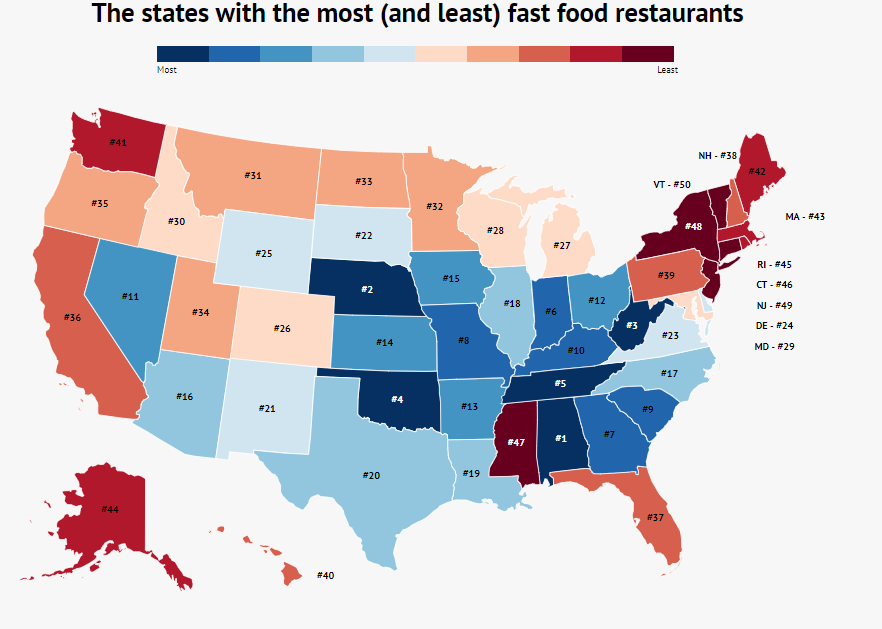
I haven’t discussed diet yet but rest assured, Illinois eats more hotdogs than Iowans. Iowans are in the top of the states for candy consumption, coming in at number eleven. Sugar isn’t linked to cancer though. There have been few and inconclusive studies linking fast food to cancer. Iowa is #15 for fast food consumption. Pella recently was “blessed” with another fast-food restaurant, and you should see the lines at the drive up window, and the nutrient content of the food! 

The bottom line is that on many levels, Iowa doesn’t look like a particularly healthy state. We have nitrates, pesticides, arsenic, fallout, radon, smoking, coal mines, obesity, and too much hog waste.  Sometimes the answer is “all of the above.” I’m going to go a step further and say we’ve been trained not to worry about our health. Studies of the dangers of agricultural chemicals are not taken seriously. Any attempt to keep pollutants out of the air and water is accompanied by screams from elected officials. We quickly gave up on COVID mitigation measures. We even had office holders refuse to wear masks despite their efficacy. As for CAFOs, we’re number one and like ethanol, we’re pretty much stuck with it.

Iowa has a cancer problem and few care. We just don’t care. The story about our cancer rates hasn’t gotten much traction. Has it been in the Register? Are your friends talking about it? Have our politicians stopped bashing WOTUS and rolling it back? No. They are bitching and moaning about not being able to build on wetlands—which could remove toxins–or fighting for their rights to pour toxins into ditches that will eventually drain to the Mississippi.

And yes, our politicians want to censor information about HPV vaccines, which will prevent cancer.

We vote for these clowns and believe them.  Maybe it’s a lifestyle problem after all. 

Iowa With Half a Caucus

For most of my life, I’ve been an Iowan and a caucus goer. When I was younger, I went to whatever party caucus seemed most interesting. I drifted toward the Democrats because they are more scientifically correct and just plain nicer. When Republicans discussed a candidate who could win despite serious personal flaws, I walked out of the caucus and didn’t come back. They were right though. He won.

I’ve run the Democratic caucus for Ward Two Pella more times than I can recall. Some of this is because I was the default precinct chair. I did it once and no one cared to replace me. Voila. A task for life, or so it seemed. I’ve had coffee with Jill Biden, enjoyed a meeting of education experts with Barack and Michelle, asked an insulting question to Pete Buttigieg. I hope he forgives me.

My car got stuck in half frozen mud at a Kamala Harris event after which I signed up to caucus for her—a day before she withdrew. I rocked out to Muse at a Bernie rally. Being three quarters Dutch, I was interviewed by television and newspapers in the Netherlands.  Like most Iowa Democrats, I took the whole process seriously. Maybe too seriously.  Seeing Iowa slip towards authoritarianism, I wrote an entire Iowa-ag based dystopian novel series. Not surprisingly, some of it has already come true.

As political money poured in, Iowa became alarmingly polarized politically. Sometimes, the Democrats had no candidates running at all in Marion County. Since nobody else would, I ran for office and John Edwards showed up and stumped for me. One of my parents’ close friends made a radio ad against me. After all, he was Christian Reformed, like Betsy DeVos. This had to be a low point for me—realizing even a friend would turn on two of the kindest people in the world.

Later came the Russian inspired Hillary for prison float in Arcadia, Iowa. The person who came up with the float later received a modest, forgivable PPP loan. Lies about that caucus, like the Dean Scream that didn’t happen, refused to die.

Political ads became meaner and gun laden. Political aggression became more common in my hometown. Local Republicans discussed shooting Democrats, after which, assault rifle hunting was permitted. Recently, Trump supporters had a parade complete with a low-flying helicopter. They gathered at a church and someone nearby with a Biden sign got a rock thrown at her window, cracking the glass.

By the time the last fateful caucus rolled around, I, a precinct captain, was paranoid as heck. So yes, I admit, I didn’t use the app. I hadn’t been trained on it and the e-mails about it seemed like phishing schemes. In my opinion, the caucus process went smoothly. The reporting stumbled, in part due to jammed phone lines—thanks, Republicans. For better or worse, the Democratic caucuses in Iowa are first no more. Meanwhile, a trail of people more interested in winning than practicing democracy are coming here to eat corn dogs, but half as many corn dogs will be consumed.

Now here we are banning books, ignoring science, and torching public schools. We’ve fallen into the abyss, an example of how not to do things. We might even allow loaded guns in cars. The Democrats are smart to get out. Give others a chance!

Did the caucuses wreck my state? This place was once a heaven. Now, our poet laureates can’t even sing about it. I can’t blame the caucuses for some of the decisions we’ve made here. The last election wasn’t even closely predicted by the polls in some cases, so not everyone is happy about the state of the state.

The easy solution, for those who don’t like extremists, is to move to ranked choice voting. Quite a while ago, I worked at a college where we had elections to committees. Some sort of malaise swept the place. I’ve forgotten what. People fell into two camps. Opinions were divided. I’ve forgotten what divided us but I clearly recall what brought people together. The math department advocated for a change in voting strategy. We switched to Approval Voting, in which voters could select multiple candidates of whom they approved. The rancor and polarization dropped and the results were more palpable.

Ranked choice voting is another sensible alternative approach. If Alaska can do it, so can other states. The question is: are we sensible?

Below: I pose with Jan Postma of de Telegraaf. It was fun meeting him. Believe it or not, we both have ancestors from the same area of the Netherlands.

Queries: advice for the searching

I came to the novel writing late in life, having enjoyed what I was doing as a human being. I was satisfied with my life and with an occasional published short story.  I didn’t want to tip the balance. Sadly, the short story market mostly evaporated. I took the plunge and began a novel. Many writers struggle with depression, some of it might be induced by the writing profession itself. After all, only trouble is interesting. Fortunately, my worry-wart grandma along with being a chemist gave me enough lessons in foreseeing trouble.  When I returned to writing, I could do it with minimal disruption to my mental health.

I finished my first novel around the same time as my mom died. The tolling bell of death reminded me of the slippage of time. I wondered if I’d ever live to see the novel published or enjoy a writing career.

You could say I jumped into publishing my novel with death sniffing at my heels. I had no idea what I was doing. Thankfully, I had publishers willing to take a chance with my work and now, ten years after, I’ve learned a thing or two.

When I took up novel writing, I had no idea how to go about getting my foot in the publishing door. I’m too careless of a proof-reader to go it alone and I like editorial feedback. I read advice about writing a query, done after the whole novel was written. In a nutshell, a query is a letter of inquiry, asking if the recipient would like to see some or all of the novel. It should include these elements:

The title, word count, genre or category, how it compares to published novels.

The pitch or hook which describes the story and the most important aspects of it.  If the recipient is looking for romance, describe the romance for example. This is usually 150-300 words.

A little about yourself to convince the agent or editor you aren’t a one-hit wonder.

Before querying have a polished manuscript ready to go. Until I found a publisher, I paid for both copy editing and proof-reading. You should know what the agent or editor is looking for—their Manuscript Wish List.

You should never have to pay to submit your work.

Author Lauren Connolly advises making a personal connection. She says, “I found attending in-person events helpful. The first year I put a book out, I was focused on self-publishing, but at a romance conference I happened to sit next to a literary agent. And we had a nice chat and she gave me her contact information. A year later when I had a book deal offer, I reached out to her asking about representation. She remembered me, and I think having a face to put to a name was a big help. Making personal connections and showing that you’re ready to put yourself out in the writing world is a good way to show agents and editors the passion you have not only for your writing but also the writing business.

Lauren brings up a reality I had difficulty facing: being an author is a business and you need to be ready to commit to selling yourself and your work. This is tough if you’ve been trained not to bother people or ask for things, as I was at my previous job. She gives another bit of advice, yes you can submit to publishing houses and agents at the same time. Lauren says, “There are plenty of publishers that accept un-agented submissions (like City Owl), and if they offer you a deal you can request some time to seek an agent to represent you. You certainly don’t have to do this, but the fact that you already have an offer makes their job easy, then you have someone to negotiate your contact, and they can shop your future work for you.”

Author Emily Hornburg adds,” Etiquette would be if you get an offer from an editor or publisher, request two weeks before you say yes or no so you can reach out to the other people you’ve submitted to. Email those…you haven’t heard from yet and let them know you have an offer and when you need to know by.”

For my latest query, a new series, I won a query critique from author Em Shotwell. Her advice was this: “The query’s ONLY JOB is to make the reader request the pages. You want to keep it snappy and short—but leave them wanting more.” She helped me with a problem I have with my queries. My books have comic elements, but when I query, I’m business serious. 

Here’s the finished query:

SNAKES IN THE CLASS is a 68K novel and Book One in a series set at Manster College, for humanoid monsters.  I plan to have the series follow the same characters, led by gorgon Professor Gormley Grimn, as they struggle between being monsters, fitting in with humans, pacifying the fickle demigods, and claiming an education for themselves and their students. 

At Manster College, monster professors guide students in the fine art of fitting into human society–easier said than done. 

Professor Gormley Grimn didn’t choose the Gorgon life—the Gorgon life chose her…sort of. Born a human, Gormley led an uneventful existence until graduate school, when she was cursed by the jealous fiancé of her study partner. Her only recourse was to leave her behind her husband and son and become a professor of chemistry at Manster College, teaching young Gorgons, trolls, and other monsters. It’s a passionless and secluded life…until she falls into a lusty affair with Dean Ormr Snaakemon—half smooth-skinned man, half smooth-scaled snake, one hundred percent hottie. They tell themselves snakes don’t get attached, but the attraction is undeniable. Besides, Gormley is overdue for some fun—and Ormr is more than happy to oblige. They even start partying with the trolls at the local bar!  Life as a cursed Gorgon finally doesn’t seem so bad.

 A hostile intruder from the Purity League suffers a fatal mishap in Gormley’s chemistry lab. Seeing financial opportunity from an anonymous backer, the President Reaper insists Gormley tutor her Gorgon students in the art of “civil defense”.  There’s a problem. Gorgon powers don’t work as described in classical mythology. Instead of turning instantly to stone, men are more likely to have accidents such as falling onto soda dispensers and getting attacked by stray dogs. It doesn’t matter, anyway—Gormley is far from an expert wielding the ancient powers. And even if she did know how—she isn’t sure it’s the right thing to do. That is, until her long lost son appears. It turns out he is a were-coyote. The Purity League wants to stamp out all monsters. Should Gormley stick with her no-killing-just fit in principles, or join forces with the Knobbers—a group of demigods, including the woman who cursed her? And is Ormr going to stay by her side, or is he a snake in the grass?

Snakes In the Class is playful with a heat level of 4.  Think: The Adams Family with mythological creatures, and an even spicier Gomez and Morticia

 I’m happy to make any changes you find necessary to reach readers. Thank you for taking a look and I hope you enjoy it!

Catherine (Cathy) Haustein

author of Lost in Waste, Mixed In, Wolves and Deer: A Tale Based on Fact, and Cleaner, Greener Laboratories for Analytical Chemistry and Instrumental Analysis,  Wrinkles in Spacetime

https://catherinehaustein.com/

***

I’m glad to have the query stage behind me. It took a few jolts of Vietnamese coffee to get me this far. Now, on to write Book 2. And many thanks to my editor, Danielle DeVor.

Inside view of a brief moment of purgatory

This week, I found myself in author purgatory. I’d finished my manuscript and submitted it to my editor along with a synopsis and a pitch.  The manuscript I’d labored over for a year, put my heart and soul into, was out of my hands. It’s a feeling nearly as confusing as empty nest. 

This book, Snakes in the Class, meant a lot to me. I previously published a satirical dystopian series set in what was once Iowa, thanks in part to the governor of Iowa’s shady ways. It sells steadily but not smashingly.  For this next novel series, I moved to comic Dark Academia… similar to Wednesday, but for adults. Since I’d been a professor for most of my life, this book was 100% my mind looking for a meld. How did I get here?

A year ago, my publisher put out a call for their authors to consider writing a monster book set at a college–a mature contrast to the old familiar monsters in high school. I was happy to oblige. Except, this one is told from the professor’s point of view, not students. Is it too dowdy? Not “college” enough when told from a more mature point of view? I worried.

I’d taken other risks including having the leading man be half snake (the bottom half). Thanks to my spring 2022 Short Story Writing class for that inspiration! Is it too weird?

The waiting was torture. You’d think after five novels, I’d be used to it. I’m not.

I don’t have an agent to reassure me or to negotiate my contracts. How did this happen? I was looking for one rather half-heartedly (because I liked my day job and it’s difficult to get an agent) when I saw an advertisement on duotrope.com looking for novels. I sent my first one, Natural Attraction (now out of print) to Penner Publishing and it was purchased in a “nice deal.” Nice deal means an advance of less than 50K.  You need to get an agent for a bigger deal. Here are some truths about getting an agent.

My next novel, Mixed In, was accepted by City Owl Press, sent to them after they opened a one-month window for un-agented novels. How did I find them? On Twitter. They were seeking a dystopia without vampires or zombies. I had one ready—a dystopian satire that’s a cross between Idiocracy and Handmaid’s Tale set in the near future in what was once Iowa. There’s the rub with writing a novel—you write it without any assurance someone will want to publish it. Writing what publishers are looking for is a big advantage but the landscape can shift. Dystopian novels got less popular once Trump was elected. He brought the dystopia. And some of my dystopian novel nightmares are inching towards reality. Despite this, I finished a trilogy, trying for an upbeat ending. Dictators fall after all.

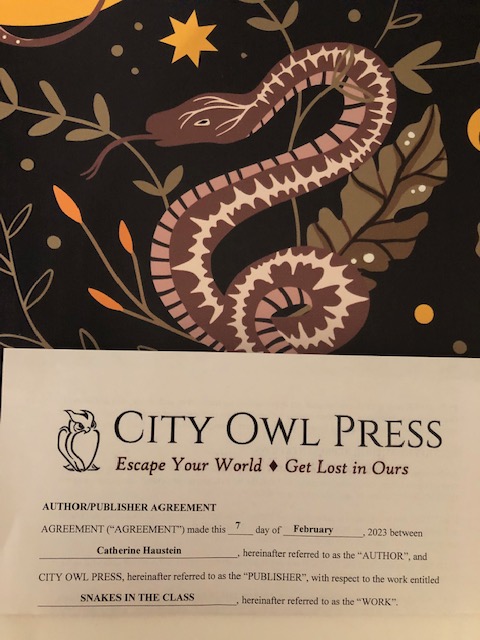
My worry was unfounded! I just signed a contract! Now my editor and I can go through it together as the first step in its journey to publication.  And of course, I need to start on the sequel.

Snakes in the Class is a Dark Academia. Think Lessons in Chemistry plus The Addams Family set at a college for monsters in a small, midwestern town. Out this August—in time for back to school!