Oil’s long, dirty, and highly useful fingers

Do you think most acetic acid comes from fermented apples? Think again.

Saudi Arabia is going to cut oil production and although they say they are not doing it for political reasons, we can see our politicians here vocalizing what could be their wishes such as finishing the Keystone pipeline which would bring crude to their refinery in Texas. It’s hard to imagine that some US pols even speak against electric cars made in the USA. Or maybe not. If we all switched immediately to electric vehicles powered by wind and solar energy, would we still need oil? The answer is, yes.

Fuel oil and gas are not the only petroleum based products. The paving and roofing material asphalt is a complicated mixture of large hydrocarbons and plenty of sulfur, vanadium, and nickel impurities and is petroleum based. Tar can be made from coal or found naturally, as in the La Brea Tar Pits in Los Angeles where fossils of mammoths and dire wolves have been found. But tar and asphalt are not the only additional uses for petroleum.

Petroleum is the starting material for most of our plastics and synthetic materials, everything from fibers to pharmaceuticals, starts out as a form of oil.

Hydrocarbons can be chains or rings, and are distinguished by their composition-molecules made from just two elements, carbon and hydrogen. These materials can be light and flammable like naptha and gasoline or heavier as with asphalt and tar. Although they are useful in their own right, organic chemistry can step in and add elements to the hydrocarbons to make them into entirely new compounds. But they are the necessary beginning–the feed stock so to speak.

Here is an example of making something simple, acetic acid, as found in vinegar. Acetic acid contains oxygen in addition to hydrogen and carbon. It can be produced by fermentation as in this reaction where the acetic acid is bolded.

2 CO2 + 4 H2 → CH3COOH + 2 H2O.

It can also be made from alcohol, something you don’t want happening to your wine, for example, in this reaction starting with ethanol (as in wine) and adding oxygen naturally. It’s why you need to carefully control the amount of oxygen when wine making.

C2H5OH + O2 → CH3COOH + H2O

With the proper catalysts, acetic acid can easily be made from oil, for example as in this reaction:

2 C4H10 + 5 O2 → 4 CH3CO2H + 2 H2O

Why would anyone do this when acetic acid can be made from fermentation? We need a lot of it. Non-food acetic acid has been produced industrially since the 1960s and accounts for 90% of the usage world-wide. Over 5 million tons are produced each year. It’s a high demand chemical used to make coatings, paints, inks, and plastics such as PET. It’s one example of how we use chemical feed stock petroleum to make products we use every day.

Twenty percent of each barrel of oil is used as a chemical feed stock and when oil goes up in price, so does anything made from oil.

There are biological ways to make synthetic materials as discussed here and in my novel Lost in Waste. But as long as there is plenty of oil available, it has a long history of being used as a fuel and a feed stock and this isn’t likely to change anytime soon. Kicking the world’s oil addiction won’t be easy, unless we want to go back to life as it was 100 years ago. And we all know how some politicians love plastic bags. Fortunately, crude oil prices are still much lower than their highest point in 2008 so don’t despair. We will have plenty of low cost cigarette butts other plastics in the near future. In fact, the petrochemical industry will no longer be investigated if a plant catches on fire. That’s bad for people who lives near the plants, most on the Gulf Coast, but good for plastic prices.

Who’s here for the apocalypse? (My neighbor for one)

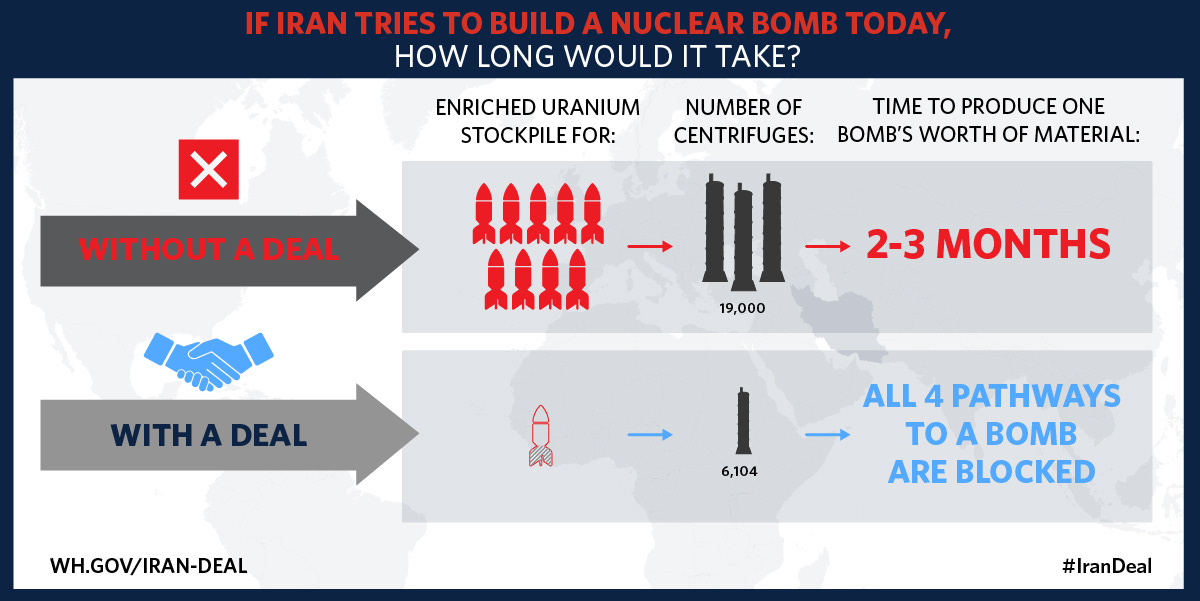
You may have heard of a consequence of the US, in 2018 under Trump, getting rid of the Iran Nuclear Deal. The deal, made by the Obama Administration, limited and surveilled Iran’s nuclear capacity. Netanyahu, Israel’s Prime Minister, did not like the nuclear deal—saying it could bring another Holocaust. The reason he had for his qualms was sanctions on Iran were lessened and they got financial relief for their concession. Israel had approved the deal but he represented new leadership. As a consequence, he wouldn’t negotiate with Biden (who did not bring back the deal) for peace in Palestine and is happy Trump won. Trump has a policy of maximum retribution to Iran.

The above graphic is from the Obama White House

The outcome of the having no nuclear deal is maybe a bust. Iran’s nuclear program is getting no surveillance. They don’t care about our feelings and thus, Iran has made enriched uranium. They are close to making it weapon-grade. What is that and why should anyone care? Sit back for a science lesson. (or skip to next paragraph with a bold font if you want to avoid it)

Uranium is a dense heavy metal that decays–meaning it’s radioactive and gives off particles and energy and transforms into a slightly lighter metal, thorium, which is also radioactive

It emits an alpha particle, the Mac truck of subatomic particles, which is also a helium nucleus. This is where earthly helium comes from! All forms of uranium are radioactive, but not the helium it emits. Don’t worry, your party balloons are safe. (If you want to learn more about sub-atomic particles, let me know!)

Uranium is unstable and thus radioactive. The word radioactive was coined by the Curies in 1898, with radio being related to ray as in a ray of light Many radioactive elements and nuclear reactions cause their surrounding to glow due to their energy. Uranium is slowly radioactive with all isotopes having long half-lives. It can be found in deposits across the globe.

Uranium can be made into a source of power when it undergoes fission. During fission, the core of the atom (the nucleus) is hit with a neutron and split into smaller pieces and new lighter elements are made. The lighter elements are more stable and the energy needed to hold the large unstable uranium together is released. More neutrons fly out and if enough atoms of the right isotope of uranium are nearby, they split other uranium atoms. A chain reaction ensues and this keeps the energy release going. If the reaction is fast enough, a bomb is created

Here’s the catch, not all forms of uranium undergo fission. Only the isotope with 92 protons and 143 neutrons in the nucleus, uranium 235 or U-235, is unstable enough to be broken in this fashion. And it’s not very plentiful. Only 0.7% of naturally occurring uranium is this isotope. And to allow for the chain reaction to occur, you need to concentrate this form of the metal. This is needed for both weapons grade and power reactor uranium but weapons grade uranium needs more concentration aka enrichment. This is not easy. Why does it take so much work? Chemical reactions occur with the outside of the atom–the electron cloud. This is an easy way to separate chemicals–by their different reactivities due to different electron clouds surrounding them. 

All isotopes of uranium have the same cloud of 92 electrons. This means the isotopes have to be separated by mass. The uranium is reacted with fluoride and forms a gas, then is passed through a porous membrane which only lets the smaller 235 isotope through. Alternately, it might be centrifuged. There are a few other less efficient methods of enrichment. This process demands lots of energy. Monitoring the energy use of enrichment facilities is one way to watch to see if a country is working on producing weapons grade U-235. 

What’s going on in Iran? After the Iran-Nuclear deal was trashed, they used centrifuge technology to enrich uranium to a concentration of 4.5%. The allowed limit with the Nuclear Deal was 3.67%. However, it takes 90% enrichment to make a bomb because a bomb reaction must go faster with more U-235 atoms close to each other. Getting to this level is a huge challenge needing a high tech centrifuge. Yes, Iran can get there if the nuclear deal remains sour for years and apparently, it will.

Right now, the world has a surplus of enriched uranium because of the many enrichment plants world wide. This is why tech billionaires want to use nuclear-powered AI. It will be fairly cheap. What country has a surplus of weapons grade uranium? The United States. We are sitting on a “gold mine” so to speak. Germany, the Netherlands, and Japan also have plenty of the stuff.

Scientists worked hard to create the bomb. Some did it unknowingly and others suffered remorse at how it was used. Scientists approved the Nuclear Deal, they supported it, and scientific collaboration is suffering at its end.  The end of the nuclear deal helped Trump achieve victory by gaining support from Arab-Americans and from his overseas pals, who are willing to make others suffer to achieve power. 

I suppose that’s nothing new but disappointing for idealists everywhere. People are terrible—they will draw out a war to get their way. Fortunately for me personally, I’ve been a scientist for so long, I no longer score in the idealist category on personality tests. That influence came from my educator parents. I’m one of those pattern seekers. I play the long game.(click for vacation photos). 

You know who also plays the long game, Christian Nationalists. They now have the president who has promised to bring the apocalypse. Yes, he did. And some of them are here for it, as this flag in my neighborhood shows. It says: The final chapter God Wins.

Here’s a view of a similar one.

It might seem harmless but look up Christian Nationalism. They are planning on seeing the Final Chapter, as in the final chapter of Revelations, which ends in destruction and god and angels coming down. The Apocalypse. You can read about these folks cheering on the apocalypse here. And by the way, they hate Jimmy Carter. 

I saw apocalypse flag flying homeowner today as we both walked our dogs. We look similar when out walking. Our paths didn’t quite cross or I would have asked her to explain more about the flag.

Do I really think the apocalypse is at hand? No. It would ruin the world economy and that’s the last thing the autocrats want. But according to the Bulletin of Atomic Scientists, it’s 90 seconds to doomsday. Better stock up on necessities, maybe a water purifier, and get your vaccines while you can! And personally, I’m going to cut back on social media because it’s full of inaccuracies and products I don’t/won’t need.

What’s the missing element in science education?

What makes a kid like science? It isn’t information or government edict, advanced courses, or religion. Yes, a promise of a good job helps kids like me who grew up middle class. but it can’t be all it is, because there are times when science is routine, boring, and demands repetition, because some of the joy of science is being able to predict.

One of my favorite exercises in high school was the bug collection, which had been done for eons. I’m not sure it’s done anymore but I remember just being so fascinated with catching the bugs and classifying them.  I needed to add a twist so future chemist me had this thought that instead of sticking the bugs on pins and putting the pins on a piece of Styrofoam or cardboard, I incased them in plastic. Each bug was set in transparent resin. Giving them a category and finding their scientific name was a whole new language, and an interesting one at that. I remember one kid getting in trouble for turning in an old collection, one his brother had done. The evidence? He had a cicada in his collection that didn’t emerge in the year we were supposed to be catching our bugs. Science triumphed. Why would you ever want to cheat in science?

What’s missing in the STEM education discussion these days is curiosity, and the sense of wonder about and the respect for the whole vast natural world as compared to the engineered world of humans. In fact, respect for scientists themselves is missing from our political landscape in Iowa.

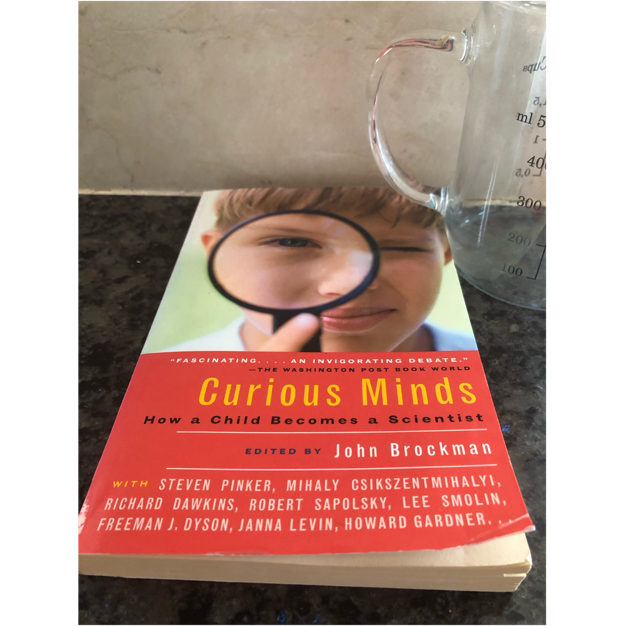
A book on a table

Description automatically generated

I was just about to put this old book in the Little Free Library near the park. I paused because I wanted to read it one more time. I don’t think enough people understand what it takes to really, really be a scientist and to persist in it. I thought I might, for a post, just go through a few of the entries in that old book and see what scientists had to say about what brought them to science.

For many, it was being in nature itself. One scientist recalled being at a summer camp in Wisconsin and becoming fascinated with amoebas. Looking at the stars was the key for another. One scientist grew up in the California mountains, surrounded by nature. As an aside, Iowa has very few public lands to allow for exploring nature. The state has severely cut back the DNR. One strike against us.

The DNR budget has been cut back for years. Our state parks have fallen into disrepair. This isn’t a great way to encourage science.

According to the book, playing with batteries and wires in a family shed and constructing tic-tac-toe machines gave another his start. Some were from families of scientists, others had parents who never finished high school. There wasn’t a standard path to science. “Scientists are people of very dissimilar temperaments doing different things in very different ways. Among scientists are collectors, classifiers and compulsive tidiers-up; many are detectives by temperament and many are explorers; some are artists and and others artisans. There are poets–scientists and philosopher–scientists and even a few mystics. … and most people who are in fact scientists could easily have been something else instead.”

The scientists highlighted their curiosity,  physical discomfort when there was incomprehension and the ability to be both free and skeptical.

The scientists interviewed pointed to a few factors which helped them along the way—financial assistance and autonomy of thought. Neither of these things will the average kid get from a right-wing authoritarian. What are we getting from our state education department?

In the science homework that I’m seeing in the schools, there’s a whole lot about evidence. What’s the answer? How do you know? And that’s fine. Science is evidence based. But there’s a whole swath of it that’s missing.

Iowa has gotten overly practical about educating kids for jobs, especially ones the state—and no doubt the parents– want them to have. These are often STEM jobs. Manufacturers are even hitting up grade school kids, telling them to work for them when they grow up. But in some cases, I’ve heard students express doubts about a life making poisons and making people fat.

Likewise, long ago the now Iowa Governor came to visit my private school science department to tell us how much she likes science and private schools. I am seeing through a glass dimly here but I didn’t like her because she didn’t get science and was not there to listen to what we had to say.

Now, she acts as if she’s done miracles with STEM education. She might even be the next Secretary of Education, all while ignoring doctors and scientists. In other words, she ignores the informed opinions that scientists with autonomy of thought have given her. This is not anything to model if you want to promote science. She is a Trump supporter and Trump said that listening to scientists is something “only a fool would do.” Instead, you have to listen to the money.

Few people on the Iowa STEM council are working scientists, especially sparse are the natural sciences and basic sciences such as chemistry and biology. I’ve seen some of the curriculum and it has a heavy emphasis on design and engineering. And of course, there are corporate partners and a focus on jobs. It should be called a sTEM Council with a lower-case s. Current science focuses on methodology which many older scientists point out, can be boring. And I really, truly worry about a future where the only people paying for science are people that are making money from it. In the past, the government and universities have been drivers in basic science, the foundation of scientific discovery.

Instead, politicians publicly bash scientists. This in turn causes a public distrust, especially among Republican voters. It’s unlikely that Iowa’s Republicans will look at the evidence. They will instead, create a science-hostile climate for the foreseeable future, making a mockery of STEM education.

What you need to know about nitrates

A short time ago, I was helping make a movie about water testing at Big Rock Park. One thing I tested for was nitrates. As I was testing, I mentioned that nitrates are a sign of fertilizer in the water. We didn’t find any fertilizer in the water that day but one of the videographers mentioned he was surprised to learn that nitrates are in fertilizer since they are also in food. Yes indeed they are and it might be giving people in the corn belt cancer.

Nitrate is an ion with a negative charge. The formula is NO3– which looks harmless enough. Nitrogen is an important part of proteins and is needed for life. Nitrates are a water-soluble way for living things to get nitrogen. Nitrogen is an element that can take many oxidation states, meaning it forms a myriad of compounds. 

The nitrate ion occurs naturally in some foods such as spinach, beets, celery, and many other vegetables. It is found as an additive in processed meats. If it’s in food, why is it harmful? Why should a water chemist check the nitrate levels in water?

Nitrates will bind to hemoglobin, displacing oxygen, causing blue baby syndrome. They also react with organic compounds in water to form nitrosamines which are similar to nicotine and cause cancer.

Nitrates in food aren’t always bad. When you eat things containing nitrate, your saliva can turn it into something useful, nitric oxide, NO.  Having slightly low oxygen such as when a person lives at high altitude or exercises until muscles ache can also help create NO. NO can help blood vessels expand and function. This reduces resting blood pressure and improves vascular function.

Saliva is an important factor in the conversion process and eating slowly will allow for time to boost the conversion to NO. Dry mouth, caused by anxiety, medications, or other imbalances, impedes the process. If you find you need to sip a lot of liquids to help you swallow your food, you might have dry mouth. Other nutrients in fruits and vegetables, including Vitamin C, can help this NO conversion process occur. In the absence of the boost from saliva and food antioxidants, the nitrates will react with other components of foods to form a class 1 carcinogen—nitrosamine. Cooking-nitrate rich foods speeds the nitrosamine formation. Here’s the information in a simple chart form.

Chlorination of water also helps nitrate form nitrosamines. We don’t want bacteria laden water and disinfection of drinking water is necessary. Additionally, the food components which inhibit the formation of nitrosamines are not present in the drinking water. Thus, nitrates in water are more dangerous and high levels of nitrates in water are associated with cancer. In fact thousands of cancer cases in Iowa alone have been linked to nitrate in water.

Bacteria can break down nitrates but when water is overloaded with nitrates, they can’t keep up. Sources of excess nitrate in water include fertilizer and manure. The EPA limits nitrate in drinking water but the nitrate limit here in the US might be too high. Even low levels of nitrate in water are thought to be harmful and have been linked to colorectal cancer and preterm births.

You may want to turn to purified water but be careful. It doesn’t always contain the healthy minerals we need,

What areas of the US are vulnerable to high nitrate levels and nitrate contamination of groundwater? Click here for a map. (Hint: lots of places.) Why should our water grow gross with nitrates at our expense? In any case, be wise about nitrates.

A plate of food and drinks

Description automatically generated

A bad combination: low altitude, meat consumption—especially processed meat,  dry mouth, not chewing your food enough, and low exercise. Will the orange juice be enough to counteract the rest of this breakfast? Ham, bacon, and sausage get you both ways—through water pollution and nitrates.

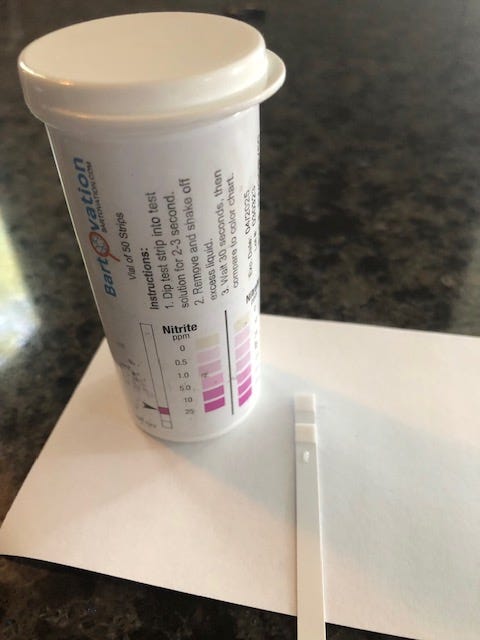
If you want to test your water for nitrates (and nitrites, an intermediate between ammonia and nitrate) there are several ways to do it. Using ultraviolet absorption, using a meter, or using test strips. Test strips are the cheapest and easiest method and you can find them on-line. It looks like my drinking water doesn’t contain nitrates. Hooray!

If you test your drinking water and find nitrates, you’ll have to invest in a water purification system. In other words, you’ll have to pay to protect yourself from the greedy few.

As You Like It

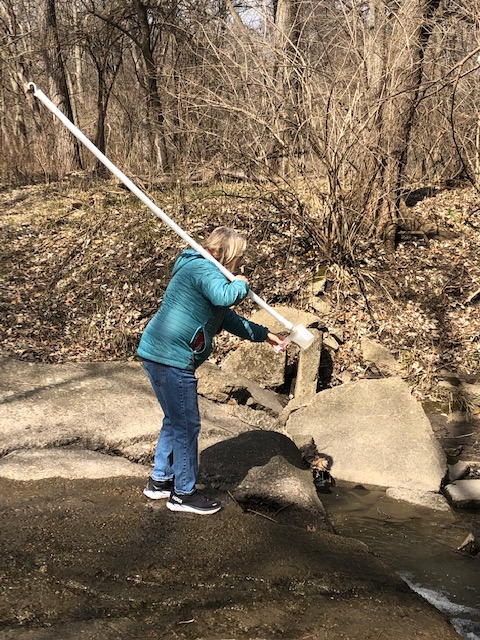
I’ve been doing some water testing for a creek that runs through a local park. You can read about it here. One reason for doing the testing is to determine if the water is safe for people to wade and fish in.

This month, I decided it was time for an arsenic test since arsenic is common in Iowa soil and water. Arsenic occurs naturally and has been known about as far back as the ancient Egyptian and Ming dynasties. It usually occurs in nature as salts and not as a free metal. The first recorded reaction yielding metallic arsenic was done by alchemist Albertus Magnes. Not even a chemist, an alchemist. Let that sink in.

Historical uses include using salts of arsenic as a green pigment and as an insecticide,

Today arsenic is primarily used as a wood preservative, although it’s found in semiconductors and the metal itself is a semiconductor. (Arsenic treated wood will take on a blue or green tint because the preservative is mixed with copper.)

Most arsenic used today is produced by China, Chile, and Kazakhstan.

Why is it toxic? Arsenic, abbreviated As, is the same column as nitrogen on the periodic table and can get involved with biological reactions involving nitrogen in a bad way. We all know it can act as a poison. It can kill slowly as well, causing bladder, skin cancer and other cancers. It can increase cholesterol and mess up your thyroid. High levels in the soil can cause birth defects.

Arsenic in Iowa hasn’t been thoroughly studied but it is concentrated in northern Iowa.

Arsenic as found in food and water has no taste or smell. Testing for arsenic poisoning was tricky until 1836.

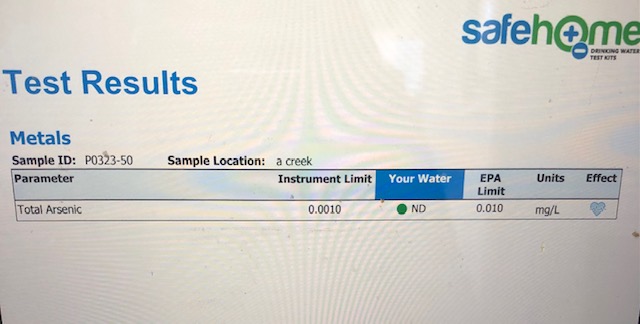
Today, testing instruments are used. I’ve put a video of me explaining a similar technique at the bottom of this post. However, this time I didn’t do the testing myself. I sent a water sample off to a lab. It was much cheaper than paying me to run the test.

The results came back this week.  The news is good! No arsenic detected!

This is most certainly As you like it!

This technique is similar to the one used to detect arsenic, but a little simpler.

Science stories of 2022 Part 2: Mendel’s corpse to Molecules to Star catching

  1. Mendel resurrected. When I read about Gregor Mendel being dug up and his genes sequenced, I considered finding a job as a soothsayer.

In my first and now out of print novel, monks and Mendel play a small role. The novel is set in 1872 a time when the field of biology was exploding with perception changing information. You see, before Czech botanist and friar Gregor Mendel showed that both male and female pea plants contributed equally to the offspring, people thought that the male contributed more. They even thought that a tiny person was inside sperm. Yes, men were the seed and women were the dirt. But Mendel’s experiments contradicted this. Although he didn’t achieve fame during his lifetime, when his studies were found, they supported the popular and controversial theory of evolution. Darwin said that sexual selection and survival determined the fate of a species and that diversity helped a species survive. Mendel showed how the diversity comes about—through sexual selection and genetic recombination. This is one thing people didn’t like about Darwin back in the day. People are equal and diversity is good? It made them feel too guilty about exploitation.

Adding to the connections with my writing, my most recent novel revolved around Isaac Newton being dug up and “reconstituted.”  

Right up my alley, the story about raiding Mendel’s casket for DNA is one of my top stories. The whole article is worth a click, especially if your knowledge genetics history is a little rusty. One interesting finding was that Mendel may have had epilepsy. He carried the genes for it. Mendel was a big guy with a huge brain. Like Newton, he suffered from bouts of “nerves.”  I’m not sure if there is a sexy Mendel novel in my future but his “resurrection” supports the notion that diversity contributes to the survival and richness of a species.

2. Molecule of the year. I admit, I’ve always found fluorine a little scary. Maybe it’s the atomic symbol F. Or the fact that F2 makes bleach look like a baby lotion. Or maybe it’s because no kind of birth control worked for the researcher I knew doing fluoride chemistry. It’s kind of a surprise that F8Cwon a molecule of the year beauty contest. It beat out some new magnetic materials for the prize (of bragging rights.) It can capture electrons so might have a use someday but right now, it’s kind of quirky—a characteristic that attracts chemists like catnip.

3. How cool is fusion? We’ve all seen a fusion reaction. It’s what’s happening on our sun. The lovely, clear light of the stars are also fusion. So, what is it exactly?

It’s a nuclear reaction which right off the bat makes it special. Most day to day chemical reactions are not nuclear reactions. They involve the outside of the atom, the electrons. Electrons make up most of the space of an atom. They are fairly easily removed with energy. Static electricity and its dramatic counter part, lightning, are example of electrons being moved by rubbing, not liking where they are, and shockingly returning to their place around atoms.

We’ve all seen fanciful atomic images where the electrons swirl around in shells or favored paths. Most chemical reactions involve those electrons hopping about or sharing their spaces to make bond. When this happens, the heart of the atom, the nucleus, remains intact. The nucleus is what gives an atom, an element, its identity. When the nucleus is changed, the atom becomes a completely new element. The energy that holds the nucleus together is tremendous and this is released in a nuclear reaction.

Most types of atoms are far too stable, too held together with energy, to do anything like this. Electrons are flighty. They’ll move. Change the nucleus? Most elements say no thanks. I like who I am. Elements in the middle of the periodic table are most likely to refuse to participate in nuclear reactions. Take a look if you want. There’s good old iron right in the center. But iron rusts you might say. It does but rusting is an electron reaction, not a nuclear reaction. It’s more of a hook-up between iron and oxygen than a change in identity for either element. An iron nuclear bomb or reaction would be in the realm of the unbelievable. Also unbelievably devistating.

Nuclear reactions as we know them occur with the extreme elements–the very small or the very large. Fusion squeezes together the smallest of the elements, hydrogen, and makes helium, the last massive inert gas. It takes much less energy to hold together the helium than the two hydrogens. The reaction releases so much energy that of course, we’ve made bombs from the process. They are ignited with a fission bomb. But to make a non-bomb and get the energy out is much more difficult.

Fusion reactors have to essentially put the sun in a jar. The payoff is massive energy that has simple by-products: helium and an energetic neutron. But is it all it’s promoted to be? Atomic scientists have doubts. But this year scientists in California created a non-bomb reaction that made some energy without blowing the container to smithereens. It’s progress towards a clean energy future. Unlike Mendel being dug up, this story was perhaps bigger than it needed to be. But I couldn’t resist giving a lesson in chemistry, and being not too tall, I like it when small things get a big reaction, so thanks for reading!

Science stories 2022 from the quirky to the personal. Part one: private items

Every science journal is rolling out a list of the top science advances of 2022. I’m going to review my favorites.

  1. Male birth control. Humans are a complicated hormonal mixture. Female birth control pills work by mimicking pregnancy hormones and prevent the release of an egg. Giving males hormones has been a bust—the men gain weight, get depressed, and have elevated bad cholesterol. Now, a non-hormonal male pill is on the horizon. It works by messing up vitamin A, which plays a role in cell growth. Apparently, a little damage to Vitamin A sensitive proteins stops sperm production. Congratulations to the University of Minnesota for this pioneering work.  
  2. Being an anti-prude, sex studies top my list and finding out that snakes have clitorises was a breakthrough.  Long standing prejudices against female animals is as old as the Bible. One of these biases is that female animals don’t need to enjoy sex. It was believed that female snakes and birds have “lost” their clitorises in an evolutionary sense.  This lead to the idea that sexual coercion or even rape was natural in the animal world. Finding that female snakes have two clitorises to match the two penises seen in male snakes shows that both male and female snakes evolved together and have mutual attraction. It would be nice to drive a stake through the Mars vs Venus idea and support the many factors, including female choice and pleasure, are at play in sexual selection which has been so successful in promoting diversity in species.
  3. Playing defense. Plan B is not an abortion. No matter how you slice it, some people have been driven mad by the thought that somewhere out there could be a homeless fertilized egg. At last, scientists are getting ahead of the game and releasing what everyone should know, but doesn’t want to. Plan B prevents ovulation. It’s isn’t causing a none of your business abortion.
  4. In another defensive move, American Medical Association called out the Supreme Court.   The AMA and more than two dozen leading medical organizations believe abortion is “safe medical care that is a decision to be made between the patient and the physician, subject to the physician’s clinical judgment, and the patient’s informed consent.” They said the “Supreme Court’s opinion would lead to government interference in the patient-physician relationship, dangerous intrusion into the practice of medicine, and potentially criminalizing care.” We all know that invasion of privacy is in the realm of authoritarian dictatorships.  The Supreme Court has been shoved upon us by the Federalists. They are not a scientific organization.
  5. When it comes to health, Iowans are not too savvy. Our covid death rate remained high and our vaccination rate was low compared to many other states.
  6. Cooking and cleaning are bad for you. These activities release airborne toxins. Frying is particularly dangerous, which makes me feel better about my short stint (was it one month or two?) as a fry cook when young. This might seem like bad news but hey, give yourself permission to skip the New Years scrubbing and frying and enjoy yourself!
  7. Feminine hygiene and hair products demystified. The life expectancy for US women is decreasing. There are many theories as to why but one thing is true—female products & their chemical content haven’t been carefully studied. One example of this is hair products, used for decades. These have been found to be a culprit in inducing some breast cancers.Another long-used product category finally getting some attention is period products. A vagina is a sensitive area as you probably know. It’s highly permeable. This means, what goes in is bound to have an effect both locally and on the reproductive system as a whole. You might think these female hygiene items are simply natural cotton but they contain thin layers of plastic  (which can release microplastics) and sometimes dyes and colorants. Some such as cups are plastic and might be dyed. Many of these are not proven to be safe. Neither of these studies were new in 2022, I wrote about one here but they are finally getting attention. This year.  the state of New York has ruled that the composition of period products must be put on labels. With increased scrutiny, manufacturers might be more careful about the health effects of their products. Now, consumers can make choices which are more informed.

Oil’s long, dirty, and highly useful fingers

Do you think most acetic acid comes from fermented apples? Think again.

Saudi Arabia is going to cut oil production and although they say they are not doing it for political reasons, we can see our politicians here vocalizing what could be their wishes such as finishing the Keystone pipeline which would bring crude to their refinery in Texas. It’s hard to imagine that some US pols even speak against electric cars made in the USA. Or maybe not. If we all switched immediately to electric vehicles powered by wind and solar energy, would we still need oil? The answer is, yes.

Fuel oil and gas are not the only petroleum based products. The paving and roofing material asphalt is a complicated mixture of large hydrocarbons and plenty of sulfur, vanadium, and nickel impurities and is petroleum based. Tar can be made from coal or found naturally, as in the La Brea Tar Pits in Los Angeles where fossils of mammoths and dire wolves have been found. But tar and asphalt are not the only additional uses for petroleum.

Petroleum is the starting material for most of our plastics and synthetic materials, everything from fibers to pharmaceuticals, starts out as a form of oil.

Hydrocarbons can be chains or rings, and are distinguished by their composition-molecules made from just two elements, carbon and hydrogen. These materials can be light and flammable like naptha and gasoline or heavier as with asphalt and tar. Although they are useful in their own right, organic chemistry can step in and add elements to the hydrocarbons to make them into entirely new compounds. But they are the necessary beginning–the feed stock so to speak.

Here is an example of making something simple, acetic acid, as found in vinegar. Acetic acid contains oxygen in addition to hydrogen and carbon. It can be produced by fermentation as in this reaction where the acetic acid is bolded.

2 CO2 + 4 H2 → CH3COOH + 2 H2O.

It can also be made from alcohol, something you don’t want happening to your wine, for example, in this reaction starting with ethanol (as in wine) and adding oxygen naturally. It’s why you need to carefully control the amount of oxygen when wine making.

C2H5OH + O2 → CH3COOH + H2O

With the proper catalysts, acetic acid can easily be made from oil, for example as in this reaction:

2 C4H10 + 5 O2 → 4 CH3CO2H + 2 H2O

Why would anyone do this when acetic acid can be made from fermentation? We need a lot of it. Non-food acetic acid has been produced industrially since the 1960s and accounts for 90% of the usage world-wide. Over 5 million tons are produced each year. It’s a high demand chemical used to make coatings, paints, inks, and plastics such as PET. It’s one example of how we use chemical feed stock petroleum to make products we use every day.

Twenty percent of each barrel of oil is used as a chemical feed stock and when oil goes up in price, so does anything made from oil.

There are biological ways to make synthetic materials as discussed here and in my novel Lost in Waste. But as long as there is plenty of oil available, it has a long history of being used as a fuel and a feed stock and this isn’t likely to change anytime soon. Kicking the world’s oil addiction won’t be easy, unless we want to go back to life as it was 100 years ago. And we all know how some politicians love plastic bags. Fortunately, crude oil prices are still much lower than their highest point in 2008 so don’t despair. We will have plenty of low cost cigarette butts other plastics in the near future.

Should you line dry your clothes?

The last time I cleaned out the dryer vent, I felt like my clothes were disappearing before my eyes. So much lint, all produced when my clothes break off fibers as they tumble in the hot air. My use of cotton, which gets more linty than synthetic fibers helped fill the lint trap.

However, a switch to non-natural fibers produces other problems. Many synthetic fabrics shed dryer lint microplastics which can be can be bad for birds, and if the particles come out in the wash, bad for aquatic life. And plastic clothes disappear, too. The shirt I have on in my profile picture has gotten almost see-through! Fragrance from dryer vents is a source of pollution. Not only that, lint is flammable. It’s estimated that many home fires start in the clothes dryer or uncleaned ducts . Yes, your dryer is a fire hazard.

Clothes dryers were developed in the late 1930s and became popular in the 1960s. I used to consider line drying something older people did. I have memories of staring at bras on the neighbor’s clothes line and wondering if I’d ever need one that large. (Turns out, I didn’t.)

Eek, it’s underwear–these are going to smell wonderful!

Each load of laundry dried at home costs about $1 . Most families do nine loads of laundry per week. It adds up to$468 per year. Dryers use more energy than refrigerators–about 4% of your total electricity costs. One solution could be to use dryer balls , which allow air circulation between your clothes and this reduces drying time and possibly keeps items of clothing from rubbing on each other.

Likewise, using the shortest wash cycle possible, avoiding hot water, and sorting clothes so that rough clothes like jeans don’t rub on soft clothes like t-shirts will help cut down on the wear and tear and broken fibers on your clothes.

I’ll be honest, I have another solution. I can’t wait until the skies clear, the sun comes out and with the help of a gentle breeze, it dries my clothes. If you find joy in the the smell of line-dried clothes, you’ve got a discriminating sniffer. Line dried laundry contains special scents, created by the sun. One, nonanal (not pronounced as you might think), is found on the skin of older people, is called aldehyde C-9 in the perfume industry, and it was one of the magic ingredients that made Chanel No. 5.”

Line drying won’t wear out your clothes or shrink them as dryers do. The sun can sterilize clothes to some extent. Some items such as Turkish towels, with extra long fibers, are meant to be hung to dry, not put in the dryer.

One concern about line drying is outdoor pollen falling on your laundry. There are a few ways to minimize this problem such as not line drying when pollen counts are high or putting the laundry in the dryer for five minutes after it hangs outside to rid it of the allergens.

Currently, only about 8% of homes in the US use a clothesline. In some places, they are banned as being unsightly, especially if used for underwear. Most people find line drying too time consuming. I must admit that a sunny day plus time to hang clothes is a luxury. Until self cleaning clothes became a reality, I’m going to indulge and breathe in the nonanal as much as I can. Please try not to look at my underwear.

Rising action: the baking powder debate

While working on a new novel, I needed a way to determine if something was acidic. I asked myself, how about adding baking powder and seeing it if fizzes–ala the volcano kids like to make with our kitchen supplies? But, since this is a paranormal historical, I wondered: was baking soda or anything like it even used in 1872? The answer is Yes. Baking soda’s near twin, soda ash or sodium carbonate has been used since the days when chemistry was alchemy or “the dark art of Egypt” and was used in mummification. It can be mined or produced chemically.

An old bottle of sodium carbonate, NaCO3, also known as soda ash

Baking soda, a less caustic close relative to soda ash, known to chemists as sodium bicarbonate, can be found along with sodium carbonate in natural mineral springs. Saratoga New York and Manitou Springs Colorado are examples of highly bicarbonated waters. It’s believed that an underground reaction produces the bicarbonate. Carbonates are common in nature and are found in limestone and shells in the form of calcium carbonate, and even in geodes.

The baking product, baking soda, was developed in by Church & Dwight to replace potash or potassium carbonate made from wood ashes, which was hard to make, not very pure, and had a weird smell.

Most laboratories have some baking soda (sodium bicarbonate, NaHCO3) handy to neutralize acid spills

Baking soda, soda ash and baking powder act as rising or leavening agents, producing bubbles of carbon dioxide to make baked goods rise and become fluffy. This rising action is called leavening. An alternative to adding a leavening agent is to whip the substance and stir in air.

Yeast is biological leavening agent, releasing carbon dioxide as an an exhale. The problem is, it takes a while to act.

Baking soda works almost instantly, but must be mixed with an acid such as cream of tartar, sour milk, sour cream, or vinegar, creating the carbon dioxide producing reaction. It’s also dependent on the amount of acid added and some things such as sour milk are not consistent in their composition.

The first baking powder contained baking soda and cream of tartar (tartaric acid, a by-product of wine making) which reacted together quickly and was expensive. Modern double acting baking powder contains an acid and baking soda plus corn starch to keep them from reacting when solid.

And believe it or not, controversy surrounded it.

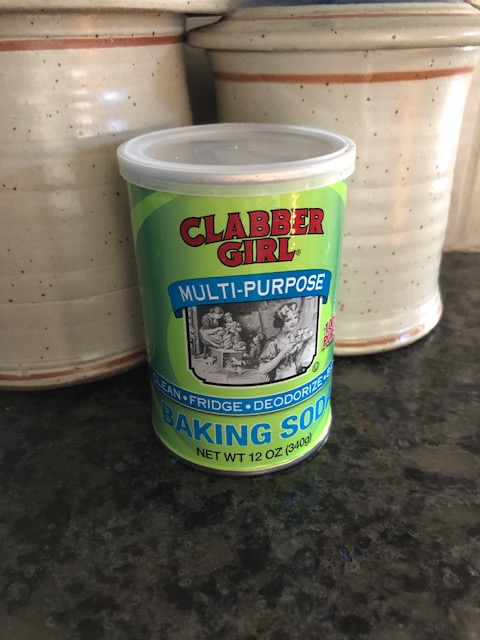
Created in 1859, the first modern version contained monocalcium phosphate, calcium dihydrogenphosphate to chemists, made from animal bones. Corn starch, and baking soda were additional ingredients. It slowly activated when water was added and fully reacted when heated (making it double acting and slower rising) Later, the monocalcium phosphate used was mined. This company was Rumford, which still makes this version of baking powder. Rival companies sprung up and alum, which was very cheap, was used in products such as Clabber Girl, clabber being sour milk. Thanks to politicians bought with baking powder fortunes, the alum based products were temporarily banned as being unhealthy.

Despite politics, the alum based powders won out due to their low price. But was the competition right, are alum based powders are bad for you? What do we know about the health effects of aluminum, the third most common element in the Earth’s crust?

Recently, nanoaluminum particles were found to impair memory and cognition in zebra fish. (Fan, Rong, et al. “Effects of Nano-Alumina on Learning and Memory Levels in Zebrafish: Roles of Particle Size and Aluminum Ion.” Huanjing Yu Zhiye Yixue = Journal of Environmental & Occupational Medicine, vol. 36, no. 6, 2019, pp. 526.)

Miners exposed to aluminum dust have elevated incidences of Parkinson’s. (Zeng, Xiaoke, M.Sc, et al. “Aluminum Dust Exposure and Risk of Neurodegenerative Diseases in a Cohort of Male Miners in Ontario, Canada.” Scandinavian Journal of Work, Environment & Health, vol. 47, no. 7, 2021, pp. 531-539. )

There are perhaps links to aluminum exposure through dust or food and neurological problems. However, most studies do not find aluminum to be easily absorbed when eaten or put on the skin. (Lead is a much greater risk and is associated with breast cancer so it would be better to worry about bullets than your leavening agent.) Aluminum and other metals are found in the brains of people who had Alzheimer’s, but it’s not known if the aluminum caused the disease since healthy brains also have some aluminum in them. One except is if aluminum is mixed with a fluoride product. This combination is toxic. One thing to keep in mind is that aluminum is commonly used in water treatments to remove cloudiness.

In any case, most baking powder now is alum based for better or worse. But there are exceptions for those who want the good-old fashioned formula. So bakers, rise and shine!

No need for sour milk. Have some alum instead.
No bones about it, alternative baking powders are still out there.