The Tragic Triumph of M.S. Tswett

photo-155

My heart breaks for a lot of people in history. Without any sort of social safety net or obstetrics or valid peer review, life was pretty crummy for many of them. M.S. Tswett is one of those heartbreakers. Almost every week, I use one of his discoveries with applications very similar to his, for in 1903, he discovered chromatography while studying chemicals in plants. Thirty years later, it became an accepted technique. Too bad he was already dead!

Before chromatography, when a chemist wanted to separate a complex mixture, say, things in a plant leaf or stem, the chemist had to chemically isolate and crystallize the molecules of study. Most of the time, this was done through a series of chemical reactions. Tswett was a botanist and he did things differently. He separated plant pigments, various types of chlorophylls, carotenes,  and xanthophylls, by allowing the chemicals to be washed through a tube of solid material. The differences in chemical attraction between the solvent and the solid and the pigments caused them to separate in bands. The ones that had more in common with the solvent moved faster through the tube. The ones more attracted to the solid came out later. This is pretty much the basis of one of the most widely used chemical techniques ever–chromatography

Little Mikhail Semenovich Tswett had a sad start. He was born to Russian parents during their vacation in Italy. (His mother was originally from Italy so perhaps she went there to visit family.) It’s not known if he was an early surprise but soon after, his mother died. Mikhail was left in Switzerland, frequently visited by his father, who gained a new family He was ever to be a man without a country. He got a Ph.D.in Switzerland and moved to Russia afterwards to be near his father. Sadly, his non-Russian thesis wasn’t acceptable in that country, nor was Mikhail’s accent. He sounded more French than Russian! He ended up getting another Ph.D. and became a professor (for female students) in Poland  where he developed his famous technique. Was it an overnight sensation? No. His chromatography of brown algae pigments gave a different result than the crystallization results of the famous botanist Molisch in  Prague. This made the poor Tswett a bit of an outcast. Another botanist, who later won the Nobel Prize, Willszateter, couldn’t reproduce Tswett’s work (it was later discerned that he didn’t have the right chemicals.)  Chromatography was declared “odd” and pretty much ignored. Tswett must have struggled financially because it wasn’t until he was forty that he married a librarian and companion in his lab work. Tswett had to flee back to Russia during WWI and died there at age 47, unable to overcome the declaration of his work as odd.

Chromatography means color (chroma) writing (graphein) but Tswett also means color in Russian. Pretty cool, isn’t it? I wonder if he ever suspected that his name would be on so many lips over a hundred years after it was discovered.

This blog entry is dedicated to the release of a new book, Pawn of the Phoenix, a detective novel set in 1903, the year of chromatography’s birth.

 

Bean nutrition, a recipe, and a book

At a cook out, I’ve always liked the beans better than the hamburger. They have a more complex flavor. There’s a reason for that. Beans are packed with good things. Beans are one of my favorite plants to study because they contain a wide variety of water soluble compounds. Since the chemicals are water soluble, they are easy to get out of the beans without complicated processes, making them wonderful plant for college students to work with safely. I’ve  studied velvet beans and you’ll find them in Natural Attraction.

Beans contain all sorts of amino acids, the building blocks of proteins, and there are a wide variety of amino acids in beans.  Nutrition chemists don’t just look at amino acid content when evaluating the nutrient content of beans. They also look at how animals absorb the nutrients. Yes, that means they look at animal excrement and see how much of the amino acids are in there. The more in the excrement, the less nutritional the beans. Cooking beans makes the amino acids more easily absorbed. Believe it or not, even how the beans are stored and processed affects the amino acid availability. Beans stored dry and then cooked are more nutritious than those stored or canned in water.

Besides amino acids, beans contain “phenolics,” a fancy word for specific kinds of antioxidants that are regarded as healthy to hearts and might prevent cancer. Red beans contain more of these chemicals than white beans.

Of course, beans are known to increase flatulence thanks to their fiber content, which gives intestinal bacteria a work out and they in turn produce gas. This can be decreased by taking an enzyme that will help break down the starchy part of the beans.

For a recipe for red beans and rice, and a peak at an exciting new Young Adult multicultural novel by author Kelly Cain, please go here. And congratulations Kelly on your book ALTERED out today.


Why do balls bounce?

In honor of a new sports romance written by my friend Jim Cagney, I thought I’d talk some about why things bounce. To understand this, let’s look at one of the first popular bouncy substance, a natural material, rubber.It’s a long chain of molecules, a polymer. There are many natural polymers, collagen for example, is a natural protein found in skin.Polymeric things tend to bounce when dropped because the stringy chains are arranged in a somewhat messy structure that’s actually very efficient. When something is dropped it picks up energy and when it hits a surface it absorbs some of the energy into its structure. This energy can be used to create heat, sound, or to become a counter force. As Isaac Newton said, for every action, there’s an equal and opposite reaction. Rigid structures will more likely absorb the impact into their structures and become hot or even break bonds. Not polymers, they are apt to react with bounce because they are elastic. The energy of the drop will compress the molecules and then, the molecules will regain their shape and bounce back. Think about what happens when a ball is dropped on a surface that isn’t hard. Lots of the energy goes into squishing that surface down and the ball won’t bounce as high because it has given away energy.

Basketballs are made a little differently from a golf ball or a bouncy ball. They are a hollow bladder filled with air with a polymer coating. This polymer is often leather which is collagen, the skin protein. The air molecules inside the ball do a great job of moving in response to hitting a surface. But they don’t like to be near each other–air likes to fill space, much like paper on my desk. The ball will distort when it hits the floor but quickly get a push back from the air and bounce. The more force you put into the dribble, the higher the bounce.

Congratulations to Jim on his book, On the Rebound. Available here.


No more dust bowls

One reason I became a scientist and specifically an analytical chemist is because of the role analytical chemistry has played in the environmental movement. Before methods for detecting pollution became advanced, people thought that the earth swept away pollution with some sort of Mother Nature’s magic wand. Of course, the pollution was still there, undetected by the crude tests. When I was a student, things had changed. The new methods and often sophisticated equipment created a new era of testing. The Earth would be clean again. We’d find all the pollution and get rid of it. I had such hope! Then came politics. Some politicians deny pollution as if their pocketbook depended on it. Names will not be mentioned.

One of my most despised pollutants is particulates. An Iowa politician is known for claiming that particulate pollution isn’t harmful. At first I thought he was just not informed. I sent him articles about the particulates and their dangers. He ignored them. This is why pollution hasn’t been tamed. Guys like him who don’t care about your health. So I’m here to tell you, these things are bad. They clog your lungs, they hurt your heart. They create haze.

There are two sizes, PM 10 from dust and grinding was the size associated with the dust bowl. These coarse particles can contribute to heart disease, pneumonia, and bronchitis. These particles are associated with the dust bowl, which is why I’m posting about them today. A friend has a book out about the hardships of this time. You can find it here. It’s good!

Those big particulates can kill but even worse are the small ones, PM 2.5. These come from combustion and other chemical reactions—cars, cigarettes, cooking indoors, fires, and power plants are among their creators. These cause all the problems of big particulates but they dive deeper into the lungs and are more dangerous. You can follow particulate pollution here (US) and here (world).

We all know that the Dust Bowl killed people. Let’s not repeat it. Be sure to write your elected official. There are ways to scrub and keep particulates out of the atmosphere. Shouldn’t this be law?

Iowa caucuses

I’m sure you’re all wondering what will happen at the Iowa caucuses. I can’t predict. I can tell you what happens at a caucus though.

A caucus is a party discussion about what candidate should run for president. Most people who go to a caucus have put some effort into looking over the candidates and deciding if they have the organization and the message to appeal to voters. A caucus is run by volunteers who see it as a privilege and  honor to vet the candidates. When a person goes to a caucus, they need to sign a pledge of support for the party. What happens to people who go to the caucus to support the weakest candidate? I can’t say it doesn’t happen but I haven’t seen it happen and it would be fraud.

At a caucus, people separate into precincts or wards based on address. Each ward has a captain and a secretary that can be voted out by the people. Usually they aren’t though because there is a lot of paperwork that goes with reporting and verifying the results. Once everyone agrees on the captain and secretary, a representative for each candidate will give a compelling talk about why you should side with that candidate. Then the Republicans vote and the Democrats separate into groups to be counted. Each vote or person is counted. Then the number of delegates each candidate will get is determined. These delegates are to go on to a county convention and eventually some will go to the national convention. If a candidate doesn’t have enough votes or people to get a delegate, the people who supported that person can either realign with a different candidate or talk others into joining their camp. Another vote is taken. Then the results get sent to the party headquarters.

Most people leave at this point but those who stay gather resolutions about what the party should stand for. These are voted on and become the party platform. Have you ever looked at your parties’ platform? You should. So should the candidates. Here is the Iowa Democratic party platform and the Republican one.

Nutmeg: the good and the bad

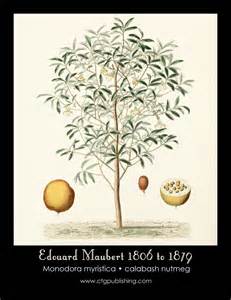
th-6I’m sure that, like me, you were all sitting around this morning wondering if a person can get high from nutmeg. The short answer is yes, but please read on.

Nutmeg is a holiday spice made from the seed of Myristica fragrant, a tree related to pines. It’s widely used in China to treat stomach problems. It’s been found that nutmeg has anti-microbial properties and can kill bacteria associated with stomach cancer, colin cancer, and inflammatory bowl problems. A recent study done by researchers in the U.S, and China shows that nutmeg can reduce levels of a chemical associated with colin cancer and creates a more healthy intestinal environment. Nutmeg also contains antioxidants.

An earlier study in Japan showed that nutmeg can help contribute to a healthy liver. So yay! Let’s eat a bunch of nutmeg. Well, no. Not a good idea. The potent nutmeg chemical myristicin can also give you diarrhea, dizziness, and make your heart race. It can cause hallucinations but not the sweet dream or enlightening kind.It’s been compared to having the flu or Montezuma’s revenge. Like most things having to do with plant chemicals, tread lightly. Remember, chemicals are a plant’s way of talking. Their words are potent.

Here’s a funny observation: I went to buy some nutmeg today and the store was out! What does that mean? Are people in Pella tripping out on nutmeg?


Sex Lives of Reindeer

I’m sure you were all sitting around wondering about reindeer sex today. Or maybe just I was. I realized that I knew nothing about real reindeer, not even that they are more correctly called caribou or that their eye color changes in the winter. The scientific name for reindeer is  Rangifer tarnadus. They are found in the arctic tundra but once lived as far south as Germany and Maine. What happened? They were hunted into oblivion in these populated regions.

Caribou herds can contain “tens of thousands” of reindeer so they are never alone.They make a clicking sound when they walk when tendons rub against bones. Both male and female have antlers. As with other ruminant animals, reindeer have a rut where the males battle it out for the privilege of mating with a group of females. The rut occurs as daylight wanes, usually in October and calves come in May-July. During the rut, the males lose weight from all the fighting etc.and after the rut, their antlers fall off. It would seem that realistically, December would not be a great time for an exhausted male reindeer to pull Santa’s sleigh. So next time you think about Dancer and Cupid, keep in mind, they are probably girls and probably pregnant.


Reading fiction: a subversive act

Recently a friend told me, I hope your novel is selling well. I won’t read it though, I only read non-fiction.

She’s not alone. Realism is in right now and has been for nearly twenty years. I’m just coming down from a “realist” phase. I read non-fiction, I wrote non-fiction. It pays pretty well, by the way. What got me back to fiction? I considered what it could do offer as we talk about our lives, and examine problems and how they affect the human soul. Fiction, because of the what each person can bring to it, goes into depth in ways that realism can’t. It’s a good tool for times like these, because there are things that realistically, can’t be said or revealed without getting yourself into trouble.

With a few exceptions, history is written by the winners. Royal families and the wealthy have the resources to destroy evidence, poison, slander, and isolate those who stand against them. That’s why the fanciful, where those people aren’t mentioned by name, might tell a more accurate tale of history than the written record holds. Additionally, most women and people of color have been written out of western history. Someone needs to tell their stories, even if they are only stories that might have been.

Author Claire Tomlin, the biographer of my new favorite historical woman, Dora Jordan, has an important suggestion: read Charles Dickens. Put yourself back in those slums with the commoners. Regain your sense of empathy. It’s a wonderful thing. Reading fiction can develop your mind’s eye. It takes some brain work because not every detail can be shown. It’s intimate too. You have to get into the heads of others. Some might be people you’re afraid to know.

What IS can be beautiful, especially when it comes to nature. But what could be and might have been has a place too. Otherwise, we limit ourselves. This might be an odd thing for a scientist to say, but there, I’ve said it. Read a fiction book and tell yourself it might have been true. It might even be better than the truth.

Male vs Female: a mistaken notion

A new study confirms: male and female brains are remarkably similar. The idea of gender similarity isn’t new. A pioneering paper by Janet Shibley Hyde (U of Wisconsin-Madison) came out ten years ago and has been supported by subsequent and previous research. In this paper, she finds a few gender differences such as  muscle mass and in some tasks such as throwing (men excel) and sexuality (men masterbate more for example, or at least, they did in 2005). She also mentions that cancer may behave differently in males and females.

However, men are not better at math or abstract reasoning, women are not more caring or moral. Adolescent boys are just as vulnerable to self-esteem issues as are adolescent girls.Girls are not more social. Boys are not better at higher order thinking. Both men and women act heroically. Men are slightly more aggressive but not by much. As these studies point out, the idea that men are from Mars and women from Venus is not based on biology. In fact, that idea is hugely harmful. It can lead to low expectations for communication between men and women. It can cause young women to forsake math and science.  I was urged to do this by the high school counciler since supposedly women did not have the brains for it. The idea that just girls have self-esteem problems leaves vulnerable boys overlooked.

Harping on gender differences goes back to  1879, around the time people also thought that there were racial differences that mattered.  As early as 1918, this notion was being questioned. Scientists couldn’t find the cognitive differences. This didn’t stop the book Men are from Mars, Women are From Venus from selling over three million copies. The author of that book even maintains a relationship advice site and sells nutrition products from it. I was given a copy of it by a boss.I’m not sure why. Bottom line: it’s crap. Feel free to defy expectations.