

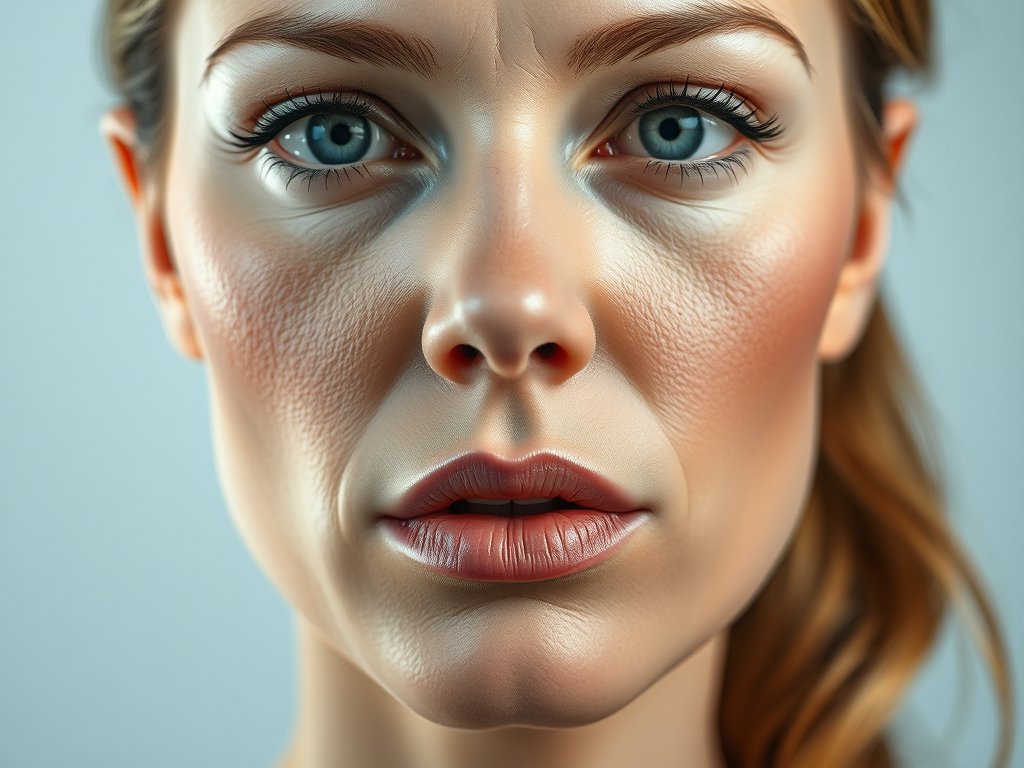
Good-looking people get treated better. In particular, women use beauty to gain a sense of superiority and often groom themselves to signal that they accept the social hierarchy. People need to look their best to impress and the number of Botox faces in politics is obvious. There is even a specific look to some of them with the prime examples cited as Matt Gaetz and Kristi Noem. Matt Gaetz has resigned from the Senate due to ethics concerns. Kristi Noem is famously known for killing her dog and posing in front of people held prisoner while flashing her Rolex. The Trump family is rumored to have spent millions on cosmetic procedures, including Botox. Most people, including Elon Musk, see nothing wrong with giving your looks a boost. Could this affect their decision making? Maybe.
Botox is an injection made from purified botulinum toxin, a protein derived from a bacterium called Clostridium botulinum. This bacteria is widely found in nature including in dust and notably in an aquatic, anerobic environments, such as found when plants or animals, including algae decompose. Many living things, alga, and invertebrates, are not harmed by this toxin. Fish and water birds are generally immune but can be killed by high concentrations of it. Pollution encourages its growth. (citation)
In most warm-blooded animals, it produces muscle paralysis which can cause death. It is associated with eating poorly preserved food, often caused by the spores which resist high temperatures associated with cooking. Farm animals can get it from spoiled hay or silage. (citation)
In medicine, when extracted from algae, purified, and administered in controlled doses, the toxin becomes a treatment ranging from wrinkle reduction to alleviating certain medical conditions like chronic migraines, crossed eyes, and other muscle problems. (citation)
Botox works by temporarily blocking nerve signals to the muscles where it is injected. This process prevents the targeted muscles from contracting, paralyzing them, which smooths wrinkles caused by repeated facial expressions like frowning or squinting. Effects typically last three to six months, after which the muscles regain their activity. However, repeated Botox injections can train the muscles to stop working, banishing the wrinkles but causing sagging and skin damage.
Botox affects more than the muscles. It can, indirectly affect the brain. Apparently, your face muscles affect the way you process emotions. When interacting with someone else, an empathetic person will subconsciously reflect their emotions. Botox can dampen this empathy and emotional interaction. People who have Botox forehead exhibit problems interpreting and responding to the emotions of others. There’s a flip side.
For some, it might improve mental health by dampening emotions. However, it can cause brain fog.
There’s another wrinkle to this whole Botox thing: people who are “too beautiful” can be seen as less trustworthy. This is one reason the occasionally unattractive photo of a politician probably doesn’t inflict much harm.
Next time you see a politician, or anyone, with a face that fails to move, consider that the empathy factor could be missing. Empathy is an important leadership skill, fostering innovation and engagement. Empathy is a building block of society.
There are other causes of lack of empathy, such as burnout or stress. Fortunately, it can be relearned.
No one wants to be reminded of the advancement of old age, and being older can set you apart from the rest of society, so the Botox trend is understandable. The other day, my granddaughter studied me—with no makeup—finally said, “When you are really old and have no teeth, I’ll give you popsicles.”
The last time I saw my grandmothers, I’d stopped by on my way to a conference. We shed tears upon parting which became lonely sobs in the car. I didn’t know it was the final good-bye but the poignancy of the moment, the raw humanity, the love and advancing loss, the tenderness and the sorrow, has stuck with me forever since. I’m not sure why some of our leaders are so inhumanly calloused, but I for one, will be watching their brows and voting for empathy.














 Catherine Haustein