Butterfly Release

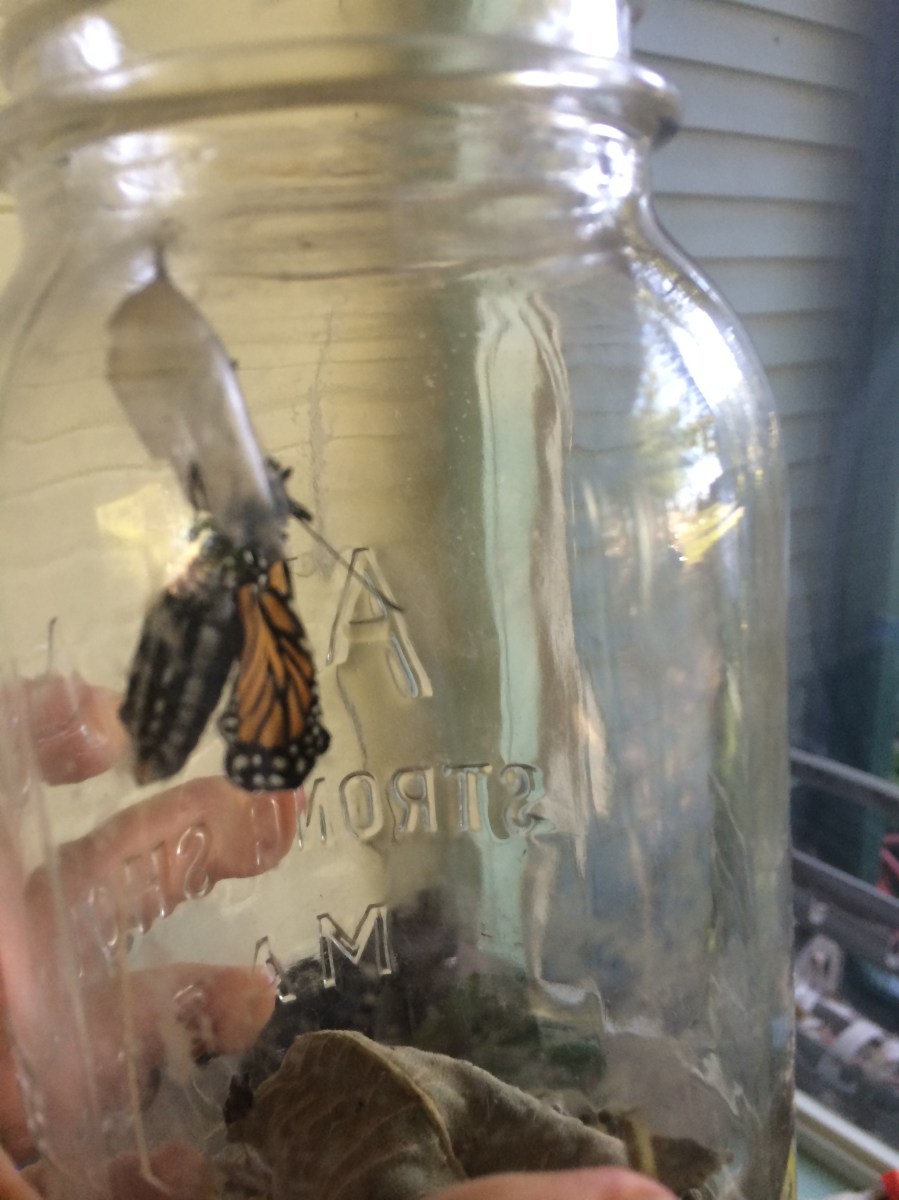
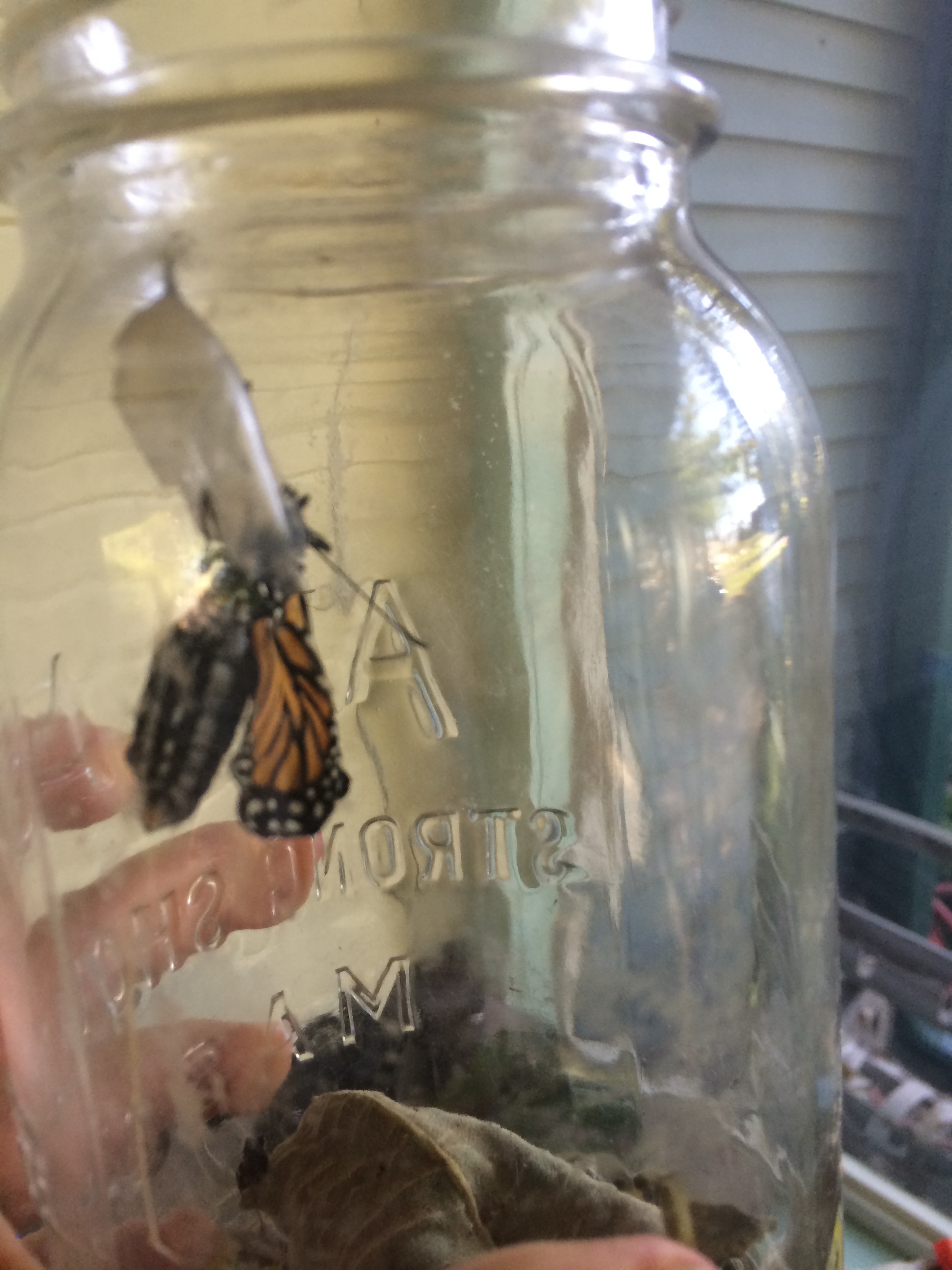
I had six caterpillars on my milkweed and I put two in a jar with some milkweed and brought it in my breezeway. Both formed a chrysalis, one a few days before the other. After about ten days, one butterfly emerged.

The chrysalis turned dark and you can see the butterfly inside.

The first one came out of the chrysalis yesterday about 4:30 pm. The wing pattern showed that it was a girl!

On Sunday afternoon about 4:30 pm, she came out!
She crawled out of the jar.
Wings need to dry in the sun, so I devised this to get her into a sunny and dry spot.

As shadows fell, she was still clumsy so I made her a room for the night.

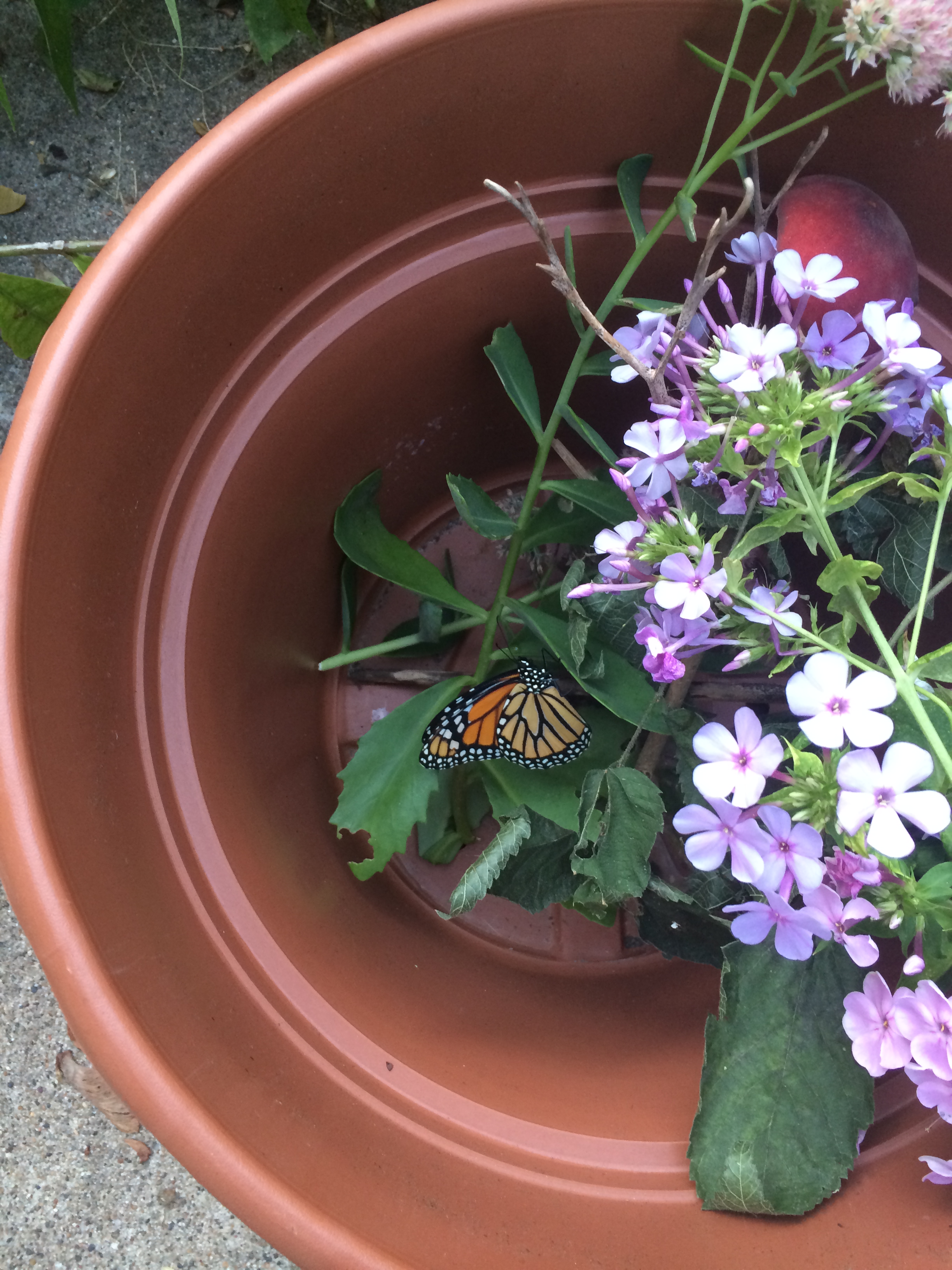
I put her in her room in my breezeway and covered her with a laundry basket. In the morning, once the temperature was above 65 F, I brought her outside to greet the sun. Before I could snap a photo, she climbed to the phlox, took a sip, and soared away into the morning.

The second butterfly was a girl too. She came out at 9 am Wednesday and by noon was flying around the yard. This video shows her taking her first drink of nectar.

Models and Mimics: An Excerpt from Natural Attraction

Tajen by my son-in-law Zach.
Taken by my son-in-law Zach.

Excerpt from Natural Attraction

Genus Ithomiinae A group of butterflies found in neotropical regions and studied by Bates as he explained biological mimicry. These small butterflies have stark black markings with bright orange, yellow, and/or blue coloring. Toxic or unpalatable to birds. The Model.

Leptalis nehemia A neotropical butterfly in the Pieridae (cabbage butterfly) group, also   studied by Bates. Although tasty, this little one resembles the Ithomiinae and thus avoids predation. The Mimic.

Complex North American examples of mimicry include the Monarch (Danaus plexippus, the Model) and the Viceroy (Limenitis archippus, the Mimic). This mimicry is complex because the Mimic is a bit bad tasting; not helpless, really.

At the next rehearsal of the sideshow, Madame made an announcement.

“We need a narrative. We will be working from a script in the future.” She put her hand to her forehead. She was holding a sheaf of paper. “Ah dear, me. Shakespeare had it easy. I’m overwhelmed with responsibility but even with my day-to-day pressures, I managed to create a masterpiece. It’s all an audience could want. Not too intellectual. Simple words. I incorporated the freaks and mining. It’s a melodrama with a sad ending and a fine cautionary moral. We’ll sell handkerchiefs to accompany it. I have it here. You must study it and perform it tomorrow evening.”

Michigan & Blueberries & Jam

photo-108

A quick trip to Michigan took me to the top of Mt. Pisgah and landed me so many blueberries that I tried canning for the first time.

Extra blueberries meant blueberry jam and ice cream topping.

Blueberries are known for lowering blood pressure, slowing cell damage, and improving insulin levels by keeping fat cells small. However, canning them with sugar as in jam changes their chemical composition, converting the chlorogenic acid, which imparts some of the good properties of blueberries (and might cause weight loss) into eleven different compounds. Cooking and sitting in a jar on the shelf also lowers the resveratrol in blueberries. This chemical is abundant in grapes and some claim it increases testosterone and can cut the risk of gastrointestinal cancers, although studies disagree.  Some food chemists recommend putting canned jam in the freezer to retain the health benefits. My jam isn’t as nutritious as fresh blueberries but it was fun to make and is so good that we had peanut butter and jam sandwiches for dinner.

.

Black Nightshade & A Dog

Black Nightshade
Black Nightshade

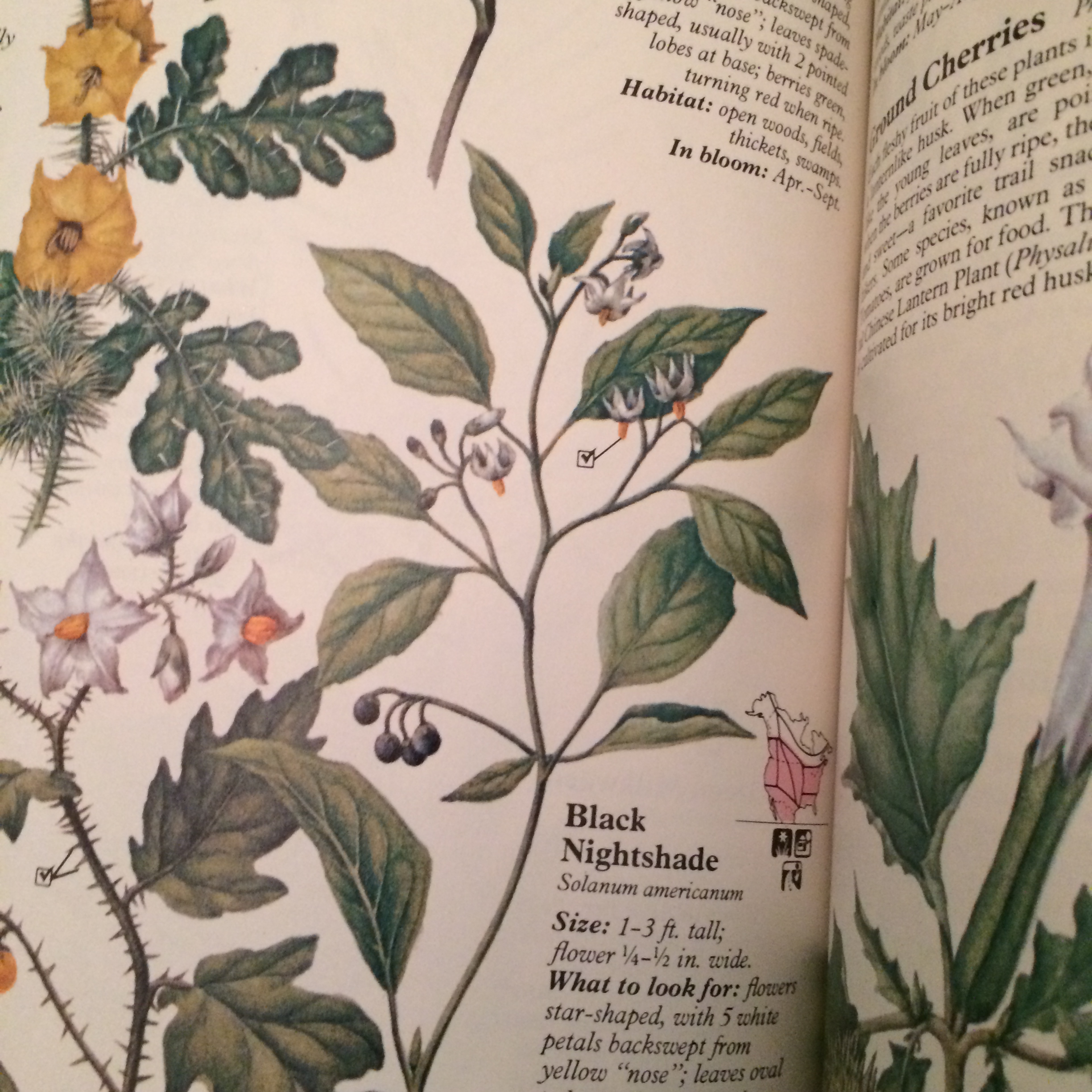
Here’s a plant that you’ll not find in my yard–only in a book. Black nightshade contains atropine, a toxin. A while ago I had a collie that developed a medical condition. Her eyes rolled back in her head. She acted wobbly and goofy. Brain tumor, I thought. I took her to the vet who couldn’t diagnose it. He suggested a specialist far away. The thing was, the dog was happy, as if she was drunk. I didn’t want to do anything since she was happy and old. It didn’t seem worth the trip. One day I watched her wander around the yard, which is large and not always well kept. She ate some plants growing under the deck. Yup. They were black nightshade. Out they came and the dog recovered.

Poke!

Poke!
Poke!

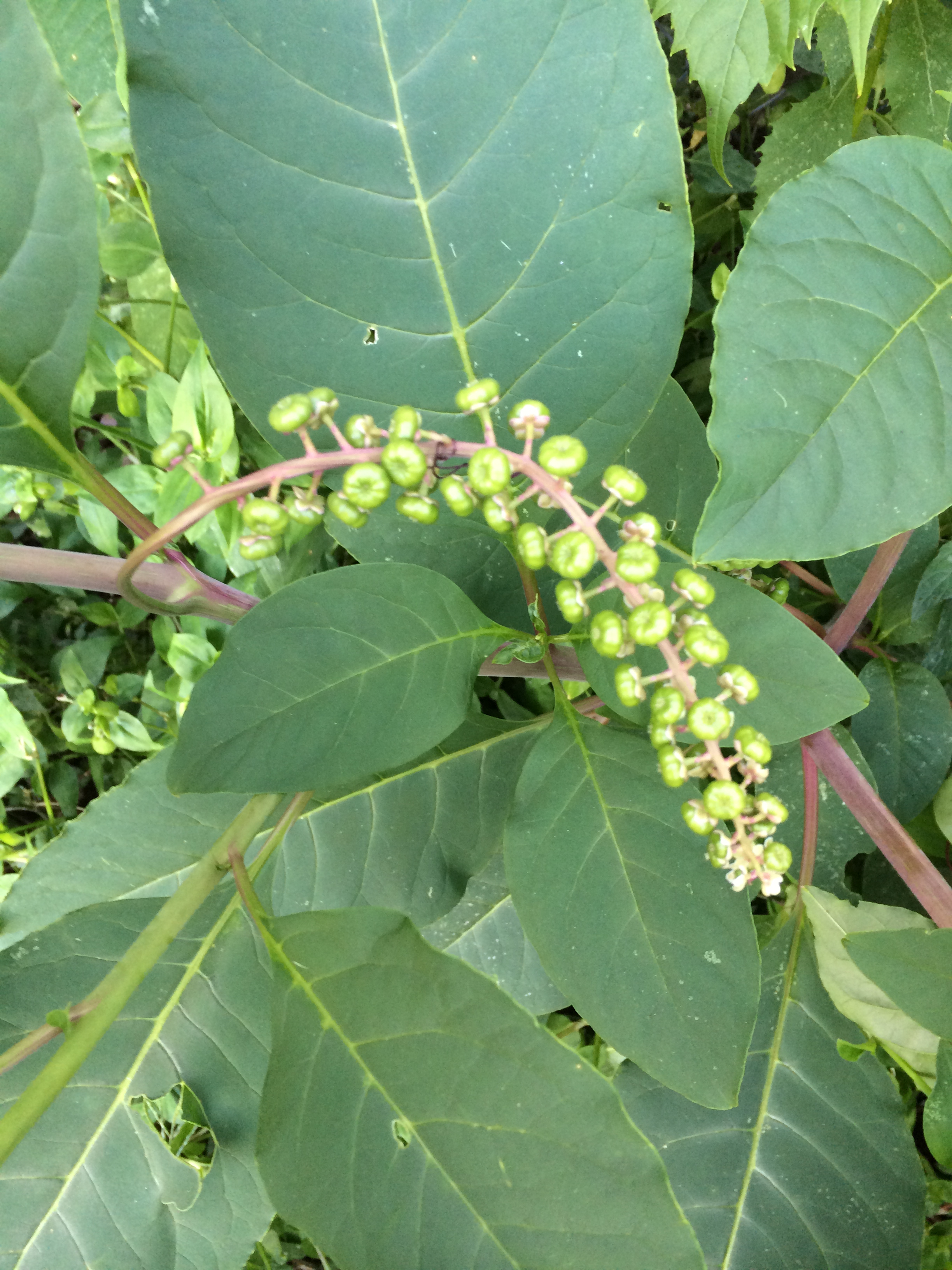
I live in a very old house and there are strange things in my yard. Do you know what this is? It’s not ripe yet and I’m not going to let it live. Pokeweed (Phytolacca) has been called “useful but dangerous” because the berries were used for ink by pioneers. It’s said that the leaves are edible if boiled in two changes of water. That’s the useful part of it. This plant shouldn’t be messed with–stems, seeds, roots and leaves are poisonous. Pokeweed can even kill large animals!  Other animals such as doves and opossums  love those berries. I like doves and opossums but sorry pokeweed. You have to go.

Feeding frenzy

These will not be pretty pictures. It’s hard to say what’s eating the milkweed faster, monarch caterpillars or aphids. For a poisonous plant, the milkweed sure provides a tasty treat!

A monarch caterpillar is unconcerned about aphid damage on the milkweed.

There are lots of things to try to get rid of aphids. I prefer squashing and cutting off the infested tops and dunking them in water before discarding. Aphids drown fairly easily. You can also dab them with isopropyl alcohol. Just don’t harm the monarch eggs or caterpillars.

I also use the relocation method. Move the tiny babies (some use a paintbrush) to another leaf and cut the infected plant’s top off.

Relocated and rushing to the underside of the leaf

One thing I’ve noticed, the monarchs and aphids prefer the same leaves!They must be the tastiest.

Another one on an aphid leaf.

In less than a month the caterpillars will be butterflies and on their way.Until then, hold on milkweed!

A Frank Talk About Panda Sex

How exciting that Mei Xiang the panda has given birth to twins at her home in Smithsonian’s National Zoo. As we all know, pandas are endangered. The giant panda population totals around 1000-2000 individuals, now only found in the wild in Shanxi, Gansu, and Sichuan provinces of China. Pandas area a victim of habitat loss and poaching, two things that wipe out a species faster than anything. Why you may wonder, is life so hard for  pandas?

Factors contributing to their decline include the following:
Problem #1. Bamboo forms 80% of the diet of both wild and captive pandas, with the remaining 20% being eggs, rodents, insects, and other protein sources. This low-calorie diet makes them a little lazy.
Problem #2. Female pandas only go into heat once a year and this might last a day or maybe three at the most.  Males only have sperm for part of the year.

Problem #3. Even when they have sperm, they sometimes can’t figure out what to do with it. Pandas like to be alone and yet, need some sex lessons from others, prompting preservationists to prepare sex tapes for pandas. How effective these are has yet to be proven. The panda twins were conceived with artificial insemination from two donors so probably the panda sex tapes aren’t all that titillating for the pandas.

Problem #4. Fireflies flash, birds sing, but panda communication is primarily through scent. Scents diffuse slowly although persistently and when you live alone, have a day to mate, and there aren’t many of you this could put you on the 40-year old virgin train.

It’s good they are in zoos, right? Well, maybe not. Pandas have another problem(this makes 5) . They can accumulate perfluorinated compounds (PFCs), artificial substances used in water proofing and found in carpets, textiles, leather, food containers, noon-stick pans, fire-fighting foams, cosmetics, and upholstery . This toxin is world wide. In China it’s showing up in wildlife, including pandas.Pandas in zoos and near cities have more PFCs than those in the wild.These substances could interfere with panda reproduction. At least, they cause reproductive troubles in lab rats, making the offspring weaker.

One last issue facing the new panda babies is that mom seems overwhelmed by multiples. (In fact, the smaller twin has died.)

Will pandas make a come back? it’s hard to say. But one national symbol did so thanks to hearty regulations, and so, it’s possible. Here’s hoping and congratulations to the Smithsonian Zoo and Mei Xiang.

Monarch Update

2 monarchs

We’re headed for the 4th generation of monarchs in the garden this summer. This next batch will be the ones to fly away to Mexico.  The eggs have been laid by now and caterpillars across the state are hatching on what is left of our milkweed plants. By what’s left, I mean that which has escaped the Roundup, a decrease of approximately 58% since 1999. Half of all overwintering monarchs are Midwesterners, making the loss of their primary food source a crisis

(Here’s more about it.)

There are 74 species of milkweed and 17 in Iowa.No doubt about it, these things could be called weeds. Once you get them going, they spread like the dickens from their roots. They’re poisonous too. (But the blooms smell wonderful!) The milk or latex holds cardenolides (cardiac glycosides), toxic chemicals, which make the monarchs taste bad to predators. Handle milkweed with care! However, like many natural products found in plants, these chemicals could be potential medicines both for heart failure and cancer. That’s what natural products chemistry is all about–finding things in nature that can benefit humanity. It also brings up WHY scientists dislike species loss. Besides being a tragedy from a biological standpoint and an aesthetic standpoint, it could be a tragedy from a natural products standpoint. More than butterflies will be wiped out if milkweed plants are lost forever.

An Unruly Woman

I’m going to have a story in an anthology. It’ll be out November 1 and you can pre-order it here.

To quote from the website

“The Female Complaint:Tales of Unruly Women
A Short Story Anthology
Edited by Rosalie Morales Kearns

ISBN 978-0-9913555-5-6, paperback, 329 pp., $24.95, November 1, 2015

The thirty-six stories in this anthology, all by women authors, center around female characters who follow their own paths and tell the powers-that-be what they don’t want to hear, women who stand up for themselves, for each other, for their beliefs.”

I know you’re all fans of unruly women so check it out!