2024 Science News

2024 science news

Trust in science has fallen, not across the globe but in the US among conservative people This began during the pandemic when people decided to trust their conservative politicians instead of infectious disease experts. Project 2025, the sweeping right-wing blueprint for a new kind of U.S. presidency, will sabotage science-based policies that address climate change, the environment, abortion, health care access, technology and education...and even cancer research. The government funds 40% of basic science, science done to advance knowledge and improve health, and the research is shared with the public and other scientists.  Now, scientific research is on the chopping block.

The US isn’t the only country giving science funding an ill-advised overhaul. New Zeeland is cutting research into social sciences, favoring research into the economy. This raises concerns because this fundamental discipline is an important tool for understanding social cohesion.

Bad news for Boomers and Gen X—the lead from leaded gas probably has made you a little psychotic.

Gun violence is declared a public health crisis.

Consolidation in the fertilizer industry, made worse when Koch Industries bought the taxpayer subsidized Wever Fertilizer plant,

Fructose promotes tumor growth by helping the cancer cells make their outer membranes. Fructose is a simple sugar found in fruits.  Its use in the form of high fructose corn syrup, developed in 1964, has been criticized for causing pollution as well as detrimental health effects such as high cholesterol and obesity. Now we know that it helps promote tumor lipid growth. Lipids are fatty compounds like cholesterol and triglycerides. Lipids make up the membranes around all cells, including cancer cells. Shouldn’t some forms of fructose carry a warning label?

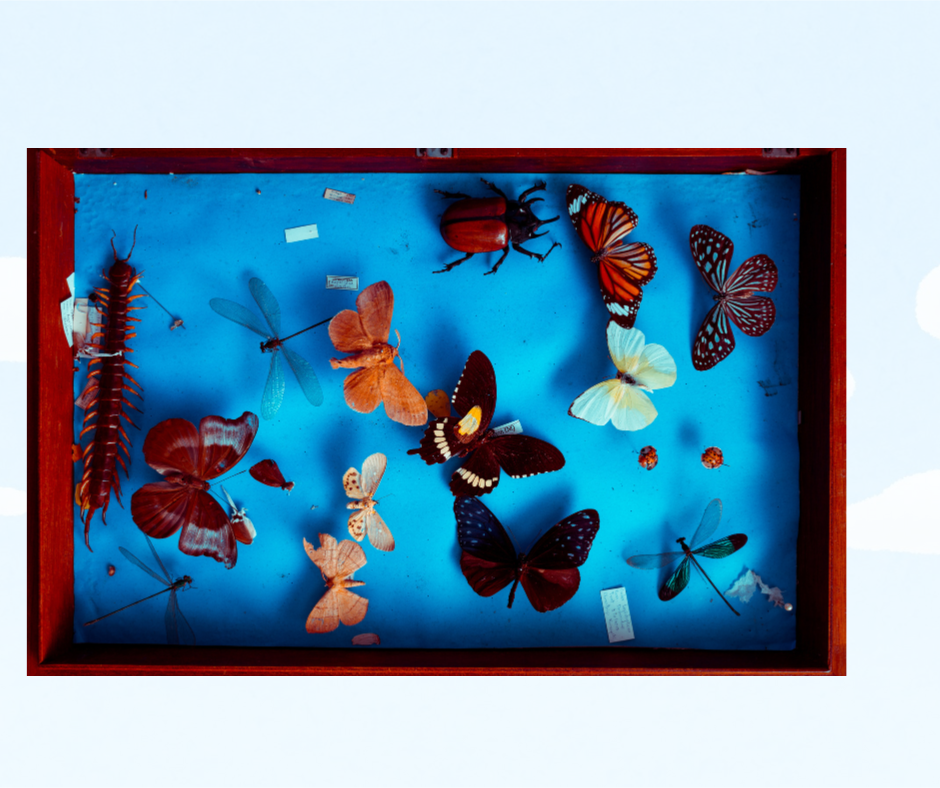
There’s mounting evidence that pesticides, plastics, and other pollutants harm our bones & butterflies & cause heart problems. Are we going to demand more regulations or will we accept our fate?

Getting some new pavement, as I did? It causes 8% of the world carbon emissions. Good news ahead! Climate friendly concrete will soon become available.

Unwashed men pose danger. You may have heard of VOCs, volatile organic compounds, which are released into the air from synthetic products such as carpet, gasoline engines, and paint. These compounds can cause health issues ranging from irritation, headaches, organ damage, and cancer. And, when men don’t wash, they emit them.

Climate change caused 150 billion dollars in damage in 2023, yet few people in the US think they will be affected. Is weather becoming more severe? Yes, it appears so. Hurricane Helene, which washed out a highway I take when I visit my daughter, was an example of heat fueled rain and winds.

Bird flu marches on, with new testing done on milk to ensure safety and track the disease. Pasteurization keeps milk safe. Yet here in Iowa, one of the dirtiest states ever, the bird flu is concentrating and progressing due to lack of any regulations.

Speaking of tests, a blood test to supplement the more invasive colonoscopy has been approved. With colorectal rates skyrocketing, this test should make getting screened easier, although it will not entirely replace colonoscopies.

Plenty of unhealthy synthetic chemicals have been banned this year, including those used in the airline and dry cleaning industries.

The US delayed acting on the Covid -19 virus, setting the vaccine development back. Are you one of those people who think the virus came from a lab? Scientists don’t agree with that.

Humans have predicted eclipses for thousands of years and yet, it’s a pretty tricky calculation. On April 8, many in the US came together to view an Eclipse. Thanks Mother Nature!

A Kinder Christmas Card

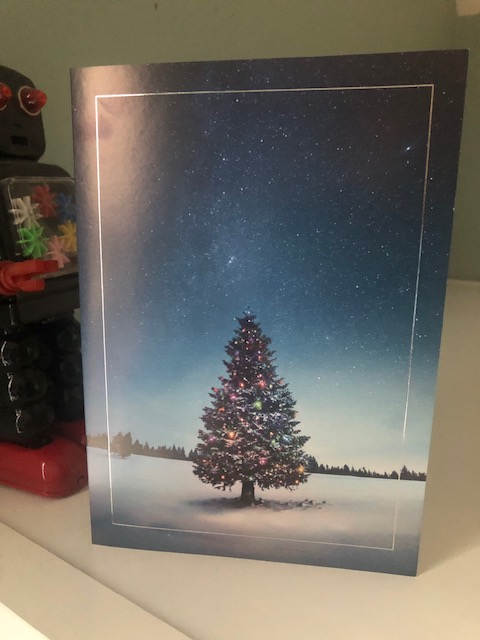
I made an attempt to connect by mailing Christmas cards this year. Yes, there’s such a thing as social media these days but believe it or not, not all I know use it. I was partly successful. Here’s one card I sent out, looking both hopeful and isolated.

I recently found a stash of old cards, some from my 102 year old aunt, and I went through them, finding everything from the philosophical to the glittery to the playful.

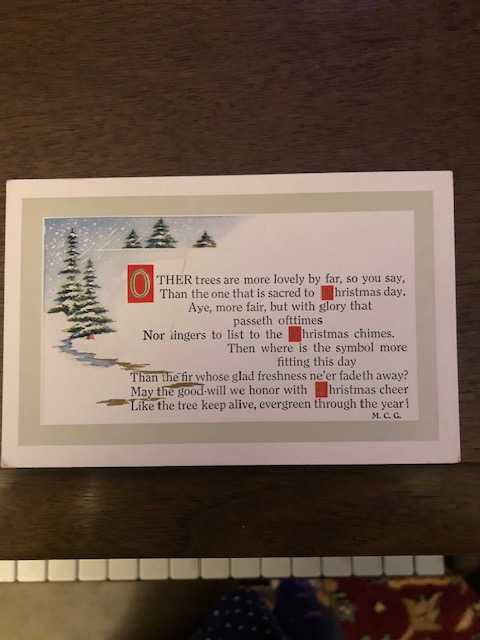
This one is by far the oldest. 

These are from the 80s and 90s. Ziggy (top right) was popular from the late 60s to the mid 80s.

This one hit me because of its kind tone. According to a search, it is from American Greetings in the early 90s, before we as a nation became hardened after 9-11. 

Yes, baby Jesus looks remarkably white but when is the last time you saw the gentle side of Christmas reminding you to love and be kind? Kindness is kind of outdated.

I’m not sure if you are familiar with the “Dan Brown” style ideas about Mary Magdalene and the more gentle and magnanimous side of Christianity but if not, here is a non-academic run down of it.  Here is a more academic version. One thing is known, the rich and powerful couldn’t endure any of that equality stuff. I’ve seen this play out in my own town. The influence of the greedy on our lives is truly exhausting. And they aren’t letting up.

We were all warned that kindness would be seen as a weakness and this is because “real kindness involves acknowledging the existence of injustice.”  Kindness and all of its moral high ground, is basically free, but we as a nation reject it over and over. Kindness, it seems, is only for kids

Kindness works against authoritarianism. To believe in authority is often associated with reduced empathy for those not like you. Having empathy, even doing things like wearing a mask, is not a winning proposition.

Looking at that card made me peaceful. You know what? Kindness reduces stress. “Kindness and caring are prosocial behaviors that build positive interpersonal connections and can uplift both the giver and receiver.”

Yes, “kindness creates positive (supportive and meaningful) social connections, which, in turn, reduce the response to stressors as well as fulfill basic, innate needs that are critical to health and longevity. Under the umbrella term of “kindness” are included.”

Besides being socially beneficial, kindness helps reduce anxiety on an individual level. Mean vibes, as in tough guy, hurt you.

This shouldn’t be confused with having no boundaries or letting the narcissists walk all over you. Read here if this is your worry.

Maybe next year, I will find a kind, sappy card. In the meantime, we can all benefit from recognizing that mean attitudes along with selfishness and greed hurt all of us. Don’t be afraid to reject the mean side of things. As it says in the previous link, walk away after the third mean thing.  As Of Montreal says, “If you feel like you can’t do it for yourself then do it for us.”

And if you have any tips for making Christmas and the rest of this year kinder, send them my way!

Lessons in Alchemy

One of my favorite monsters is Frankenstein’s monster, the guy created by the scientist Victor Frankenstein from assembled body parts and brought to life by a spark of lightning. The careless scientist was hoping to bring his dear mother back to life. You can’t blame a guy for trying. But he violated a rule of science–he worked alone. The hapless creature he made was created in secret. Only alchemists work in secret. Although alchemists came up with some still used techniques such as distillation, their results aren’t reliable, reproducible, or even understandable.  Some of their ingredients included “thoughts and prayers.” They’ve failed “peer review.” They weren’t necessarily mad scientists, just bad scientists.

The rules of new science are:

Never work alone in lab.

Keep a carefully detailed lab notebook.

Share your results with others so they can be verified and reproduced.

Thus, to work in secret is to bring about all sorts of trouble. In 1818 when the novel Frankenstein was published, scientists in Mary Shelley’s native England and in other countries close to them culturally were just beginning to move away from alchemy.  Understanding electricity was the new hot topic. Batteries made from two metals and an electrolyte were a breakthrough in Italy. In the US, Benjamin Franklin established that lightning was a huge static charge and that it was attracted to tall pointy objects. No more would people see a lightning strike as being the hand of an angry God. It was Mother Nature. 

Inspired by electric eels and frog legs jumping between the poles of a battery, humans hoped that electricity could “reanimate” dead things. Shocking executed people to see if they would revive was tried unsuccessfully.   

As for Frankenstein’s creature, he turned out to be intelligent and sensitive, but without parental guidance. He resorted to menacing his creator once he had been firmly rejected and had no companion to turn to. Like all great writing, Frankenstein says something about the human condition. The novel makes a statement on nature and nurture and the cruelty of judging and rejecting someone based on their appearance.

Yet here we are, facing the same kind of science that made the creature and made him lose his mind. 

Project 2025, the sweeping right-wing blueprint for a new kind of U.S. presidency, is here. It will sabotage science-based policies that address climate change, the environment, abortion, health care access, technology and education...and even cancer research. The government funds 40% of basic science, science done to advance knowledge and improve health, and the research is shared with the public and other scientists. In fact Obama made sure all of us can access federally funded research. Now, scientific research is on the chopping block.

If Congress agrees to the cuts and to the foolish idea of replacing government scientists with many years of experience with political loyalists, expect to see bad science. Scientific growth requires autonomy of thought. (This isn’t the same as technological growth.) No doubt other countries will take the lead in basic science research and could share information with our scientists if they are allowed. Corporations will do their research and patent it but it won’t be basic science and it won’t be public. 

As an indicator of things to come, a panel of non-expert politicians recently declared that COVID came from a lab, something most scientists don’t see evidence for, and that Trump did a great job handling it. (A prestigious science journal published results saying the US delayed acting on the Covid -19 virus, setting the vaccine development back. Are you one of those people who think the virus came from a lab? Scientists don’t agree with that.)

This is the kind of “king pleasing” science done before science was real. It’s more like alchemy.Alchemists and kings frequently crossed paths in history because kings really wanted to turn less valuable metals into gold. This can be simulated by plating reactions such as this one and is probably how alchemists appeased his highness. Of course, not everyone was convinced and for a good reason. I’ve even written a futuristic novel on this theme

You could say that science in the hands of politicians and loyalists is akin to an unsupervised child. It could become a monster or maybe just make a mess. We’ll see. 

How we got The Pill

I remember the birth of the birth control pill much like many might remember Kennedy’s assassination or the Challenger blowing up. No, I wasn’t ready for birth control, but my mom sure was and as the oldest, I was deeply sensitive to her frustrations as a being a housewife who was frequently pregnant. My mom had gone to college and chosen one of the three paths available for women who were educated:  secretary, nurse or teacher. She was a teacher who had to quit her job when she was pregnant with me because showing might tell the students that she’d been up to something.  As the oldest, I must have been her confidant because I do remember her in the living room of our split level in Rockville, Maryland, sun streaming onto the wood floors,  saying how happy she was that she could just take a pill and not have kids anymore. Having some symptoms of eldest daughter syndrome at a young age, I shared her joy.

To quote Janis Joplin, my mom was searching for a life very different than what she had known. It was common for girls to look at their future in horror back then–marriage and children. That’s it. My mom was a loving mother, but being a homemaker bored her and I could sense it.

Wanting to control family size is nothing new. Some of the earliest records from ancient Egypt contain recipes for birth control, primarily soaking lint in substances such as honey and acacia leaves putting it you know where. Nursing for many years was also a suggested method. The techniques, put forth by female doctors and midwives, were for avoiding overpopulation and keeping women beautiful. The later was the most important. Interestingly enough, scientists today link an increased biological age to each pregnancy a woman endures.

The ancient Greeks had different approaches from eating pomegranate seeds (hello Persephone, you had no choice but to eat that seed), infanticide and encouraging sex outside of marriage with someone of your own sex. This may seem shocking now, but they were very aware that again, the right family size was best for society.

Women in Aztec societies ate wild yams as birth control and Native Americans used it as a tea to prevent contraception. (Note: don’t try this at home. The Pill much improves the safety and effectiveness of this home remedy.) This plant contains one of the first substances studied as a possible birth control pill ingredient.

A hundred years ago, working with plant steroids was a large push in scientific research, with numerous substances isolated from plants such as soybeans. One, cortisol and cortisol related compounds, was effective in treating rheumatoid arthritis and was hailed as a miracle cure in the 1940s. Scientists were sure that other modified steroids would provide other miracle cures, including ability to control ovulation.

The birth control pill chemically manipulates a person’s natural sex hormones. Sex hormones are steroids with a somewhat simple structure, many of them being almost identical and similar to the structure of cholesterol. The basic secret behind the birth control pill is progesterone. This hormone is secreted during pregnancy to prevent ovulation and thicken the uterus. This tells the body to prepare for pregnancy and to stop further ovulation- no eggs are prepared to be released.

Progesterone alone is not a great birth control pill material. It breaks down in the stomach too quickly. Scientists set about to modify progesterone so that it could survive being taken as a pill.

Why were people so keen on a birth control pill? For one thing, public health measures including sanitation, vaccines, and antibiotics resulted in fewer childhood deaths. As a result, family size was burgeoning, and children were becoming a financial burden. There were many reasons given for developing the birth control pill : to control population, to free women to enjoy sex, and to help people out of poverty. Many people working on and funding he perfect birth control formula  the noble goal of making sure that every person born was wanted and had a chance in life. They knew, as we do now, too many children too close together depletes the mother who is more likely to have complications in childbirth with subsequent pregnancies.  In some cases, women were fitted with IUDs to ”correct uterine problems.” Although often illegal, diaphragms were also women-centric birth control tools. However, the idea of a discretely taken medication which didn’t require insertion of a foreign object, an idea as old as time, was appealing

Katharine McCormick worked in conjunction with Gregory Pincus to find the ideal hormone. She provided funds to Pincus, an animal reproductive biologist, searching for the perfect progesterone like molecule. He tested several forms of progesterone on lab animals in a ramshackle lab in Massachusetts

When it was time for human trails, ethical and practical dilemmas raised their ugly heads. Finding test subjects wasn’t easy. One of the goals was to have ovulating and intelligent women who could be relied on to carry out the instructions to take the medication each day. It wasn’t so easy to find healthy people who wanted to take a new medication, especially when birth control still had a stigma for some.

Women in Puerto Rico stepped up to the task. Many of them thought there was no escape from poverty if they had more than a couple children. Abortion was legal fairly common in Puerto Rico. Many women from the mainland went there to have a “San Juan weekend.”  A pill was a better alternative. The trials were successful in preventing pregnancy, however, shady, in that the women who volunteered were not clearly informed that this was an experimental drug not previously tested on humans! In fact, one of the people involved in setting up the trial was on a mission to sterilize woman in Puerto Rico because he saw them as unfit. I can look back at this time and see why people can be afraid of a new medication. Thankfully, some guidelines have been put into place including informed consent. (Hopefully, these won’t be tossed out.)

Another set of patients was found at the Worcester State Hospital for the Chronically Ill, a mental asylum. Many of the women here were suffering from abuse and domestic conditions that were not bearable. Even men there were given the prototype pill to see how men reacted. These trails were a flop because no one was having sex.

The development of the Pill can fill a book. A formulation containing Norethynodrel and dubbed Enovid was developed. It was eventually called The Pill. Selling the idea to religious and social groups was a struggle. Some called it un-natural, and others compared it to permitting sexual gluttony, like being able to constantly eat cake. People still considered talking about birth control to be “porn” as shown in this comic where the woman has not used birth control but her children are naked inside the home, showing how anything can be called porn.

The first woman take The Pill, before it gained FDA approval, was not a poverty stricken over-worked mother but a well-to do white woman, Sue Dixson Searle, daughter of the Searle family, whose pharmaceutical business developed the formulation.  After two closely spaced babies, she decided she wanted a break and was happy to be “a pioneer.”  She lived to 91, dying recently in 2022, after being an enthusiastic patron of art of public lands in the Chicago area and a mother to three and great grandmother to many.  It must have been a disappointment to those who saw birth control as a means to reduce “undesirables” in the population, but the reason Dixson took the Pill harkens back to birth control in ancient Egypt—she wanted to be happy.

On Oct 1, 1957, the Pill was offered clandestinely to women since birth control was still a felony in 17 states.

The Pill was approved by the FDA May 6, 1960.

By 1965, more than 6.5 million women were taking the Pill. In 1963 the Dial Pak was introduced.

Slowly laws against contraception fell, and it was fully legalized in 1972.

 In 2023, a non-prescription alternative, the OPill was approved for purchase.

Yellow dots on blueAs for my mom, she stopped having babies and went back to work as a teacher and she and my dad resumed an active social life. People just want to be happy and limiting family size to your individual choice can make it easier.  But who knows, laws restricting its use may arise again.

The two books in the center of this snapshot of part of my messy bookcase were sources for this blog.

Who’s here for the apocalypse? (My neighbor for one)

You may have heard of a consequence of the US, in 2018 under Trump, getting rid of the Iran Nuclear Deal. The deal, made by the Obama Administration, limited and surveilled Iran’s nuclear capacity. Netanyahu, Israel’s Prime Minister, did not like the nuclear deal—saying it could bring another Holocaust. The reason he had for his qualms was sanctions on Iran were lessened and they got financial relief for their concession. Israel had approved the deal but he represented new leadership. As a consequence, he wouldn’t negotiate with Biden (who did not bring back the deal) for peace in Palestine and is happy Trump won. Trump has a policy of maximum retribution to Iran.

The above graphic is from the Obama White House

The outcome of the having no nuclear deal is maybe a bust. Iran’s nuclear program is getting no surveillance. They don’t care about our feelings and thus, Iran has made enriched uranium. They are close to making it weapon-grade. What is that and why should anyone care? Sit back for a science lesson. (or skip to next paragraph with a bold font if you want to avoid it)

Uranium is a dense heavy metal that decays–meaning it’s radioactive and gives off particles and energy and transforms into a slightly lighter metal, thorium, which is also radioactive

It emits an alpha particle, the Mac truck of subatomic particles, which is also a helium nucleus. This is where earthly helium comes from! All forms of uranium are radioactive, but not the helium it emits. Don’t worry, your party balloons are safe. (If you want to learn more about sub-atomic particles, let me know!)

Uranium is unstable and thus radioactive. The word radioactive was coined by the Curies in 1898, with radio being related to ray as in a ray of light Many radioactive elements and nuclear reactions cause their surrounding to glow due to their energy. Uranium is slowly radioactive with all isotopes having long half-lives. It can be found in deposits across the globe.

Uranium can be made into a source of power when it undergoes fission. During fission, the core of the atom (the nucleus) is hit with a neutron and split into smaller pieces and new lighter elements are made. The lighter elements are more stable and the energy needed to hold the large unstable uranium together is released. More neutrons fly out and if enough atoms of the right isotope of uranium are nearby, they split other uranium atoms. A chain reaction ensues and this keeps the energy release going. If the reaction is fast enough, a bomb is created

Here’s the catch, not all forms of uranium undergo fission. Only the isotope with 92 protons and 143 neutrons in the nucleus, uranium 235 or U-235, is unstable enough to be broken in this fashion. And it’s not very plentiful. Only 0.7% of naturally occurring uranium is this isotope. And to allow for the chain reaction to occur, you need to concentrate this form of the metal. This is needed for both weapons grade and power reactor uranium but weapons grade uranium needs more concentration aka enrichment. This is not easy. Why does it take so much work? Chemical reactions occur with the outside of the atom–the electron cloud. This is an easy way to separate chemicals–by their different reactivities due to different electron clouds surrounding them. 

All isotopes of uranium have the same cloud of 92 electrons. This means the isotopes have to be separated by mass. The uranium is reacted with fluoride and forms a gas, then is passed through a porous membrane which only lets the smaller 235 isotope through. Alternately, it might be centrifuged. There are a few other less efficient methods of enrichment. This process demands lots of energy. Monitoring the energy use of enrichment facilities is one way to watch to see if a country is working on producing weapons grade U-235. 

What’s going on in Iran? After the Iran-Nuclear deal was trashed, they used centrifuge technology to enrich uranium to a concentration of 4.5%. The allowed limit with the Nuclear Deal was 3.67%. However, it takes 90% enrichment to make a bomb because a bomb reaction must go faster with more U-235 atoms close to each other. Getting to this level is a huge challenge needing a high tech centrifuge. Yes, Iran can get there if the nuclear deal remains sour for years and apparently, it will.

Right now, the world has a surplus of enriched uranium because of the many enrichment plants world wide. This is why tech billionaires want to use nuclear-powered AI. It will be fairly cheap. What country has a surplus of weapons grade uranium? The United States. We are sitting on a “gold mine” so to speak. Germany, the Netherlands, and Japan also have plenty of the stuff.

Scientists worked hard to create the bomb. Some did it unknowingly and others suffered remorse at how it was used. Scientists approved the Nuclear Deal, they supported it, and scientific collaboration is suffering at its end.  The end of the nuclear deal helped Trump achieve victory by gaining support from Arab-Americans and from his overseas pals, who are willing to make others suffer to achieve power. 

I suppose that’s nothing new but disappointing for idealists everywhere. People are terrible—they will draw out a war to get their way. Fortunately for me personally, I’ve been a scientist for so long, I no longer score in the idealist category on personality tests. That influence came from my educator parents. I’m one of those pattern seekers. I play the long game.(click for vacation photos). 

You know who also plays the long game, Christian Nationalists. They now have the president who has promised to bring the apocalypse. Yes, he did. And some of them are here for it, as this flag in my neighborhood shows. It says: The final chapter God Wins.

Here’s a view of a similar one.

It might seem harmless but look up Christian Nationalism. They are planning on seeing the Final Chapter, as in the final chapter of Revelations, which ends in destruction and god and angels coming down. The Apocalypse. You can read about these folks cheering on the apocalypse here. And by the way, they hate Jimmy Carter. 

I saw apocalypse flag flying homeowner today as we both walked our dogs. We look similar when out walking. Our paths didn’t quite cross or I would have asked her to explain more about the flag.

Do I really think the apocalypse is at hand? No. It would ruin the world economy and that’s the last thing the autocrats want. But according to the Bulletin of Atomic Scientists, it’s 90 seconds to doomsday. Better stock up on necessities, maybe a water purifier, and get your vaccines while you can! And personally, I’m going to cut back on social media because it’s full of inaccuracies and products I don’t/won’t need.

How to Vote for Science

Vote NO for poisons and censorship!

Some in this town have gotten a political mean streak and passed it on to their kids. Kids, or another immature group, have been roaming the town late nights and early mornings stealing political signs and in darkness ringing doorbells of people who might be signaling that they are open minded. Pella is poisoned with such bigotry.

I can’t understand why people here are so afraid and define themselves by opposition to others.  Maybe they hate something inside themselves. How deep does the censorship urge go in these people? Do they want scientists to be censored? The real fear of many scientists is yes, they do. 

I’m proudly displaying signs and I’m here to confess to one more reason I’m a Democrat—science policy. I admit, science policy isn’t going to sway the vote of a low information voter. But do you think even those voters want to pave the ways for cures and sharing of information that could lead to those cures? Who should own these cures? Will they be only for the rich? Might they be curious about new sources of energy? Do they want protection from toxins and a healthy life? Do they use weather forecasting and knowledge about weather and climate to keep safe or at least comfortable? Do they want to invest in basic science? Science can bring security to our lives, security that could be tossed out with the wrong president or party in charge. 

In general, Republicans don’t like science or take advice from scientists. Remember when Trump said COVID would go away and Iowa Governor took advice from Moms about masks—even saying that people should be able to make their own healthcare decisions. As Christina Bohannan pointed out, Iowa’s policy will make it harder to keep people safe should another pandemic arise.  Even before this, Republican presidents rejected even fundamental science such as evolution in favor of weapons of war, some of which couldn’t even be made. 

Why should government be involved in science? The government has long led the way in innovations, especially in computers and the life sciences. Every new drug since 2010 has started off with tax-payer funded basic research. Basic research is the study of a phenomenon or set of observable facts to understand them without a product in mind. Funding for basic research can come from the government, academia, or business. The federal government provides funding for about 40% of basic research, much of it health related. One thing that is good about government funded research is that it is shared with the public. Accessibility to scientific findings funded by the government was implemented during the Obama years. Biden has kept that legacy alive. This means that important discoveries won’t be made secret from the public and all of us, especially other scientists, can benefit and move things forward. As Isaac Newton said, science stands on the should of giants. 

Private funding of discoveries has a few downsides. For one thing, private organizations often have CEOs making huge salaries and sometimes these people can be huge jerks. Privatized research often has less oversight and has the potential to harm human and animal subjects. It doesn’t have to share research results and thus, hoards information that can be valuable to everyone. We could even see scientific advances being made available to a select few. Think about the harassment people get in Pella simply for having a sign! 

Although it often depends on Congress, basic science could be highly disrupted by Trump’s rearrangement of federal offices. You may be familiar with the principle CEOs use when they have to look like they are doing something—reorganization. Trump has said this is something he would do and institutions such as the Institutes of Health and the National Science Foundation could face disruptions. He’s tried this before. The only silver lining is that he failed at his reorganization attempt, just as many of these strategies fail in the long run. Sadly, he appointed many unqualified people to science positions, prompting Scientific American to endorse Harris.

Scientific freedom is another consideration when deciding which party to vote for. Remember when George Busch stopped stem cell research and set back cures for things like cancer and Parkinson’s disease? Here in Iowa, we have had a requirement to teach about HPV and vaccines for it removed from the public school curriculum, a furthering of dumbing down science literacy. Why this happened, nobody is saying.  But let’s be real—Protect My Innocence is probably hiding under your bed on this one. 

Trump has already done things that alarmed scientists such as altering a FEMA Hurricane map. In fact, he has interfered with science based decision making over 200 times. (As a comparison, Biden has done this two times.)

In stark contrast, Biden-Harris has moved to regulate and eliminate toxic substances such as endocrine disruptors from our lives while Trump issued an executive order that for every new regulation, two regulations had to be eliminated. Biden-Harris made limits and laws against toxic substances a priority. They even have worked to limit polyfluoroalkyl substances, PFAS. (Read here) Meanwhile, Trumps speaks highly of asbestos.  

 There are more comparisons and you can find them here, where I got much of my information. For further analysis, click here.

It’s sad that some in Pella are prompted to engage in censorship. Just remember, according to this book if you aren’t a Puritan, you are the enemy within. But Puritans respected science, so under Republicans, things have gotten much worse. Now even scientists are the enemy within. We saw how things went when a pandemic was downplayed. Let’s not do it again.  Vote NO for poisons and censorship

And by the way, putting American flags on a sign might make it harder to steal. 

Three Little Kittens

Several weeks into kitten season, a granddaughter found a litter of kittens in a pile of leaves near my house in the yard of the home my husband uses for an office. The mother cat kept her away and moved them. I thought they were gone. A month later, three tabby kittens came around looking for food. One was grey and shy, one was black and tiny but brave, and one was big and orange. A grandson and I decided to start taming them. We got them to play with toys and come onto the back porch to eat. They were too afraid to be touched. I decided to leave them alone. This changed when the orange one showed up with a huge bite on his neck, growing goopier by the day. We lured them onto a back porch and shut the sliding glass door behind them. They leapt at the door and hid behind a desk back there. I called the local pound. Can you take them? No.

The shelter was overwhelmed with kittens.

A Twist on the Everyday is a reader-supported publication. To receive new posts and support my work, consider becoming a free or paid subscriber.

A group of kittens on a wooden deck

Description automatically generated

Above, three little kittens in the wild.

I was a little afraid of the kittens. Could they be harboring rabies or another disease? What about cat scratch fever or pathogenic cat bites? I called a vet and arranged for them to get the feral cat treatment which is spay/ neuter and basic shots, including rabies. I asked that the injured kitten get an injection of antibiotics. I bought some cat handing gloves. My grandson who works for a local vet caught them and one by one, he and I took them to get the feral treatment. Did I get them tagged with a cut on the ear to signify a treated feral cat? No, because I had and still have hope they can be pet cats for someone someday. Since the rabies vaccine doesn’t reach full effect for a month and because the orange one was hurt, they’ve been kept inside at my husband’s office in the house next door. They’ve passed the time limit. They could go outside. But they don’t seem to want to. And the office has had mice in the past. They have a job to do/

Now, my husband and I have three semi-gown kittens. The black one, Cobalt is friendly, likes to be petted and purrs for us. He ran outside once and ran right back in. I’ve declared him a pet. Probably my pet. The other two are still shy. They all use a litter box which dispels one of my many worries about having a cat—bad litter box behavior.

I always thought if I got a cat, which I wasn’t going to, I’d get a black female cat. Instead, I have this guy:

A cat looking up at the camera

Description automatically generated

I really am not used to cats, especially not jittery cats. Cobalt was afraid when I simply moved a wastebasket in the office kitchen and started the dishwasher. Having no cat to look to for advice about humans, he hid for over an hour.

The point of this post is this: spay, neuter, and vaccinate your animals. A mom cat can have four kitten litters a year. Cats can be disease vectors. Outdoor cats suffer a variety of mishaps and a large number of shelter animals are euthanized. Feral cats are not just a country problem. I don’t even live in the country—I live in town right on Main Street. 

Feeding feral cats is not the best idea. They can fend for themselves. Feral cats can sometimes have colonies and territories. Their homes can be uprooted, leaving them even more vulnerable as is happening in this town in North Carolina. It’s difficult to tame a kitten once it is past the socialization stage, which occurs before they even leave their mother.  Some feral cats are genetically resistant to being tamed no matter how much human interaction they have. And I’m no expert on cats. This is why in general, I leave things to the experts. Jane Addams wrote extensively about the problems with charity which included the “rescuers” not understanding those they intended to help. I can see this applying to me and these cats. I have disrupted their possible colony formation and perhaps their genetic destiny to avoid humans.

Although there is a debate about if cats are wild animals or not, most wild animals find captivity stressful. However, there’s evidence that wild animals experience much stress and suffering. Cats, it seems, are only semi-domesticated. Most cats eventually tame up and as someone pointed out, “They like you a lot more when it’s cold outside.”

Meanwhile, I’m going to walk my highly domesticated dog, who doesn’t like cats. Cat advice welcome and needed.

A Tale of Two Cities and how they affect you

Nearly 200 years ago, a group of men in the Netherlands were separatists. They wanted to reject the “rationalism of the enlightenment” that was creeping into religion in the Netherlands. As far as I can understand this, the Enlightenment values included liberty, progress, and separation of church and state. The latter was important to Europeans for things like abolishing wars and moving science forward without the dogma of a church looking over. But the Dutch Separatists rejected this.

The religious separatists wanted none of that Enlightenment nonsense. Starting in 1834, they began their movement to restore what might be called fervor and dogma of the Calvinists into religion. (For those not up on religion, Calvanists think God saves some and others are really sinful.) The Dutch Reformed Church had become far too liberal for them. When they were opposed by the government, the separatists decided to leave. They debated where to go and settled on the US in the farm belt. Not many in the Netherlands were sorry to see the Afscheiding—the Successionists– go.

The first band to set out was lead by Alburtus Van Raalte, a poor preacher’s kid who was last in his seminary class. His followers were also poor and never made it to the rich farmland they expected. They settled in the woods of Michigan and there they stayed, founding my hometown of Holland, on the shores of Lake Michigan which had frozen when they got there and was impossible to cross. His impoverished group was at home in the woods and saw the trees as a gift from God, ready to be exploited. More on how that worked out for some of the locals can be found here.

The other leader, Hendrick Scholte was delayed because his infant son sickened and died. He soon followed with a more wealthy group of settlers and Scholte himself had plenty of money. He didn’t want to join Alburtus, as he found the Michigan land too swampy and unhealthy. As family lore said, “the rich kept going” and founded Pella, Iowa, where I live today.

The two groups later vied for immigrants, causing some resentment. They parted further when Scholte, who was fond of trying new things, set up an independent church. He staunchly opposed any sort of Christian school because public school was vested in the “sovereignty of the people.” He even supported the anti-slavery movement and became friends with Lincoln! Van Raalte clung to the mantel of being God’s chosen and remained more orthodox in preaching. There was even a movement in the church at large to oust independent Scholte from the Reformed Church but it failed. Those who were mad about this had other grievances. These somewhat later immigrants even found the Van Raalte style church too liberal and Americanized with at least 800 hymns they didn’t like. Much to Van Raalte’s chagrin, the malcontents created a new church, the Christian Reformed Church.

The Christian Reformed Church might be best known to outsiders as giving us Betsy DeVos and her brother Erik Prince. Van Raalte came around to see the value in public education after this.

Being of Dutch decent, I have been aware of these things, but vaguely. My point is, ancient history is today’s history. People still fight over which church doctrine is the most pure, who is a heathen, which Enlightenment values to embrace or reject, and if school should be public or private. They even fight over hymns. And for us in Iowa, a former aide to Betsy DeVos is now Iowa’s education director.  If you don’t think this will influence public education in Iowa, you don’t know history. Or maybe now, you do.

More complete background can be found here and in the Van Raalte Institute in Holland, Michigan.

A painting of a group of people fighting

Description automatically generated

The Fall of the Rebel Angels by

Pieter Bruegel the Elder

1562

  • Rights: Royal Museums of Fine Arts of Belgium, Brussel

View in Augmented Reality

Pick a Straw

As the MAGA types warn that a Harris Administration could be a threat to plastic straws, I’d like to remind readers that the Iowa Republicans have been way ahead when it comes to plasticphelia. They love plastic so much that they brought back Styrofoam cups after the Democrats had replaced them with paper cups at the Statehouse in Des Moines. Styrofoam can leak styrene, a neurotoxin (brain poison), especially under hot conditions. It might explain a few things. It doesn’t have to be in a cup to give you a little zap of brain-kill—even those foam peanuts can cause anxiety, and not simply from the mess.

Later, the exalted Republicans took the bold move to save plastic bags from extinction. Consequently, you can have the delight of seeing plastic bags hanging from Iowa fence rows. I wrote about it here and later, even wrote a novel in which people living in exile wear clothes made from plastic bags.

Plastic is cheap. A little oil makes lots of plastic. And it has fueled our consumer culture. But of course, it’s clogging our bodies as well as our oceans. It even plugs up storm sewers and contributes to flooding.  In the US, 500 million plastic straws are used each day and while they are not the most prevalent plastic pollution, they are one of the most commonly visible types of plastic litter.

I have an above ground swimming pool with a plastic liner. We play in it with plastic toys. Recently, I noticed tiny plastic fibers floating in it. The raft was shedding. As much as I dislike straws and plastic bags, pool toys are also a problem since they are not recyclable. Even recyclable plastic rarely gets recycled. I used a sock over the skimmer to get the fine plastic fibers out of the pool because I didn’t want them to clog my filter system. The insoluble plastic coated the sock. I could only wonder what it would do to an intestine. Of course, scientists have been studying this. Not surprisingly, tiny plastic particles indeed do coat intestines and affect gut bacteria, decreasing some types such as Bifidobacterium, a probiotic, and increasing others associated with conditions such as irritable bowel syndrome. Straws warm or cool a drink slightly to make it more appealing to our taste buds. They are convenient, too. But is it worth the intestinal challenge to suck instead of sip?

Is it a given to use paper straws? Paper isn’t the cleanest material to produce. Trees are pulverized and cooked slowly (digested) with chemicals such as sulfite to break them down. Smelly sulfur containing gasses are released in the process.  It uses chlorine to bleach it and is the third largest source of pollution world-wide. Paper causes deforestation and paper straws also release the toxins known as PFAS.  These substances are used to coat paper food products to make them last longer. The good news here is that the Biden administration cracked down on PFAS in paper and other food packaging and soon to be safer products should be hitting the shelves. (more here) The best option is reusable straws, or maybe, as I decided, no straw at all, at least not for today, which is also my opinion of our conservative Iowa legislature. Not today.

A few straws and a leaf on the ground

Description automatically generated

Midyear Science News

Midyear 2024 science news

The US delayed acting on the Covid -19 virus, setting the vaccine development back. Are you one of those people who think the virus came from a lab? Scientists don’t agree with that.

Mounting evidence that pesticides, plastics, and other pollutants harm our bones & butterflies & cause heart problems.

Eclipse awes, unites. Thanks Mother Nature!

 Getting some new pavement, as I did? It causes 8% of the world carbon emissions. Climate friendly concrete will soon become available.

Unwashed men pose danger. You may have heard of VOCs, volatile organic compounds, which are released into the air from synthetic products such as carpet, gasoline engines, and paint. These compounds can cause health issues ranging from irritation, headaches, organ damage, and cancer. And, when men don’t wash, they emit them.

 Gun violence is declared a public health crisis.

Climate change caused 150 billion dollars in damage in 2023, yet few people in the US think they will be affected. Is weather becoming more severe? Yes, it appears so.

Bird flu marches on, with new testing done on milk to ensure safety and track the disease.

Speaking of tests, a blood test to supplement the more invasive colonoscopy has been approved. With colorectal rates skyrocketing, this test should make getting screened easier, although it will not entirely replace colonoscopies.

Project 2025, the sweeping right-wing blueprint for a new kind of U.S. presidency, would sabotage science-based policies that address climate change, the environment, abortion, health care access, technology and education...and even cancer research. The government funds 40% of basic science, science done to advance knowledge and improve health, and the research is shared with the public and other scientists.