Running Against the Tide

photo 2-24
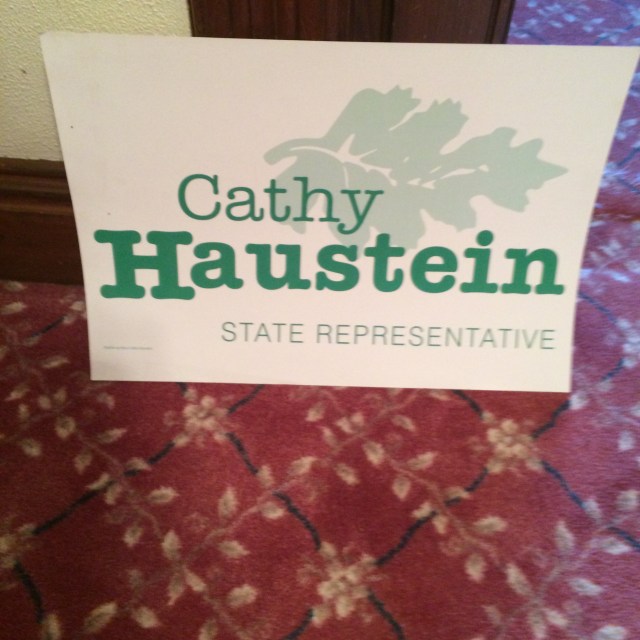
People steal and deface signs so a window sign was the go to.

A while ago I ran for public office. I ran because I was a member of League of Women Voters. We hosted candidate forums. There were two elected officials who came, reluctantly in my opinion, and used the time, not to listen, but to toss out a variety of scare tactics and to be walking, talking advertisements for their special interest donors. One man was a manufacturer who had something to do with plastics and any type of regulation was his enemy. He would ask rhetorical questions about why this or that needed to be regulated and being a chemist, I would answer him with some science. Then I figured it out–he didn’t want an answer.

The other guy struck me as terribly lazy with a million excuses as to why he couldn’t accomplish anything for our district.  I got mad. I thought “this an affront to democracy.” They represent us. So I filed the proper papers at the State House and with a lot of help from friends and my husband, my treasurer, I ran against “Sleepy.” I didn’t win, but I learned a lot.

I began by knocking on doors. I would tell people I was running for state representative and almost everyone would say “what’s that?” and “who is it now?” My big issue was water quality.

I had fund raisers. One fund raiser site was toilet papered the night before the event. I ran advertisements. A friend was a sign guy and he made some signs with an oak leaf and my name on them. Another friend had a printing company and made handouts–cowboy cards they are called. My campaign manager was the high school government teacher. Pretty soon, my opponent knocked doors for the first time in his life. He ran advertisements. He had signs. He sent out mailers. I was against God and family apparently. That kind of thing really works in my district. Probably a dead dog could have run on that platform and won. A friend of my parents even ran a radio ad against me.

You learn a lot about politics doing such a thing. You have to disclose who gave you money and you can look up who donates to your opponents. Several people donated to both candidates. When you run ads you have to say who paid for them—have a disclosure statement. One newspaper left off my disclosure statement and I got in mild trouble from the state. The next election, I wasn’t running but another person ran against Sleepy and the same newspaper left off her disclosure statement. I then wrote the election board and said I suspected that this was on purpose and it never happened again.

I got anonymous hate mail. I turned it in to the Post Office. My local party chair told the party chair of the other party (we all know each other here) and said that if it happened again, there would be a federal investigation. (True.) It never happened again,

The local chair of the opposite party called me up and chewed me out for walking down the sidewalk with some cowboy cards in hand, saying it wasn’t allowed. I called the county auditor and as I recall, he called her and said it was allowed. See the pattern here–you run for office for democracy’s sake and people harass you–not about issues or differences of opinion but on stupid “gotcha” stuff.

I saw that people do not show up to candidate forums. (I have even witnessed that the person who did not show up to the forum won the election.)  I decided that one thing that would help politics is publicly funded elections.

Here is another thing I learned about politics. If you win, there are perks such as milage to visit your constituents and you get great, and I mean great, health insurance.

I found that I was bad at remembering names. This is not a good trait for a politician.

I took of photo of my opponent’s license plate because you know what, he had plates from the neighboring county. Not even from the place he represented. No matter.  I lost. He won. A third party candidate jumped into the race. It was exciting. I spent $4 per vote. The winner spent $16 per vote.The man had to work for his seat for probably the first time ever. This made it kind of worth it to me. I wish I could write a novel about the experience but I can’t think of a single thing earth shaking or inspirational revelation about the process. I did it because I wanted to see a lazy man have to work for once in his life. That I did.


A Teacher in Summer

A while ago I was asked what it was like for a teacher to transition into summer.

First thing I did was get my house in a lesser state of randomness. It’s now just chaotic. I am not a tidy housekeeper which would no doubt shame my grandmothers. I am one of those people who can’t find things if they are put away. There are no Nobel Prizes for housekeeping. My lab on the other hand, is clean, as an analytical lab should be. Priorities.

I usually do some sort of laboratory research in the summer. During the school year, a student researcher might work 3-6 hours per week. In other words, at the best of times, each week accomplishes a little less than a day’s worth of discovery and insight. This year, I didn’t plan to do research and in fact, I miss it. As Isaac Newton said, it’s like picking up pebbles on a beach to learn the secrets of nature and they are indeed, right there waiting for discovery. Summer is a great time to make strides in research. I’m sad I didn’t come up with a project but one is on the horizon for the fall that I’m excited about.

This year, I decided to concentrate on reading and writing fiction.I became the teacher of Short Story Writing quite suddenly after my fiction writing mentor, Arthur Johnson, decided to retire. The course has been fun to teach but I’d like to give it a tiny bit more grooming.  I’ll be looking for short stories to use as examples of classics and how to do it right. Some of my favorites to use are “The Yellow Wall Paper“, “The Tell-Tale Heart,”(always a favorite of the class),”St. Lucy’s Home for Girls raised by Wolves, ” How I Contemplated, ” “Incendiary Girls,” “Edison, New Jersey, ” (often my students do not understand people trapped in a situation), “Hell Heaven,”  and “The Pukey.” What’s one thing you notice about them? There is no problem solved by a gun and no “it was just a dream.”  They might just be saying something about the human condition. Maybe there is a beautiful word or figure of speech.  I’m going to add something by Constance Fenimore Woolson. Any more suggestions? What’s your favorite story?

I’ll be going to a writing conference, the Iowa Summer Writing Festival in Iowa City. I need a pilgrimage to Iowa City every now and then to give a penance to my younger self for making a poor choice when I moved away from there and started a new job while pregnant. Talk about stressful. One thing I can say about my life is that no one ever rescued me from my bad choices. This summer, I’ll be working with Sands Hall on my third novel.

That is what I’ll be concentrating on during the month of June. In July, I’ll spend time with family, go to some music festivals, and start working on a lab manual for Instrumental Analysis which I’ll teach in the spring. I am very happy with my “Cleaner, Greener” lab manual and now have the itch to write another.

In other words, teachers use the summer to re-gain balance and to plan for the future. It’s a wing spreading time, but come fall, I’ll be happy to see everyone again.


Iowa Corn–Unstoppable

photo-174

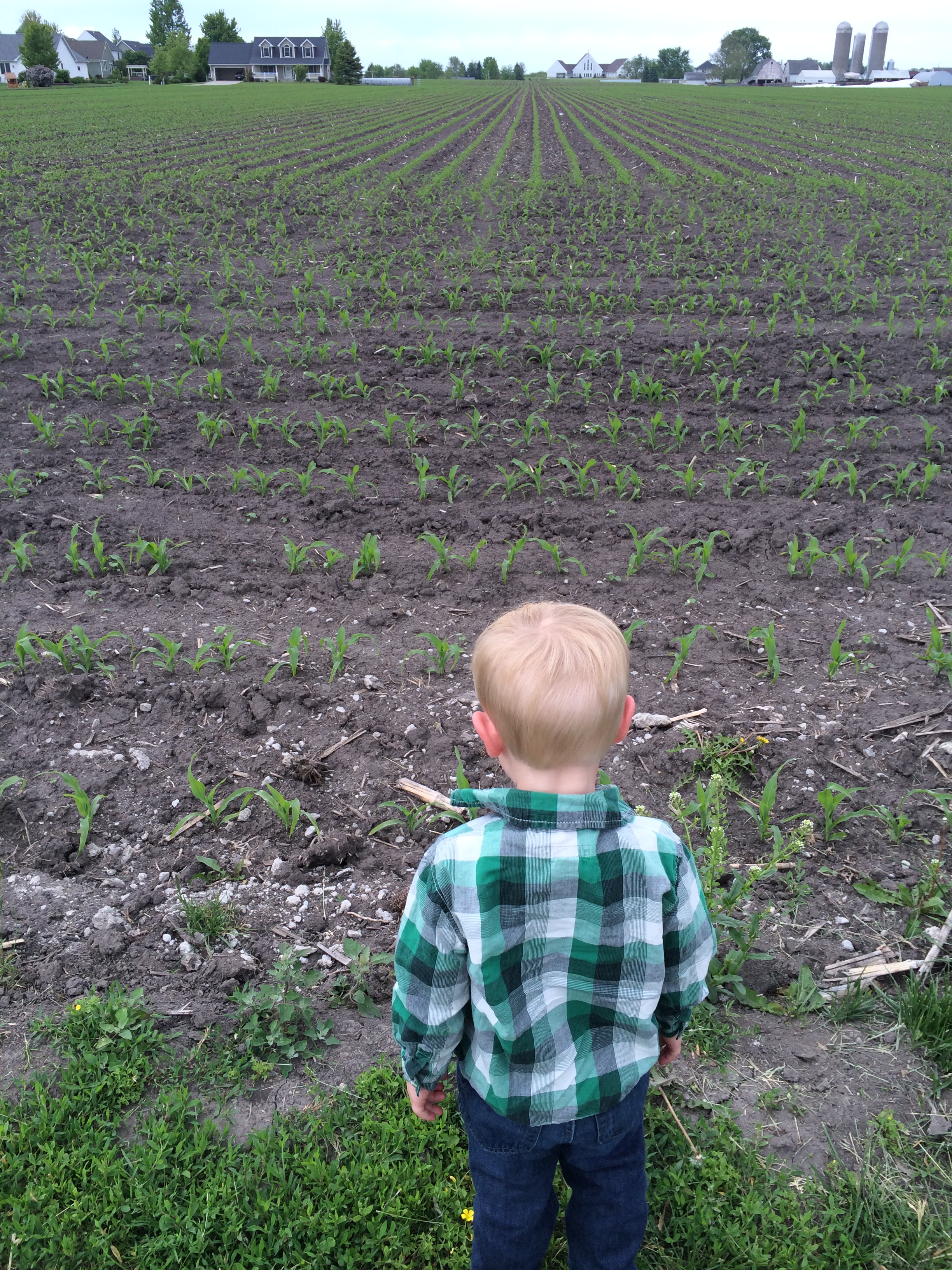
School’s out here in Pella and summer unofficially begins. In Iowa, we will watch our corn grow from the tiny shoots pictured above to up to 12 feet. Imagine every one of those tiny plants as 12 feet tall.  It’s supposed to be “knee high by the 4th of July” but is often much taller than that.

Iowa grows about 2.3-2.4 billion bushels of corn per year. (A bushel is 56 pounds.) It’s not sweetcorn. Much is field corn and used for ethanol production, sweeteners, and most of all, animal feed. Ninety-five percent of animal feed is made of corn. Citric acid, used as a food preservative, food additive, beer additive, component of soaps and detergents, and to make artificial lemonade, can also be made from corn. Iowa produces the most corn of any state in the U.S. and about 10-20% of the corn produced is exported.

Like other grasses, corn contains p-coumaric acid which can act as a mild antibiotic and reduce the chance of stomach cancer.

About eighty-eight percent of corn is genetically modified. (2012 statistic)

Herbicide use on field corn has increased as weeds have become resistant.

Agricultural income in Iowa is around 5 billion dollars a year.

It’s everywhere in my agricultural dystopia of Cochtonia, too. It grows quickly and some even glows in the dark.

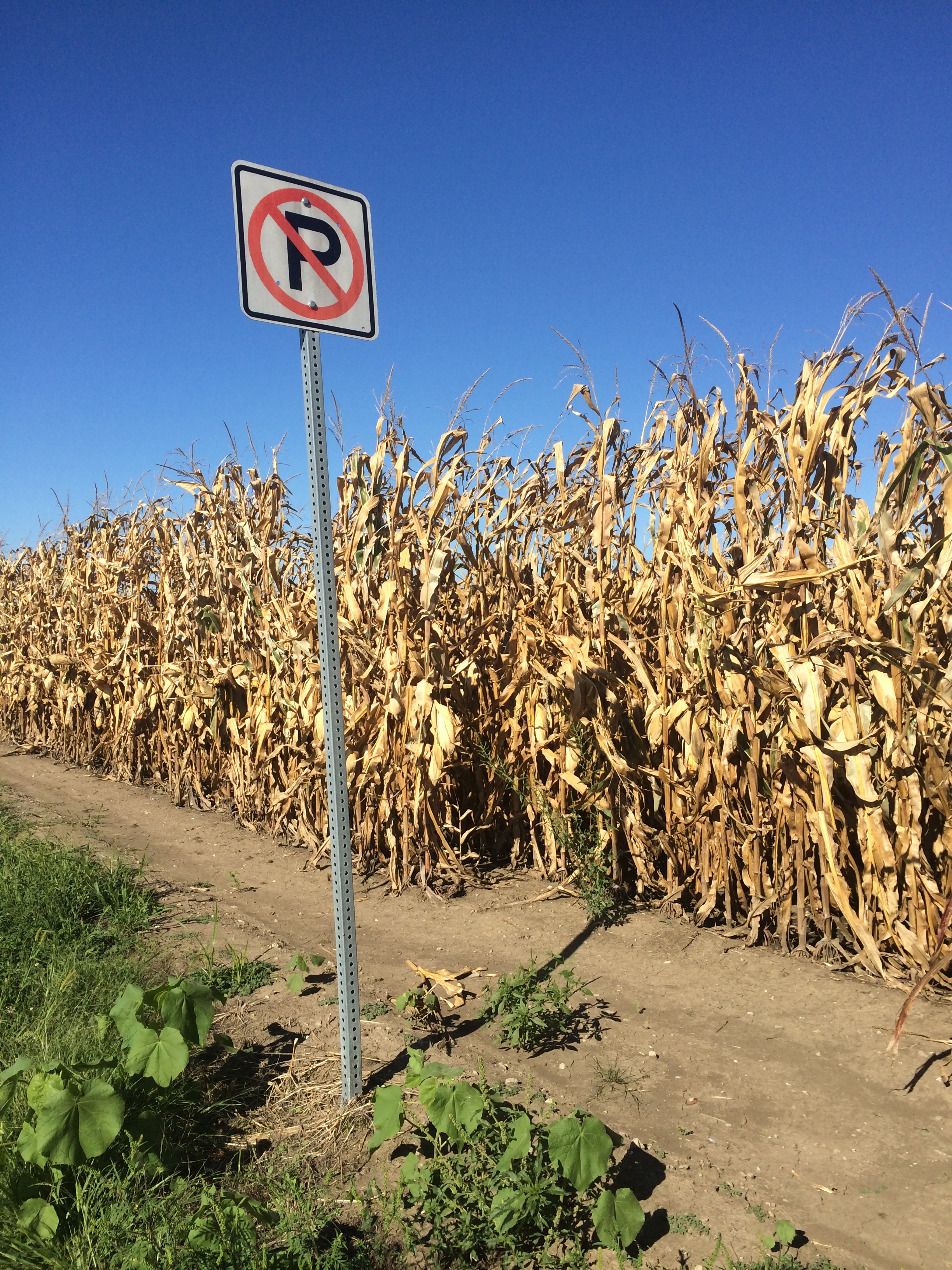
What are my deep, dark feeling about corn? Well, it’s green and that is good. But I’m not from Iowa originally and I have always found it sort of scarier than hell. Yes, it’s true. There is so much of it and it is absolutely everywhere. It even makes it more humid here in Iowa. Honestly, do we need so much of it? It’s a thing you can’t escape. Yes, it is pretty when it sways in the wind and even kind of pretty when it’s dried for harvest. (see below). But if ever there was a zombie plant, it would be, yes, it would be corn.One minute it’s so small and cute and the next minute it’s huge and being sprayed with crop dusters. It’s everywhere. It’s in everything. If I eat high fructose corn syrup I get insanely hungry. Zombie. Believe me. You can’t escape the corn. photo-175***

What is love?

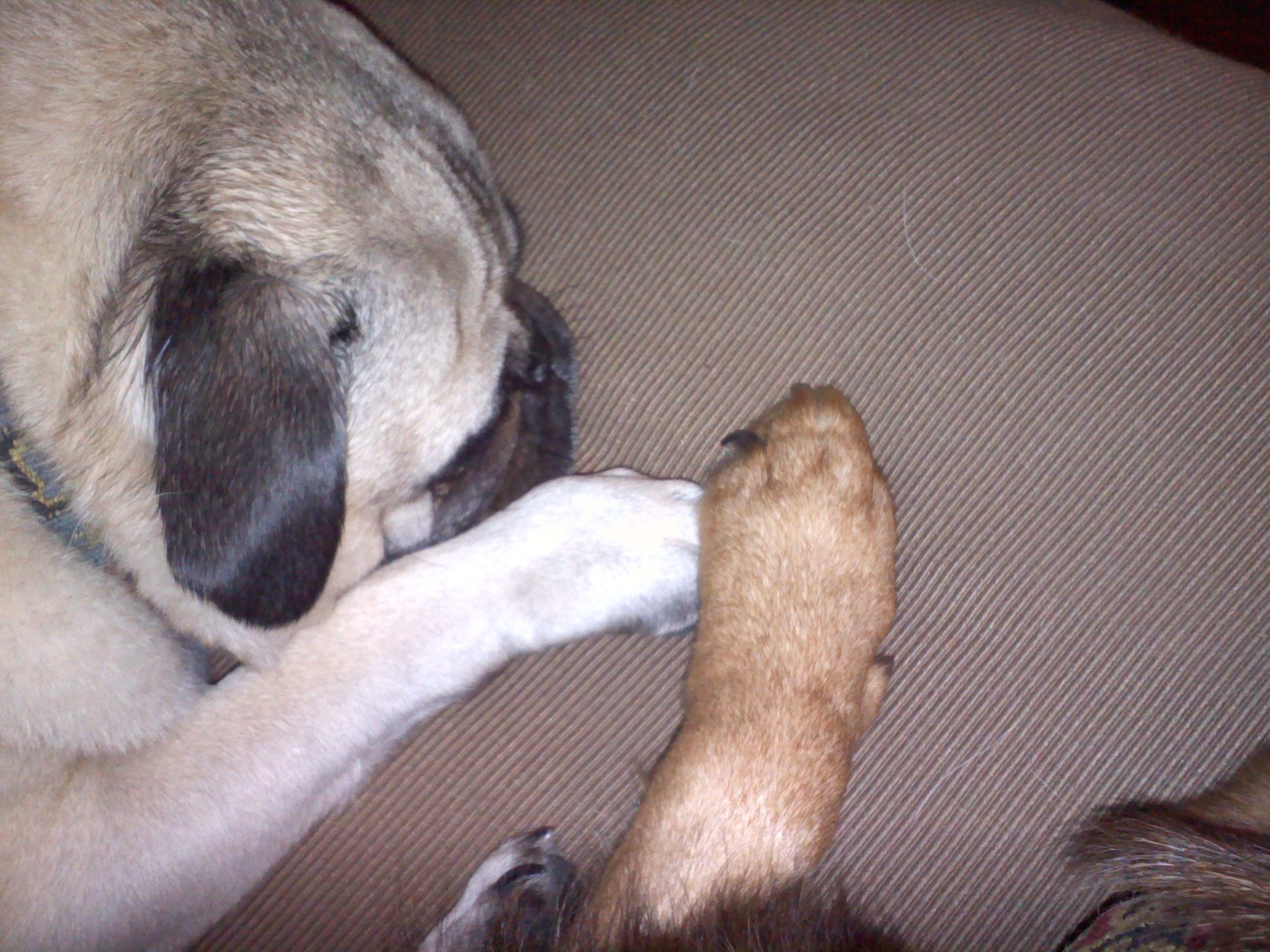
I got a request to write a post about love, but when I asked what it was, I didn’t get a good answer.How about this for a theory: love is connection.dogs in love

Mammals begin life connected. Even before birth the connection between mother and child influences our brains, making nerve fibers that will affect our temperament. Some of the way we perceive love and what it means to us, begins before we even take a breath. Motherhood drug use,  exposure to toxic chemicals, or stress will affect our development and our ability to love in the future.

The mother-infant bond sets the stage for the offspring to be able to take and give love and to handle stress. The mother and baby need to look at each other, work together to establish mutual rewards, and generate oxytocin and cortisol (the first to relax us, the second to create vigilance). Believe it or not, the development of a form of ambivalence is a part of the bond. Babies are exhausting. Motherhood is tiring. Our very first experience with love is that it’s too much to maintain intensely. Such is the tragedy of love, but if we are healthy, we can love and do so with some autonomy.

Of course, one can’t talk of love without mentioning erotic love. Kissing boosts the immune system and increases our sense of well-being.  It makes us invincible even though the search for erotic love can bring us to some crazy places of insecurity about our worth and appearance and rightly so, erotic love is stimulated by visuals. Yes, it’s shallow and also wonderful. Even just having a crush releases some feel good chemicals.

Attachment is a phase of love and it is just as chemical as erotic love. As the song goes, “be careful who you love.” There are those who don’t think twice about doing another in emotionally. People who treat others poorly, who fail to attach, have a chemical imbalance. Break ups or “love rejections” are chemically harmful. They might take up to two years to recover from. But it’s better than casting your lot with someone who can’t attach.

Alcohol and love do similar things to the brain: they take away fear, make us feel better about ourselves but also, surprisingly make us more judgmental of people outside our social sphere, creating a special connection with the one you love, be it a person or a bottle.

I personally get a strong sense of connection working beside someone and I’m not alone. This is why a person can love their job or a group they are a part of. It’s no accident that I became a laboratory scientist. Working in lab on an experiment is a delicious form of connection and ever since fictional Victor Frankenstein worked in secret on his creation and subsequently abandoned the hapless creature, the message has been clear: don’t work alone in lab. To be a scientist is to never work alone. It’s true that if you love your job, you don’t have to work.

We love our pets and they can love us. The owner-pet bond is real, healthy, and less dependent on visual cues than erotic love. It’s as true as any love.

The other day I was visiting my dad. My mom, died almost three years ago. He was telling me how much he missed her. I asked him what I could do. He said, “Just listen.” It turns out that feeling listened to is one way that people feel loved.A person will feel loved if they know that you understand what they are going through and that you share the same emotions about it.I was glad and surprised that loving him was so simple as that.I didn’t have to fix anything or make a grand display.  Guess I had a thing or two to learn about love.


The Periodic Table Explained

I post insecurely in front of the periodic table display  at the U of Iowa (featuring actual elements).
I pose insecurely in front of the periodic table display at the U of Iowa (featuring actual elements).

A while back a friend asked: what’s the deal with chemists and the periodic table? In a nutshell, the periodic table displays all of the elements in an order that allows chemists to know something about each one at a glance.

The elements are arranged by increasing atomic number–the number of protons (+ charges)–roughly equivalent to increasing weight. They are in rows according to the shell or as chemists would say, according to the quantum numbers. Quantum numbers are the equivalent to an element’s address and tell a lot about the electrons–negative charge cloud around the atom. Most of the time, reactivity is due to electrons and their placement around the atom. Conveniently, mother nature made it simple, as elements gain mass and electrons, they group themselves. The columns on the periodic table belong to elements growing ever larger but with the same arrangement of elections on the outside. This means, they react in similar fashion.

See that row on the right with the neon sign? Those are the noble gasses which don’t easily react with anything. Conversely, on the far left are things like sodium and potassium that react so easily to give elections that the elemental forms must be stored under an oil to keep them from joining up with oxygen. Why can you chose between chlorine and bromine for your hot tub? You’ll find chlorine above bromine on the table. They act much the same but chlorine is lighter.

Metals are on the left side along with hydrogen, the lightest element, and non-metals such as carbon, oxygen, and nitrogen are on the right. Elements in-between are the semi-metals or semiconductors. Radioactive elements, too big to be stable, have their weight in parenthesis.

This mortarboard, made by a clever Central College graduate, shows the system of symbols used for element names. The Cc abbreviation is for “Central College.” The numbers are for the proton number (the smaller number) and the weight of the element, which includes neutrons, heavy without charge.

Elemental mortarboard at Central College graduation.

img_2620
I like to hand out periodic tables. If someone gives me a tract I will respond by giving them a table. I have even given periodic tables to children associated with the Westboro Baptist Church. I’ll give you one too. Just ask me. 🙂

There you have it. The periodic table will give up lots about the elements without requiring deep thought. The father of the Periodic Table was Mendeleev, a hairy dude who let his lust get the better of him and my guess is that this is why although he made the most useful tool ever imagined way back in 1869, he never got the Nobel Prize. He did it without knowing anything about the parts of the atom–the protons, neutrons, and electrons–basing it all on how each element reacted. That’s what science is all about, predicting, and what helped science slay the beast of fearful superstition that plagued humans throughout history.

Bison Legacy

photo 3-8
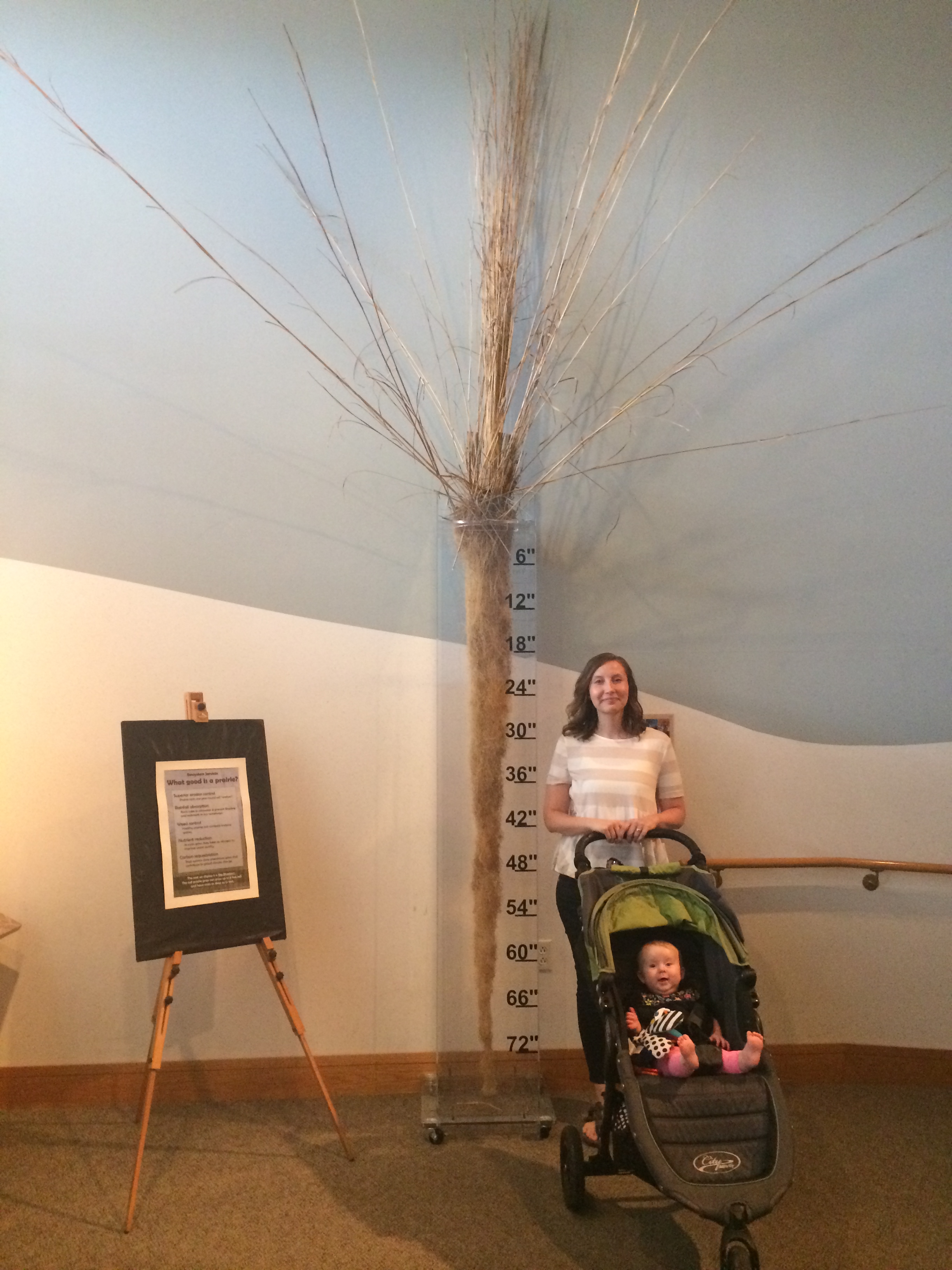
Look how deep the roots grow.

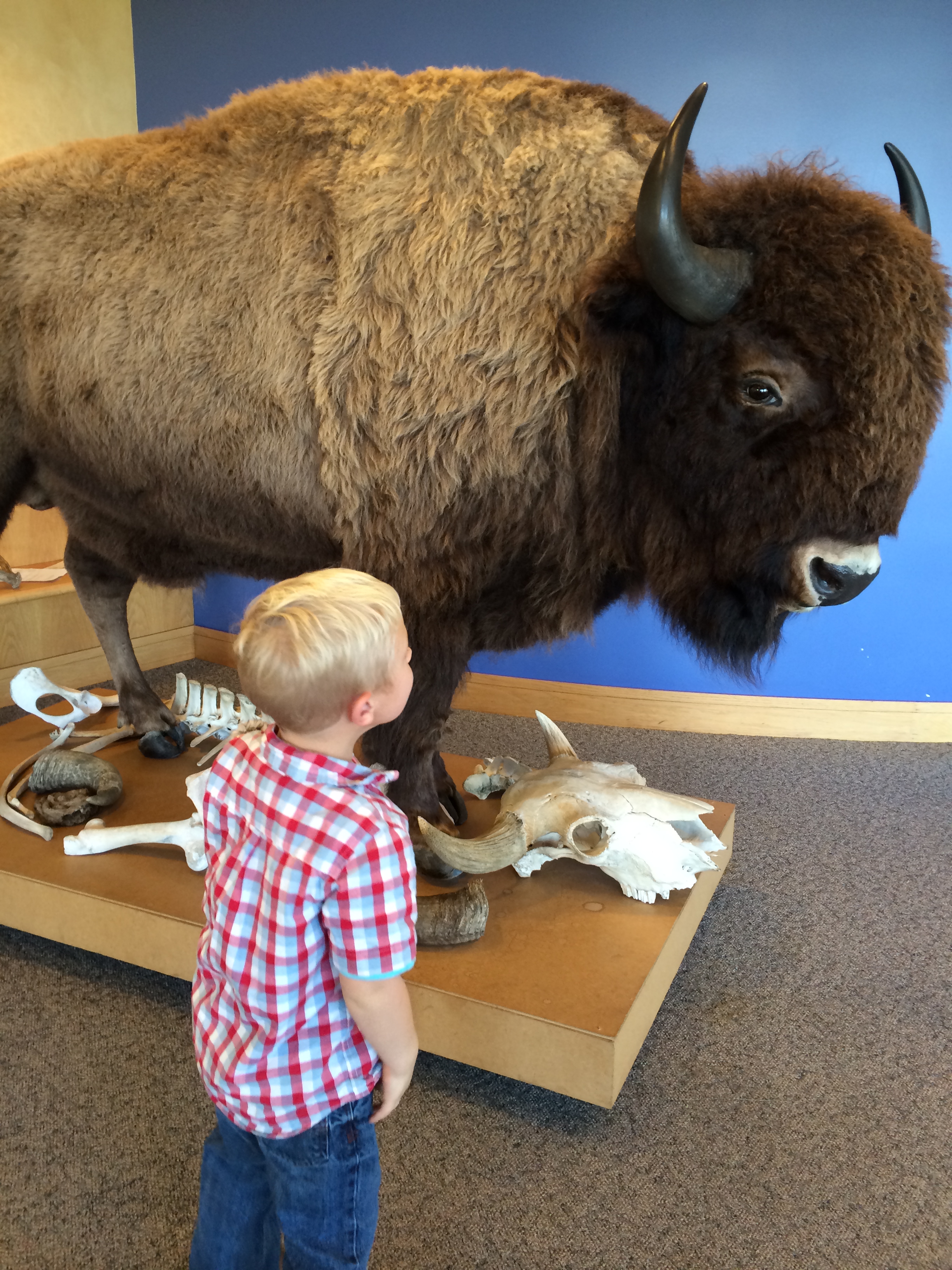
In Natural Attraction, Clementine, posing as naturalist Calvin, travels west and wonders where the bison are. Eventually she finds some, and Buffalo Bill as well. The sad fact was that even in 1871, the bison had been hunted into near oblivion, in part to discourage Native Americans, and to provide entertainment for tourists. The good news is that we now have a Bison Legacy law that protects North America’s largest land mammal.

The Neal Smith Wildlife Refuge is about a half hour from my house. It’s a wonderful day trip where you can view herds of buffalo and elk, walk trails, and visit the information center. We can’t undo the past but we can learn from it and take steps to appreciate the depth and breath of life on Earth.

photo 1-21
Display at the Neal Smith Wildlife Refuge in Prairie City, Iowa

photo 2-23
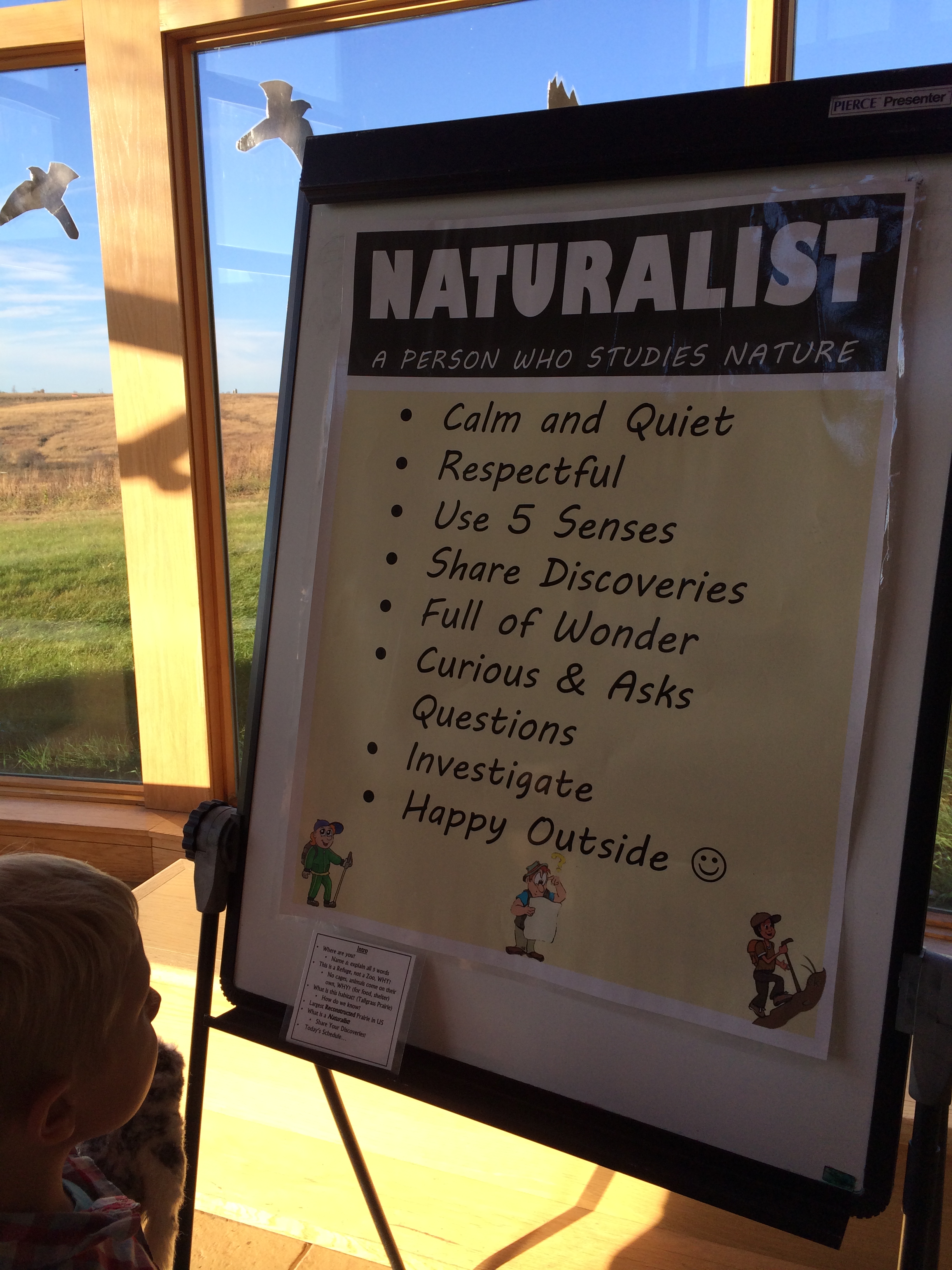
Do you have what it takes to be a naturalist?

photo 2-26
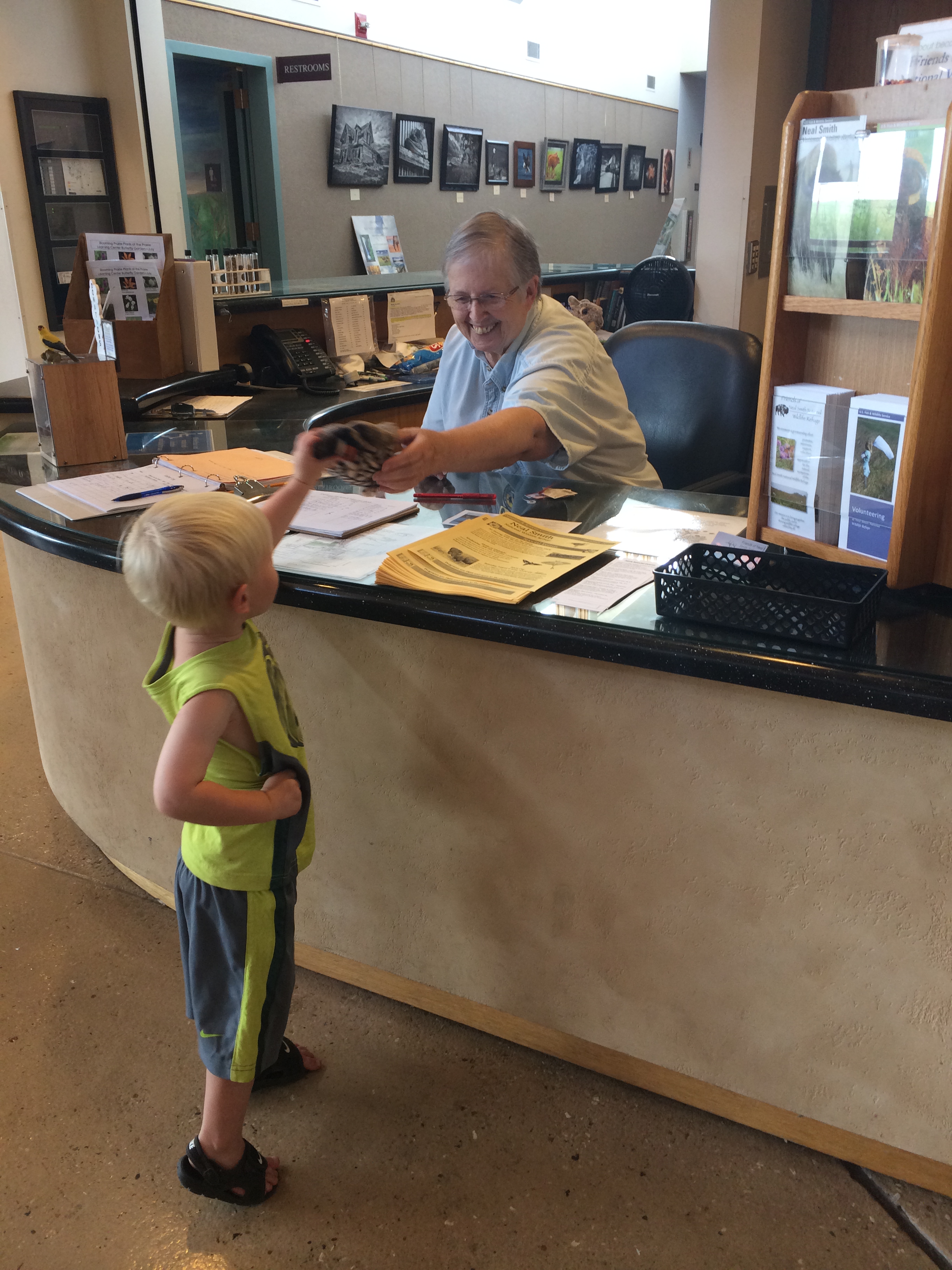
A friendly volunteer shares a moment with a young visitor.

Then and Now, Big and Small: Poster sessions

In Natural Attraction, Clementine must face crowds of experienced scientific men and make her case for discovering a new species by giving a talk and demonstration. Over a century later, presenting research via a poster is common and even at times, controversial. As with science fair displays, a formal poster session is a great way to accommodate numerous presenters in a short period of time.

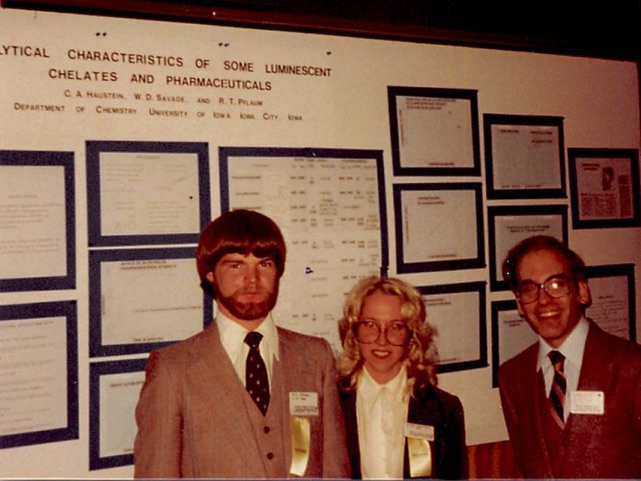
Here’s a poster of mine from the 80s. The first thing scientists of today will notice is how big and beautiful it is. Yeah, the 80s were big all over.  No computer generated posters. A real live secretary printed this off and since it isn’t crooked, probably glued it to the poster paper for me. Some of this research is what a man tried to steal (see previous post.)

RTP 80s style jpg
A poster session 80s style.

These days, posters, glasses, and hair are much smaller. 10325363_10152128198560665_944410361826256467_n

This week my research students wrapped up another successful semester. Yes, there are moments during research when you wonder a’what ever were we thinking?” with a project. The great thing about research is, you aren’t alone. That whole solitary scientist in lab alone is a myth. We work in groups.  Why did Dr. Frankenstein run into trouble? He didn’t have a lab group!

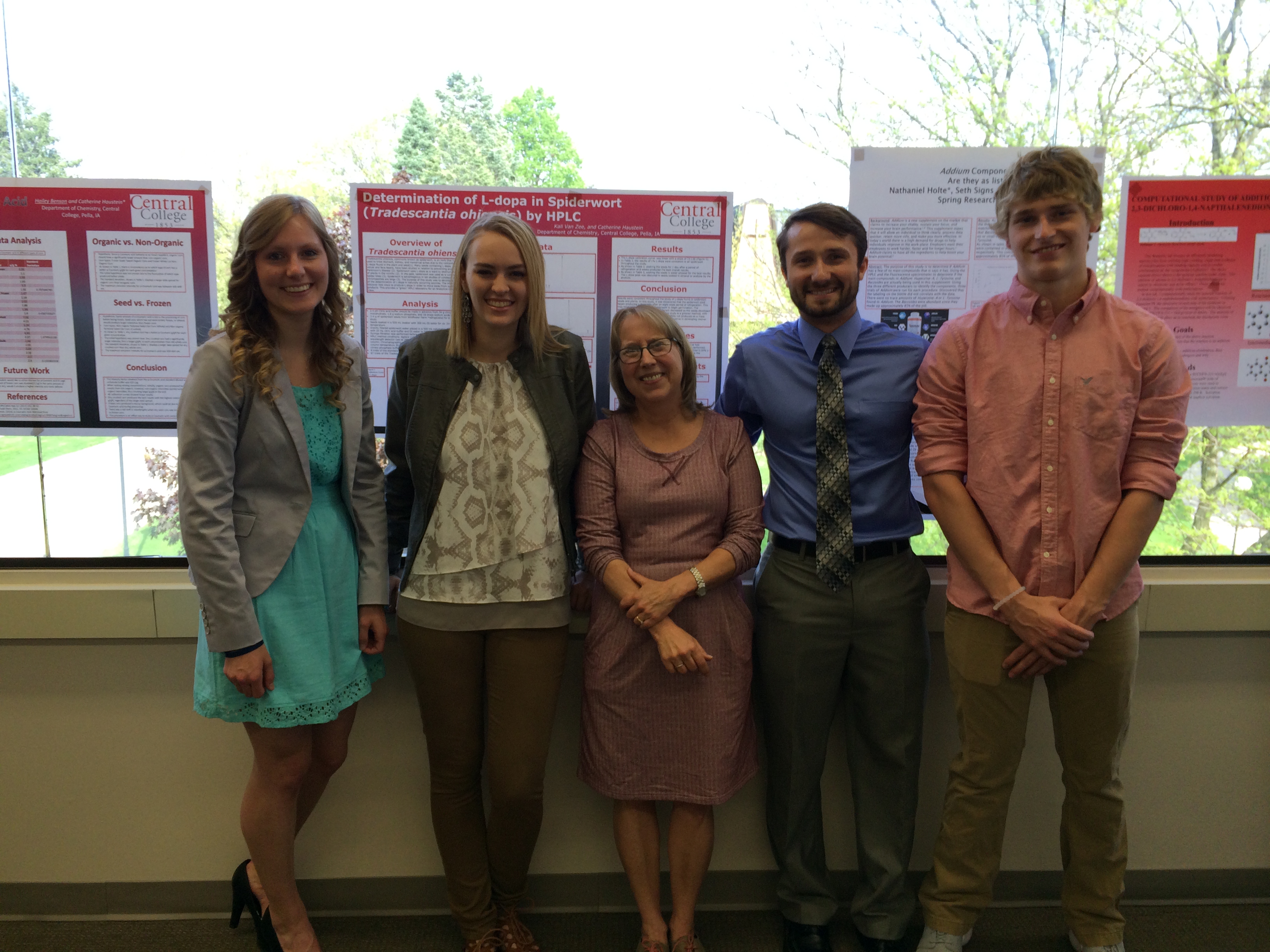
Here’s my research group and their posters, made via Power Point and a big printer. A little blue tape and they’re up with ease.research 2016

Although analytical chemists are known to improve their technique with age, students this semester remarked on more than one occasion that time isn’t always on your side–the brain shrinks with age. (Were they sending me a subtle message? I was teaching an extra class.) But we did it , and we won’t talk about our struggles. Our posters went up, they look beautiful, and now comes some of the sadness of being a teacher, the end of the year good-byes.


Female in Lab: throwback Thursday

RTP jpg

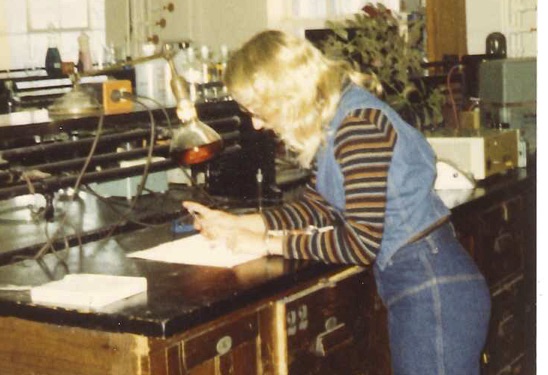
Here I am in the in lab in the 80s. The first thing an experienced chemist will see is that I’m not using gloves and don’t have my hair pulled back. I have glasses but not safety glasses with a side shield. These are all considered unsafe lab practice today.

I’m using a syringe to apply molecules to a tiny punch of paper in a technique known as room temperature phosphorescence. After being dried with the heat lamp, the molecules will glow in the dark. I’ll put the paper in the instrument that can be seen far to the left and measure the glow. I studied psychoactive compounds, some  of which are controlled substances now.

No doubt the radio was playing 80s music loudly. I had an office just to the right of the lab and I shared it with people I liked. There’s a lot of waiting in chemistry and we filled the time by doing crossword puzzles. drinking tea and coffee, and playing computer games. The games had no visuals, only text. The best one was similar to  Dungeons and Dragons where you developed an identity and walked around looking for treasure (typing out commands such as “walk forward, pick up object, swing sword” and getting attacked.) You couldn’t just buy software then. Someone wrote the program and put it on the server. We all knew Fortran, haha.

This is my only photo of me in that lab. I did have a few female scientist problems but the department director was a black man, Leo Davis, who recognized subtle harassment and kept it at bay even as I wouldn’t admit any incidents to myself or confess that there was anything at all holding me back or that I was at all different from the majority. To be honest, I was also in the Writer’s Workshop and any trouble was “interesting “as writers like to say.

There were a few problems at first such as the female scientists being relegated to TA-ing all female labs. The thought was that the male students were so unable to control themselves that they would go wild in the presence of the females. After we griped about that enough, we were allowed to TA whatever labs we were best qualified to teach. I once got a complaint that I was too sexy to teach analytical lab. I did like to wear skimpy clothes but always closed toed shoes as chemist must wear.

Perhaps the worst incident was when I submitted my work to be published and a man stole my idea, redid the work, and published it. Fortunately he didn’t know what he was doing (reported the blank for example) and I published my data elsewhere after asking the journal to NOT let him review it.

Even with mild harassment, these were the uncomplicated days of my past, filled with camaraderie. If I didn’t have to make a living, I’d be in graduate school forever.

Everything you need to know about SWF–single winged females

10534716_10152404753205665_7864675837439782315_n

When one thinks of agriculture, bees and honey rarely come to mind. Yet much of agriculture is dependent on one of nature’s single winged females, bees, to pollinate crops. Honey, exclusively made by female bees, is a valuable commodity.

Nationally, around 130 crops rely on bees to produce the produce. These include almonds, cherries, blueberries, apples, pears, peaches, squash and melons. Over half of the nation’s hives (1.7 or more million colonies) are needed just to pollinate almonds grown in the US. Pollination by bees is estimated to provide 15 billion dollars in revenue annually. Most bees provide this as a free service.

According to the Iowa Honey Producers Association, apples, strawberries, and raspberries in Iowa are 90% dependent on bee pollination and melons, pumpkins, cucumbers, and squash are 80% dependent. Soybeans are 5% dependent and the total value of pollination in Iowa is 92 million dollars. Honey bees are not native to North America. They come to us from Europe and can be considered Italian. Many crops such as blueberries and tomatoes are much more effectively pollinated by native bees. According to biologist Paulina Mena, native bees are specialists and have certain plants that they prefer and more effectively pollinate. For example, tomatoes are more easily pollinated by bees that buzz and produce a dust of pollen.

Not all bees form colonies. The honey bee does and lives in hives containing hundreds of individuals. Bumble bees congregate but only in dozens. The U.S. native bees, and most of the 19,000 bee species, are solitary which means that they are more damaged by habitat fragmentation than the colonizing bees.

Most bees  are females and those you see working most certainly are. The males have one set of chromosomes and come from unfertilized eggs in a process known as parthenogenesis. Females come from fertilized eggs. The queen bee stores sperm and as she ages, she runs out of sperm, and produces more unfertilized eggs–more males. The males don’t work for the hive and eventually, it dies out naturally.

There is a unique Mayan bee species native to Central America that produces honey in  colonies that can last up to 100 years. They are tiny bees, like sweat bees, and the colonies are kept by human families and passed down from generation to generation.

All bees face habitat loss and death from pesticides. In these maps, you can see states where bee populations have been decimated and where pesticides are most used. Iowa is ground zero for both. In places where pollinators have been killed because of pesticides, farmers must hand pollinate. I like to grow pumpkins. A pumpkin needs around 6-7 visits by a pollinator before the flower is properly fertilized. I’ve had years where I’ve gotten no pumpkins because I didn’t hand pollinate. This is not good. Besides being weakened by pesticides, bees tend to avoid plowed fields and suffer when wild flowers and clovers are removed from the environment.

People in the United States are the world’s most enthusiastic honey consumers. Honey is popular in industrial food processing and those little honey bears fly off the shelves in stores. Honey is one thing that Saudi Arabia imports from us. The top honey producing state is North Dakota followed by South Dakota, California, Florida, and Minnesota. Worldwide demand for honey is strong. However, care should be taken when eating honey that is imported. There are concerns that Chinese honey may be dangerous and contaminated.

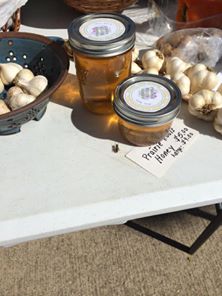
In Iowa there are over 350 beekeepers owning 10,000 colonies inspected by the state. Overall, there are 30,000-35,000 total colonies of honey bees in Iowa. Some of the colonies weather in California and southern states.  Local honey suppliers include Prairie Roots (pictured), Purely Organic LTD in Fairfield, Noble Bee Honey in South Amama and Ebert Honey in Lynnville. Ebert Honey began in 1980 and now has 700 hives. Ebert bees feed on local flowers. It can be purchased at Hy-Vee, Fareway and Pella Nursery.

Sixteen percent of flowers rely on bee pollination. Steven J. Baskauf of the Department of Biological Sciences at Vanderbilt University observes, “As insects, bees are relatively intelligent and are able to learn how to locate and operate particular species of flowers that are in bloom at a particular time.  They are also relatively strong and are able to push their way into complicated flowers that are not accessible to other insects.”

Bees can’t see red so they mostly pollinate blue and yellow flowers with a place to land such as snapdragons, bee balm, passionflowers, clovers, dandelions, berry blossoms and sunflowers. Don’t be reluctant to plant red flowers. Butterflies love them. But you also have permission to let your dandelions grow.

Bees will transport about 40-70 pounds of pollen per year per hive as they gather nectar. Zipping from flower to flower allows for cross-pollination Bees also collect pollen that is mixed with honey and fed to baby bees. Pollen is a protein rich food while nectar provides the carbs. Honey is produced by the bees from nectar secreted by flowers. Nectar is converted to glucose and fructose thanks to enzymes produced by the bees. It is dried down by summer heat and fanning from the bees’ wings. This drying action creates the buzzing sound associated with beehives. It’s estimated that 4 pounds of nectar will produce a pound of honey. Each hive will produce 120-200 pounds of honey, stored as food for the bees. A bee will visit 100 to over a thousand flowers before her nectar storage area is full. Worker bees, which are all female, can work themselves to death. They live just 35 days at the peek of the summer. Worker bees produce beeswax as well and this is used to make the colony.

According to Phil Ebert of Ebert Honey in Lynnville, “Bees can fly a long way. 5 to 6 miles is not uncommon. However, it’s better if they can find forage close to home. They wear themselves out in a hurry if they have to fly long distances. When we are placing bees we try to locate a visible floral source within a mile of the bee location.”

Besides being an eco-friendly locally produced sweetener, honey makes a valuable and accepted home remedy. It contains loads of natural amino acids, antibacterial compounds, and micronutrients. It can be used as a cough syrup and mild burn remedy. It might be useful as a laxative and weight loss product. It is an effective antibacterial agent against sinusitis. It has been suggested as a hangover cure. It can even slow bacteria that cause dental plaque.

However, honey should not be given to babies under one year due to their immature digestive tracts. It contains botulism spores found in soil and dust that can cause a serious disease. (Honey is not the only source of these spores.) Keep in mind that it is still a sweetener and should be consumed in moderation.

Besides making useful materials and providing valuable services for humans, bees provide fascinating study for scientists. Most of a hive consists of worker bees that gather nectar and pollen for the hive and in the process pollinate flowers and crops. Bees in general are not aggressive except when they feel the hive is in danger. Some bees do have aggressive personalities while others are more laid back. Bees are known for having “hive intelligence” aka “swarm intelligence” or being “self organizing systems”. Like ants, there are no managers and nobody is in charge. As a group they function as an intelligent being and make better decisions than the individuals.

With an average of 50,000 bees to a colony, they work on consensus building. Thomas Seeley, a biologist at Cornell University has studied the bee decision-making process and now even uses this process at his department at work. Bees seek out diverse opinions, run them past the hive and then narrow choices.

Bees in the United States and other spots in the world have been disappearing. Bees do not return to the hive. Only 30% of hives make it through the winter. This phenomenon is known as Colony Collapse Disorder or CCD. It is thought to be due to a group of factors including pathogenic microbes, stress, mites which carry viruses, pesticides, poor quality nutrients, over-work and inbreeding of domestic bees.

According to Catherine Zentile of the Cavendish Laboratory at Cambridge, in Great Britain “the biggest impact has been availability of food and drink, in particular the continuity of supplies throughout the colony cycle. The UK has lost 98% of its flower-rich grasslands and this has been devastating for …bees.” She suggests that gardeners set out a pot of sage rosemary and lavender to help the bees out.

Has CCD hit locally? Phil Ebert says, “Whether or not I am having a problem with CCD depends on how you define it. I would say no but our number one problem is keeping the bees alive. My number two problem is finding productive places to put them. There isn’t a lot of bee forage out there. Our biggest problem is with Varroa mites. When they get bad enough, the colony crashes. Some die in the box but most fly out and disappear. There are four main stress factors that affect bees—parasites, viruses, insecticides and poor nutrition. Put all of those in a box and shake them up and you have big trouble. One of the results of these stress factors is reduced queen viability. The question used to be, ‘How many years will a queen last?’ Now, a lot of them don’t last the season. I love beekeeping but it’s a scary way to make a living.”

The Agricultural Research Service has some tips on how to help your local bee. “ The best action you can take to benefit honey bees is to not use pesticides indiscriminately, especially not to use pesticides at mid-day when honey bees are most likely to be out foraging for nectar.”

“In addition, you can plant and encourage the planting of good nectar sources such as red clover, foxglove, bee balm, and joe-pye weed. For more information, see www.nappc.org.”

Currently, the plight of the bee is more of a sorrow than a crisis. There are still enough bees and enough honey, although growing demand and the cost of fuel for transportation is raising prices.

Honey and beeswax are produced without killing anything. In fact, pollen and nectar collection results in the spreading of life. For this reason, bees and honey are considered sacred symbols in many cultures. Now that I understand the importance of bees I’m planning to add a few more bee friendly flowers and vegetables to my garden.

Thank you to Phil Ebert of Ebert Honey  and Paulina Mena of Central College for insightful comments and information. Thanks also to Steven Baskauf of Vanderbilt for permission to use his quote from his website.