Two Years of a New Life

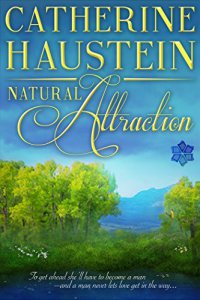
Two years ago I signed a contract for Natural Attraction with Penner Publishing. I’d written  numerous short stories over the years but this is my first novel. I’d taken a break from writing fiction to write non-fiction because

1. I needed money and

2.. I didn’t feel very wise.

Having teenagers will do that–make you feel broke and not very wise. And we don’t have dowries now but we do have weddings to pay for. Not that I didn’t adore those years. Quite the contrary. They were a rush of emotions and activity.  Bottom line. I didn’t write unless it was for solid money. That meant I wrote about science.  I wrote the truth about science. From this I learned at least one thing–don’t argue with editors. They have a tough job and a vision. Plus they won’t pay you if you don’t follow their directions.

I have an MFA in fiction writing and as a child I wrote prolifically. A writer needs something to be passionate about and for me that was science.I like how science changes perceptions. My best advice for those wishing to get into an MFA (Master of Fine Arts) program is this–have an angle. For me, it was science. Writing about science wasn’t enough. I wanted to be a scientist. I honestly love the hands on aspect of laboratory research. I even like fixing equipment–perhaps because my grandfather was a plumber. I like scientists. They’re quirky and unbelievable humble before Mother Nature.

How did I turn back to fiction? I was encouraged to do so by other fiction writers. I sat down to write a short story and it became a quirky novel about a scientist in 1871 who takes a tonic to become a man and falls in love with a preacher. The novel takes a humorous look at gender and class roles in the Victorian Society when they were absurdly strict. My goal was to de-romanticize that time period because in many ways, it was terribly cruel. It also explores how science gradually changed ideas about slavery and human equality. As I said before, that’s what I love about science.

I thank Penner Publishing for taking a chance with this book. I am grateful for its acceptance because it contains a diverse set of characters. The Kindle version is on sale right now. Tomorrow I’ll be at the Pella Author Fair selling copies. Yes, you do have to get out and sell your books and promote yourself as an author. You need to be on social media.

I also thank everyone who has purchased a copy and thank those who have put up a review to help those who might enjoy it.

Did my life change dramatically in the past two years? Not really. I do now get to teach a fiction writing course. My students never fail to impress me with their passion and creativity. And every day –often in the morning and before bed–I spend some time with a new story to tell–weaving in my experiences as a scientist and a female. The bottom line for me now is this: there are not enough diverse stories about the female experience out there. I’m doing the best I can to tell these stories. Once again, to everyone: Thank you!


Science and equality and the homunculus

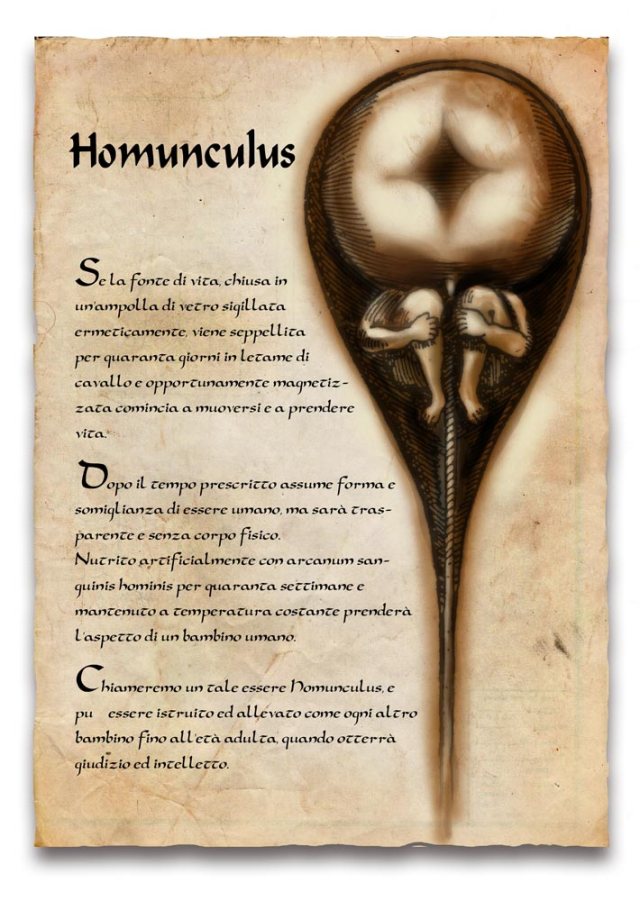
Wouldn’t this Homunculus be a great Halloween costume?

homunculus_by_spacechili-1
Just store it in glass, feed it blood and keep it warm for forty weeks and you too can have your very own human child!

The idea that a tiny person could be made by a man without help from woman is as old as Plato. The no-woman-required homunculus appeared in alchemical writings around 1530. It was wishful misogyny. How dare women do something men could not! But even as late as the 1920s, many people believed that the sperm contained a tiny person and the woman was no more than dirt for the seed to grow. This thought gave people permission to see women as lesser beings who didn’t deserve property rights or the right to their own children. It explains misplaced disdain for older women and women who don’t have children. Even the religious figure Martin Luther questioned if women had souls. Fortunately, science put a halt to this inequality.

The idea of inheritance from both parents, genetics, was first proposed in 1866 by Mendel who determined that peas contained traits from each parent in the same proportion. His work wasn’t widely known until 1900 and his clear evidence that both parents contribute equally to the offspring wasn’t accepted until 1925. The notion that the mother was an equal in the creation of offspring is less than 100 years old. This means that for eons past, a woman was blamed for barrenness or even for being too fertile. Charles Dickens, that great champion of humanity, brought this charge against his own wife as he abandoned her.

Genetic equality gave women more credibility but even still, James Watson, who is a discoverer of DNA, was a sexist man. Old ideas hang on even against clear evidence that they aren’t true. Fortunately, with time, the idea that women are lesser beings and a form of dirt because they bear children is on the way out.

Homemade Serums & Creams

One great thing about being a chemist is, well, chemicals. I was looking through a catalogue the other day and saw Vitamin C serum. Allegedly it’s good for the skin and being an antioxidant, slows down the aging process. Here’s an aside–I have also read that oxidants are useful in getting rid of wrinkles so there’s conflicting advice out there. However, in my case, I just wanted to make and try my own serums and knew that Vitamin C is cheap. (Make sure to get the L form as in L-ascorbic acid.)

I store my Vitamin C serums in brown bottles and try to use them within two-three weeks.

  1. Super Simple Recipe

1/4 tsp Vitamin C (L-ascorbic acid)

1 tbs water + 1/2 tsp

2. Moisturizing recipe

1/4 tsp Vitamin C

1/2 tsp glycerin

1 tbs Water

3. Super Moisturizing recipe

1/4 tsp Vitamin C

1/2 tsp glycerin

1/4 tsp Vitamin E

1 tbs water

Shake before using


4. Oil-Vitamin C

1/4 tsp Vitamin C

2 tsp water

1/2 tsp Almond oil

1/4 tsp Vitamin E

1 tablet Coenzyme Q with lechithin –cut open and add contents

Shake well.  Shake well before use.


Here’s another product I’ve made

Easy Eye or Night Cream (kind of greasy)

1 tbs coconut oil

1/4 tsp niacin

Mix well.

If desired, add 1/8 tsp Vitamin A. Also optional 1/8 tsp orange oil


As you can imagine, you will need to try a tiny bit first to make sure you don’t have a bad reaction to any of the ingredients.Vitamin C is an acid and niacin (B3) can make some people look flushed so use with caution.

I also purchased a skin cream kit from Lotion Crafters. Here’s a warning on that–the lower volume kits need amounts so small that you can’t easily weigh them out with a kitchen scale.

All in all, I enjoyed making creams and lotions.Here’s what mine looked like when I was done:

recipe
Left to Right: Vitamin C formula 4, Vitamin C formula 3, Eye/Night Cream, Lotion Crafters Cream

Now the real question: did I save money? On the serums yes, probably. However, my formulas don’t have the emulsifiers needed to make them super smooth. They are low budget items. On the kit from LotionCrafters, I’m not certain. Unless you are into mixing chemicals, it might not be worth it. If you don’t enjoy careful measuring, it might not be safe. But I’m into mixing and probably will make these things again.


“Machines made of words”

“Take a moment to streamline your prose,” I told my Short Story Writing students.

To do this

  • Use simple tenses. They dined rather than they were dining.
  • Avoid stock gestures. No shrugging or shaking heads or raising eyebrows.
  • Use simple dialogue tags. “I love beer,” she laughed. No. Not that way. “I love beer,” she said.
  • Toss out these junk and filler words–Just, Then, Very. Noticed. Wondered. Few, But. Really.
  • Another thing,  keep “stage directions” to a minimum. Don’t do this for example,  “She noticed the bottle of beer. She wondered who owned it. She really wanted it. Then she went over and opened it.” No. Not that way. Your reader will appreciate something simpler. Try this: “She opened the Peace Tree Red Rambler.” You know she noticed it, wanted it, and went over to it, right? So why belabor the point?
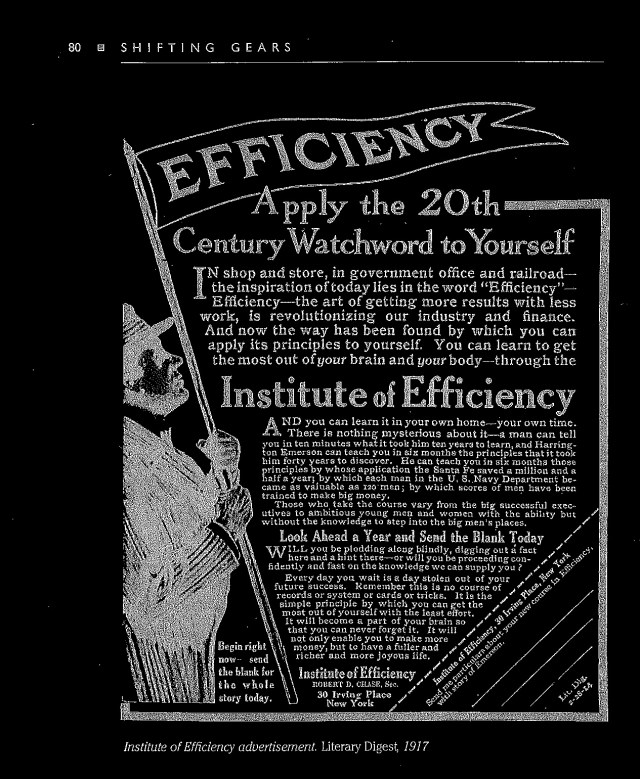
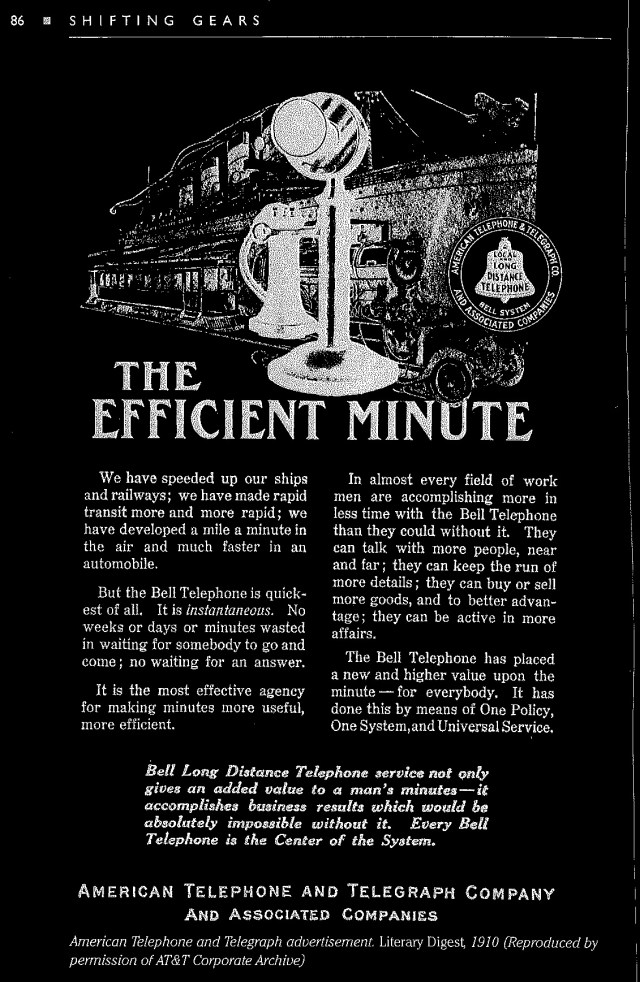
image taken from the book Shifting Gears
No lazy slackers now that we know about thermodynamics. Work, work, work!

I grew up learning that Hemingway was a great writer. His prose was so simple and unadorned–just like a punch in the gut. There were characters barely described and given names like “the woman.” He was in a word, efficient. Believe it or not, this whole notion came from science and technology.

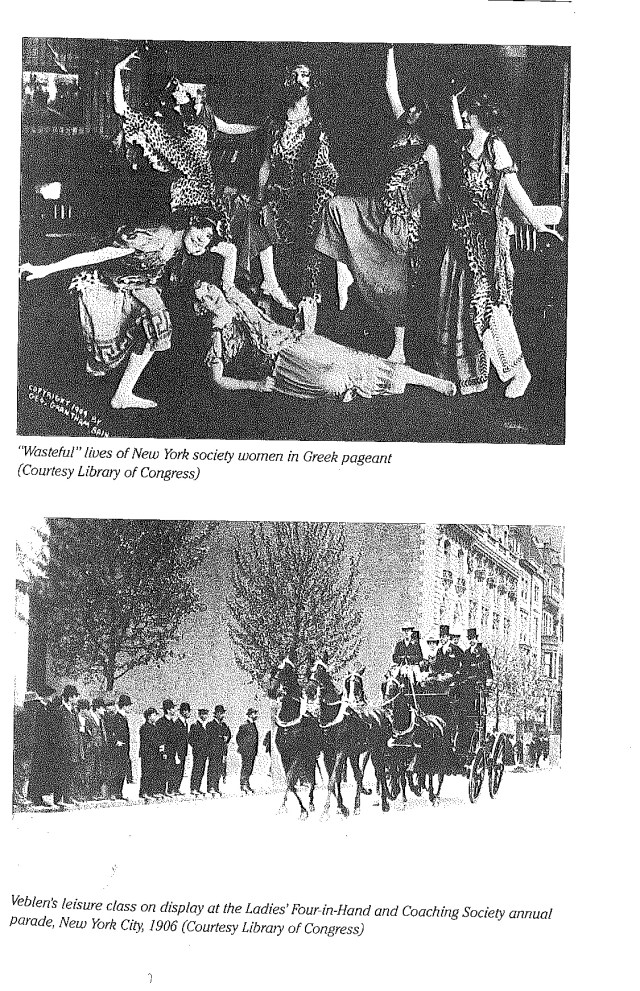
In the 1900s the idea of efficiency, a near worship of it, pervaded society. This idea came from studies of brewing and of machines. An efficient process lost less heat and did more work. This idea began in England with James Joule, the son of a wealthy brewer, who studied thermodynamics but it really lurched to life in the juggernaut that was American culture. Everyone had to work and be useful. The idle rich were a problem. Inefficiency in buildings was a problem. And inefficient prose was a problem as well. Take a look at some of these photos and advertisements.

idle rich
One Grecian urn, two Grecian urns, three Grecian urns and a fountain. The inefficient lives of the idle rich, women in particular, were held in contempt. All that hot air!
arches
Architecture could have excess too. Note the arch and its lack of usable space
house
This looks like my house–clean cut and no waste.

Hemingway came about his efficient prose in an honest way. He was a war journalist and telegraphed his stories back to the U.S.. The telegraph coded letters as dots and dashes and each one cost money. And with the advent of photography, people didn’t need or want the long descriptions of scenery that punctuated older fiction. They only needed enough to set the mood and ground the fiction.

Today, the century old efficiency movement is still with us. We are told to want stories that are sleek, like an Apple product.Some publishers even remove the Oxford comma. Professor Cecili Tichi called this new prose “machines made of words.”

I like machines. Nobody likes rambling or babbling. But sometimes, I want something more delicious. I want the rush of pleasure from abundant words and the keen insights of  metaphors and turns of phrase, the dappled light of a brilliant day as was today.

phone
Forget long letter. With the invention of the telegraph and telephone, words counted and communication was instantaneous. Time was money.


What about you? Who do you read? What’s your style? Sleek? Efficient? Or old school?

Cement floors and shoes that love them

I’m not sure it’s accurate to say that I love shoes. It’s more that I need shoes. To be a laboratory scientist means closed toed shoes shoes plus cement floors. According to our Fitbits, professors can walk three miles per lab or up to six miles per day while supervising lab classes. I love labs and would rather walk than sit all day. However, I’m ever in search of the elusive comfortable shoe and I join a plethora of health care workers, teachers, beauticians. craftspeople, and sales staff in my quest.

What shoes do hard working cement walkers wear? I asked my Facebook friends: what shoes do you recommend? Here are some of my findings:

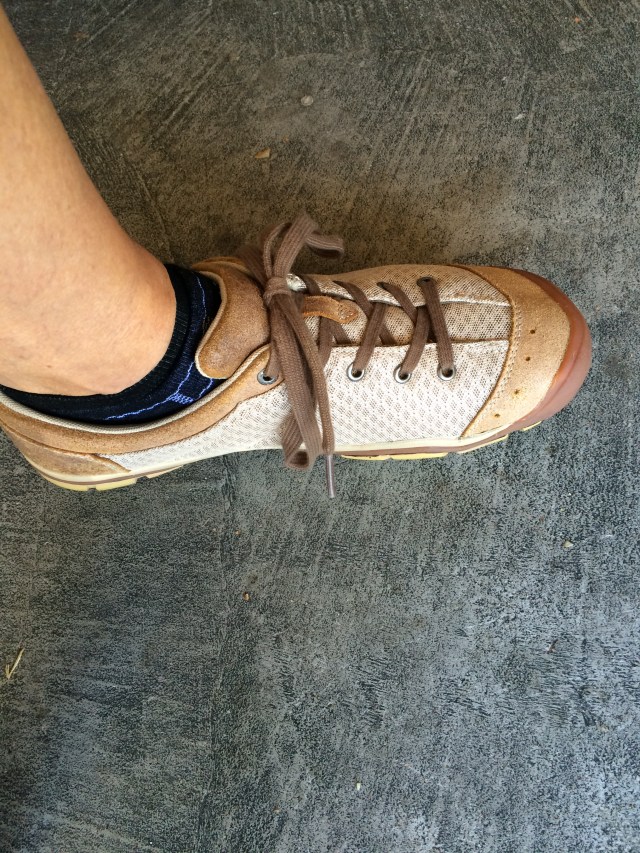
img_2527
The science stockroom manager–and a lot of other people–recommended Keens.
img_2577
A CNA said that these Nikes were perfect for her flat feet–so comfortable.
img_2576
A CNA prefers these light weight New Balance that allow her to move easily.
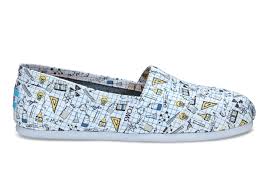
periodic-toms-1
Toms, Sperry, and Birkenstocks–a chemistry research student swears by them. And we all want to get a pair of the chemistry Toms.

I  went to the local shoe store to compare my Hokas with other shoes.

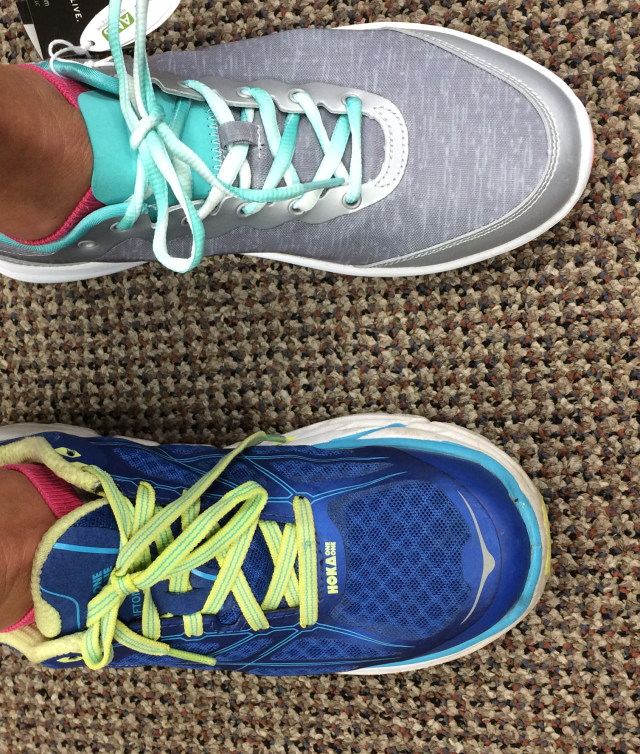
vionics
Vionics (top) vs my well used Hokas (bottom). I have high arches and don’t need the heel cushion offered by the Vionics. I prefer the Hoka pair but if you have heel pain, the Vionics would be wonderful.


brooks
A nurse mentioned Brooks (top) and they are cute. (Not a match for the Hoka in my opinion.)
img_1616
An auto shop owner prefers Vasque.
img_2566
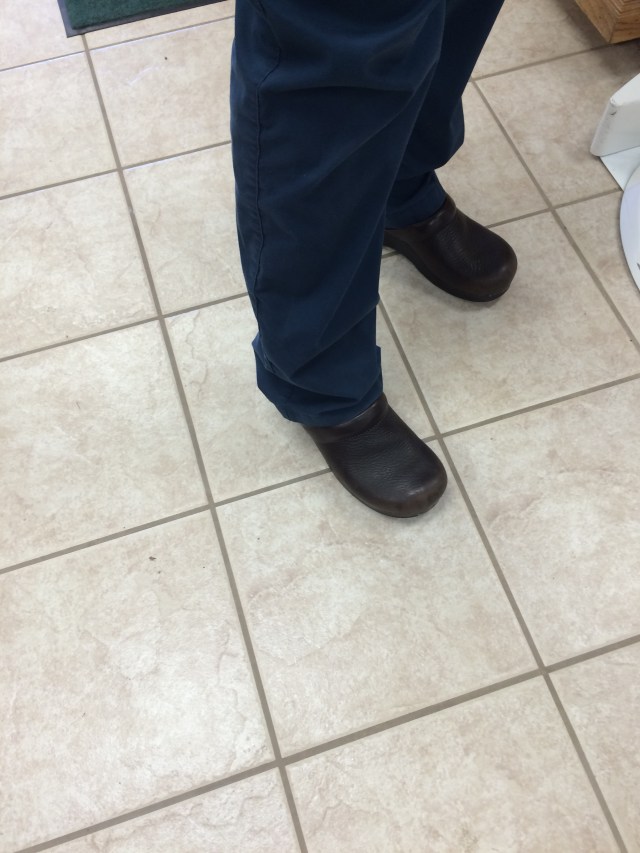
This shoe salesman prefers Danskos.
img_2575
If you’re looking for comfy Oxfords, I recommend Ahnu or Cole Haan.

When the going–and weather– gets tough, many cement floor professionals don hiking boots.

img_2580
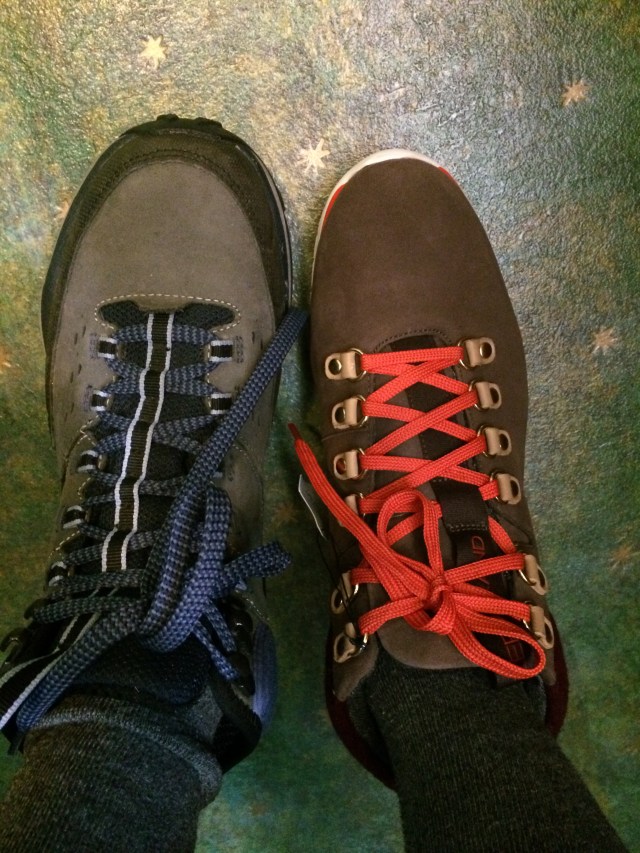
Hiking boots: Hoka (left) more sturdy and cushiony than the more light and flexible Cole Haan (right). A very small toe box on the shoes on the right so not for me.

Timberland boots were also recommended as “are more than comfy. I constantly walk for 45 or so hours a week and my planters fasciitis isn’t even visible.”

A veteran of trade shows gave this advice: change your shoes at least twice a day and get a foot massage. She explains, “My feet sweat, so not only did I change my shoes I changed my socks too. I gave myself a food massage when I changed shoes (just a couple of minutes starting at the toes and working back). It truly was the only thing that kept me upright for 12-14 hours at the shows.”

Here’s to all who spend their day on cement! Maybe some day my lab floor will be covered with an anti-fatigue mat. Until then, I’ll search for the Holy Grail of shoes–and take that advice to change pairs frequently.

Alpine Chicken & An Easy Variation

mom-on-horse
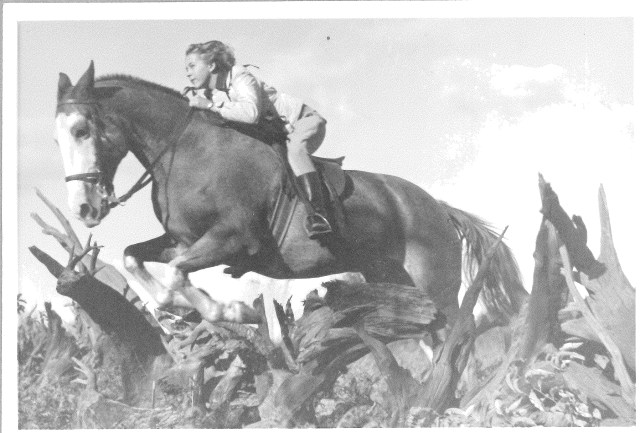
Foolish or daring? Mom–without a helmet– jumps a horse for a publicity photo (for the horse).

Certainly there is a story behind the Alpine name but I don’t know it. This was a favorite of my mom and a dish I make once a year to remember her. Topped with cashews and crushed potato chips and making use of the ubiquitous canned mushroom soup, this is most definitely a mid-century dish.

Alpine Chicken

4 cups cooked cut up chicken

2 cups chicken broth

2 cups celery

1 cup mayonnaise

2 cups cheddar seasoned croutons

1 onion, chopped

2 tsp chopped pimento

4 tsp chopped green pepper

2 cans cream of mushroom soup, undiluted

1/2 lb sharp cheddar cheese in small cubes

2 cans sliced water chestnuts, drained

1 tsp salt

1/4 tsp pepper

1 tsp thyme

1 tsp sage

Mix all ingredients well in a large bowl. Put into an 11 x 15 pan. Top with crushed potato chips and 1 cup cashews.

Bake at 350 degrees for one hour. Serves 12.

***

A variation of the above is simply called “Brunch dish.” It’s easy and features Velveeta cheese which is cheese with extra whey, maltodextrin (sugar/food starch),  some preservatives, and natural coloring.

Brunch Dish

1 can 10 1/2 ounces cream of chicken soup

2 cups cooked chicken breasts cubed

1 cup Velveeta cheese cubed

1 1/2 tbsp onion chopped

5 slices of bread cubed-crusts too!

1/2 cup mayonnaise

3 eggs–slightly beaten

1 small can of mushroom pieces

1 tbsp chopped pimento or green pepper

1/8 tsp each garlic salt, celery salt, and poultry seasoning

Combine all ingredients but the eggs. Gently fold in eggs. Pour into a 9 x9 greased pan.Refrigerate over night. Bake at 325 for 45 minutes.

Recipe can easily be doubled and put into a 9 x 13 pan–increase baking time to one hour.

Note: I made the “brunch dish” yesterday and realized that I had never in my memory purchased Velveeta and had no idea where it was in the store. I had to ask and it was with the pizza ingredients. I served it to some of the grandsons and one loved it, one found it unsettling that the ingredients were stuck together with “weird cheese,” and the one who never eats tried a small portion of it and ran off to play on the swing set. It was easy for the toddler to eat as he  practiced using utensils and I’ll consider serving it when I have my dad– who has Parkinson’s– over for dinner.


1950s high blood pressure meat loaf

a360f4c3a1791d65a4c8b393b3b6fb4f
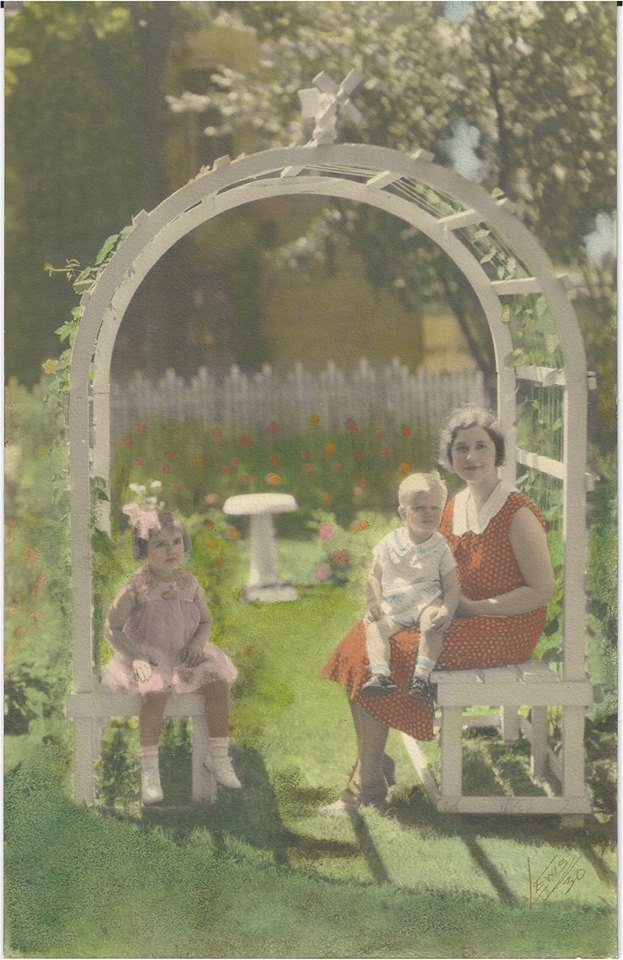
Gladys Fedelia Kendrick Hinga and children around 1930 in Holland, Michigan

My grandma Gladys was a well-educated woman and lovely hostess.I have to give credit to her for instilling me with an appreciation of new scientific advances. She wove such horror tales of life without technology and antibiotics and the difficultly of being a wife and mother during those times. See that cute little girl? That’s my Aunt Connie who was born before antibiotics. She’d get ear infections and puss would drip from her ear! No wonder I rushed to board the lifeboat that was scientific progress.

Grandma was a wonderful cook. But when pre-packaged foods came about she had no qualms about using them — freeing up time to go dancing or take her grandchildren on educational outings. I still remember when she took me to a museum and I saw a whole display of shrunken heads.

Here’s her meatloaf recipe. Easy, tasty, and loaded with sodium chloride!

3 lbs ground beef

2/3 cup oatmeal

1 1/4 cup V-8

3 eggs

1 pkg Lipton onion soup mix

2 tablespoons mustard

1/4 tsp pepper

3 tsp salt

Worcester sauce

Bake at 350 for 1 1/2 hours.

***

Salt is both good and bad. It can help retain fluids in the body but too much will cause kidneys and arteries to overwork and thus create hypertension and damage to kidneys and arteries. In fact, my grandmother suffered from artery damage later in life. Biologist Dr. Ellen Dupree explains it this way “Salt is essential for normal functioning of our cells.  Too much or too little salt affects water balance in our cells, affects our blood pressure, the ability of our nervous system to function properly and can affect kidney function.  Salt levels are so important that we have multiple hormones designed to maintain proper salt concentrations in blood (and around cells).”

I can’t sleep when I’ve eaten too much salt and I’m not the only one. Endocrine Abstracts published a study that found that salty foods will keep people awake and give them restless sleep. In graduate school I used to eat a hot dog the morning of an exam to wake me up after a night of cramming–especially for organic chemistry, oh what a killer.That was in the 80s when people said things like “I’ll sleep when I’m dead.” Would I pull an all nighter today? Na.


“Duck and Cover” Russian Tea Loaf

mom2
Connie Boersma Hinga

Here is a recipe from my mom. Mom inspired me to not aspire to be a house wife. She couldn’t hide how bored she was. Although she was loving and nurturing, I found myself weaving tales of school that went well beyond what actually happened because I felt the need to entertain her. I was finally busted when I told an elaborate story about having speech therapy. Not only did I not need speech therapy, I claimed that the therapist gave me a Payday Candy bar.

Mom made this cake for my dad’s birthday.  I’m not sure why it’s called a Russian Tea Loaf although I once had a Russian tell me that if you have blue eyes, you are part Russian. In the 1950s-80s, the U.S. and Russia were locked in a  Cold War which made Russia glamorous. My family lived in Washington D.C. during the Bay of Pigs incident and learned early in life to duck and cover. I  practiced running home from school to die with my mom in ten minutes or less. I even had a sleeping bag at school in case the Big One was launched and not detected in time and the school was used as a bomb shelter. If you see older citizens of the U.S. with no savings and their health shot through from bad living don’t judge. They were taught from an early age that they were going to die young. Now we have school lock down drills and terrorist threats so only those who grew up in the 90s escaped that sense of doom and dread that is part of our culture.

As with most mid-century cooking, this uses a pre-made item, the angel food cake, an American invention. It also contains an unspecified package size. Sorry about that. There wasn’t the vast array of choice back then. Cut the cake with a serrated knife.

Russian Tea Loaf

Buy an angel food cake.

Custard filling:

5 eggs–remove yolks and set aside

3/4 cup sugar

1 1/2 cups half and half

1 envelope unflavored gelatin

1/4 cup cold water

1 pt whipping cream

1 tsp vanilla

Beat yolks until light and add sugar. Heat cream in double boiler. Add egg yolks mixture and cook until thick.While custard is hot, add gelatin which has been dissolved in cold water. Let cool and add stiffly beaten whipping cream and vanilla. Cut cake in 3 layers and put custard between layers and over entire cake.

Enjoy and bombs away!